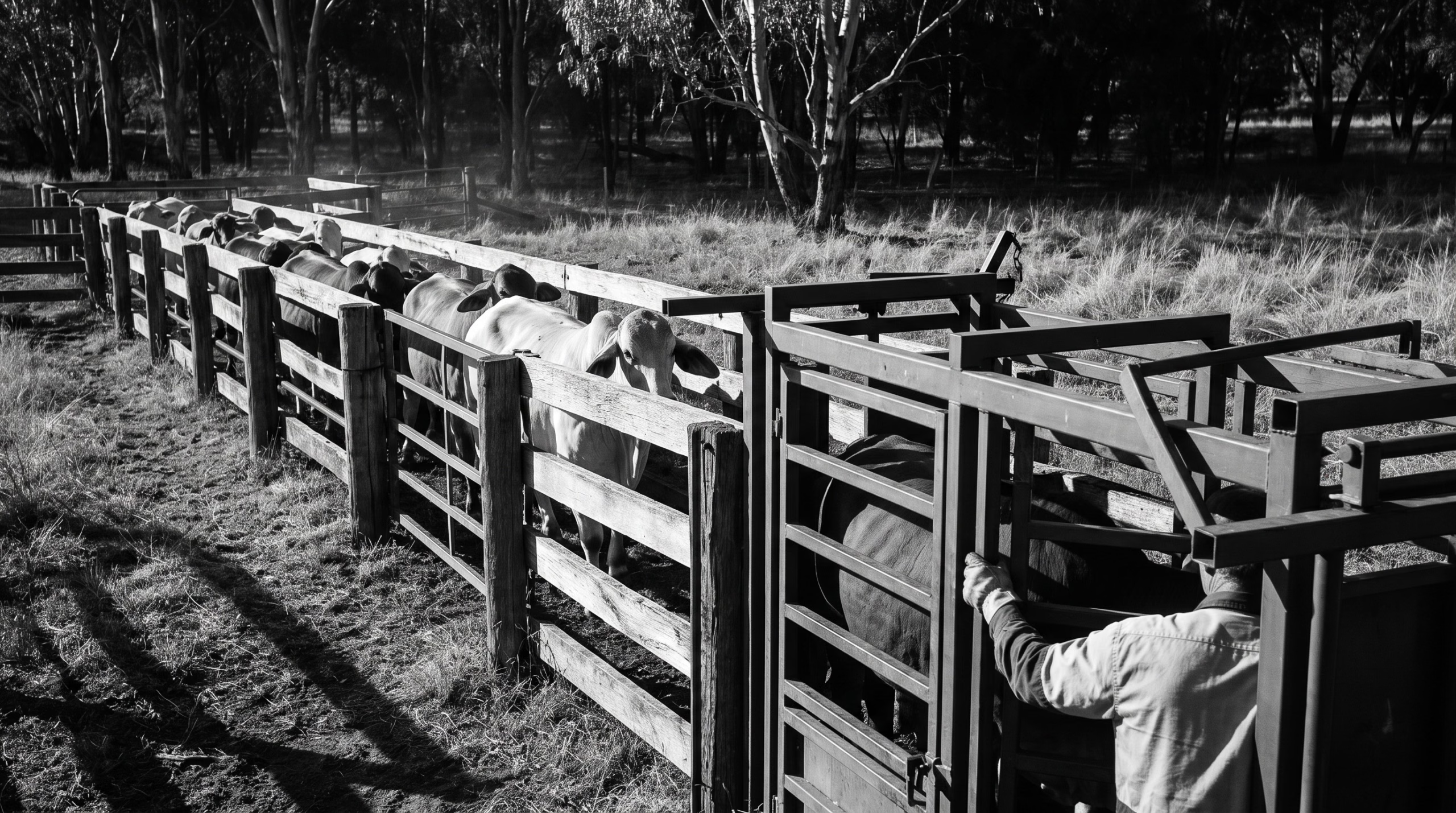

Pregnancy testing in cattle tells you which cows and heifers are in calf, and which are empty. A trained tester checks each animal in the crush. Methods include manual palpation, ultrasound and blood tests. The result drives your culling, your feed plan and your calving groups. An empty cow eats a year of feed and gives you no calf. Testing finds her before she costs you more.
This guide covers the methods, who is allowed to test, how to time the job, and how to turn results into decisions. It draws on advice from FutureBeef, Meat and Livestock Australia and the PREGCHECK scheme run by Australian Cattle Veterinarians.
Why pregnancy test your herd?
FutureBeef lists five main uses for test results:
- Find non-productive breeders and heifers to cull
- Sell surplus females with a certified pregnancy status
- Estimate when your calves will drop
- Pull out high-risk cows in herds with year-round joining
- Check AI programs and tell sires apart
The first use pays for the job in most herds. FutureBeef advises you cull dry cows found empty at the test. Each one you keep eats feed a pregnant cow needs.
The second use earns money. FutureBeef notes certified pregnancy status attracts a premium when you sell surplus females. Buyers pay more when they know what they are getting.
Testing does not fix poor management. FutureBeef makes the point plainly. Nutrition, bull power and a set joining period come first. Testing then shows you how well the system worked.
Pregnancy testing methods
Three methods are in use across Australia. Each suits a different job.
Get the latest cattle market updates straight to your inbox. Subscribe free to Cattle Weekly’s weekly newsletter. Subscribe here
Manual palpation
The tester feels the uterus by hand through the rectum. This is the most common method on beef properties. A skilled tester works fast and gives an answer on the spot. Experienced testers also estimate the stage of pregnancy. This is called foetal ageing.
Speed suits large mobs. The result depends on the skill of the person doing it. Ask any tester how many head they test a year, and what accreditation they hold.
Ultrasound
The tester uses a probe and a screen to see the foetus. Ultrasound picks up pregnancy earlier than palpation. It also gives a clear view for foetal ageing and twins. The gear costs more, and the work runs slower on big mobs. Dairy herds and AI programs use ultrasound often.
Blood tests
A blood sample goes to a lab. The lab looks for proteins made by the placenta. You get results days later, so you draft the cattle at a second muster. Blood tests suit small herds with no trained tester nearby. They do not age the foetus. Ask your vet about the earliest stage the test works, and how long after calving to wait.
Compare the methods
| Method | Result on the day? | Foetal ageing? | Best fit |
|---|---|---|---|
| Manual palpation | Yes | Yes, with a skilled tester | Large beef mobs |
| Ultrasound | Yes | Yes | Early testing, dairy, AI programs |
| Blood test | No, lab result | No | Small herds, no tester nearby |
Who is allowed to pregnancy test cattle?
Rules differ by state. Some states treat pregnancy testing as an act of veterinary science, or limit it to vets and accredited lay testers. The Northern Territory runs an accreditation path for trained lay testers who test export cattle. Check the current rules with your state agriculture department before you book anyone.
PREGCHECK accreditation
PREGCHECK is the national scheme for certified pregnancy results. Australian Cattle Veterinarians runs the scheme. Accredited vets record each result against the animal. The PREGCHECK website lets buyers search for certificates. When you sell pregnant females, a PREGCHECK certificate gives the buyer proof.
The push for a national standard
MLA funded work on a national standard for pregnancy testing. The project reviewed how testing runs across Australia. Its aim was a common standard for accuracy and records. Ask your tester how their work meets these standards.
Export cattle
Female cattle bound for live export need a pregnancy test. The Australian Standards for the Export of Livestock set the rules. These cover the test window and limits on stage of pregnancy. In most states, a registered vet must do the export test. Confirm the current rules with your exporter before you muster.
When to pregnancy test
FutureBeef notes testing works best closer to the end of joining than to branding or weaning. The timing depends on your goal.
- To cull empties early: Test as soon as your method allows after the bulls come out. Sell empties while they still carry condition.
- To age pregnancies: Test while foetuses are young. Foetal ageing is most accurate early in pregnancy.
- To fit your yard work: Many herds test at weaning. This saves a muster. You lose some accuracy on foetal ageing.
A short, set joining period makes testing far more useful. With year-round joining, you get a mix of stages and harder decisions. Our guide to cattle breeding management covers how to set a joining period.
Turn test results into decisions
A test only pays when you act on it. Draft cattle in the yards on the day. Here is how to use each group.
Empties
Cull empty cows. FutureBeef is clear on this. Empty heifers also go, unless you have a known cause such as a bull problem. Sell them fat if you have the feed. Sell them early if feed is short.
Late conceivers
Cows in calf to the last month of joining drop late calves. Those calves wean lighter. The cows then struggle to get back in calf on time. FutureBeef suggests culling the 5% to 10% of cows who conceive in the last month of joining. This tightens your calving each year.
Calving groups
Foetal ageing lets you draft cows by expected calving month. You then put early calvers in the best paddock. You watch heifers closely. You time supplements to each group. Our cattle calving guide covers how to manage each group at calving.
Cows in poor condition
Body condition drives conception. FutureBeef shows the link. In its chart, about 96% of cows in condition score 4 conceived. About 90% in score 3 conceived. Only about 62% in score 2 conceived. Draft thin pregnant cows at the test. Feed them through the dry so they calve and get back in calf. Our guide to managing weaning shows how early weaning takes pressure off thin cows.
Benchmarks to judge your results
Compare your figures with these FutureBeef targets:
| Class | Benchmark |
|---|---|
| Heifers joined at two years | 90% conception over four months of joining |
| Yearling heifers (central Queensland project) | 60% to 85% over four months |
| First-calf cows | Often 10% to 40% below maiden heifers |
Low rates in first-calf cows are common. These cows are still growing and feeding a calf. If your rate sits far below the range, look at nutrition and condition first. Then check bull fertility. A bull with a fault leaves a big gap in your results.
Track results year on year. Record the rate for each mob and each class. Over time, the numbers show where your system works and where it fails. Visit our cattle health hub for guides on diseases linked to poor fertility, such as vibriosis and pestivirus.
Common pregnancy testing mistakes
Most problems with pregnancy testing come from the plan around the test, not the test itself. Watch for these five.
Testing with no plan for the results
Some herds test, write down the numbers and change nothing. The empties stay in the mob. The late calvers stay too. Decide before the muster what you will do with each group. Set the drafting gates to match.
Leaving the bulls in too long
A long joining period spreads your calving. Foetal ageing then shows a wide range of stages. You lose the chance to cull late conceivers without losing too many cows. Pull the bulls on a set date each year.
Poor records
A result with no tag number is of little use next year. Record each result against the NLIS tag. Keep the mob, class and tester on the same sheet. You then track each cow over her life in the herd.
Choosing a tester on price alone
An error costs more than the fee. A pregnant cow sold as empty is a lost calf. An empty cow kept as pregnant eats a year of feed. Ask about accreditation and accuracy before you ask about price.
Ignoring the bulls
A poor pregnancy rate often starts with the bulls. Test bulls for fertility before joining. Check them for injury during joining. A low result in one mob and a good result in the next points to a bull problem.
Pregnancy testing checklist
- Book an accredited tester before the bulls come out.
- Check the tester meets your state rules and any export rules.
- Tag and record every animal before the test.
- Set up drafting gates for empties, late calvers and thin cows.
- Record each result against the NLIS tag.
- Draft and act on the day.
- Compare your rates with last year and the benchmarks.
Frequently asked questions
How soon after joining do you pregnancy test cattle?
It depends on the method. Ultrasound picks up pregnancy earlier than hand palpation. Blood tests need a set time after joining and after calving. Ask your tester for the earliest stage their method works. Test soon after the bulls come out if you want to age pregnancies.
How much does it cost to pregnancy test cattle in Australia?
Prices vary by region, herd size and method. Most testers charge per head, plus travel. Ask two or three local testers for a quote. Compare the cost with the feed an empty cow eats over a year.
Do you need a vet to pregnancy test cattle?
Rules differ by state. Some states limit pregnancy testing to vets and accredited lay testers. The Northern Territory allows accredited lay testers for export cattle. Check with your state agriculture department.
What is PREGCHECK?
PREGCHECK is the national scheme for certified cattle pregnancy results. Australian Cattle Veterinarians runs it. Accredited vets record each result, and buyers search certificates online.
Should you cull empty heifers?
In most herds, yes. An empty heifer at the test is a poor bet for next year. FutureBeef advises culling empty cows. Check for a bull or disease problem first if many heifers are empty.