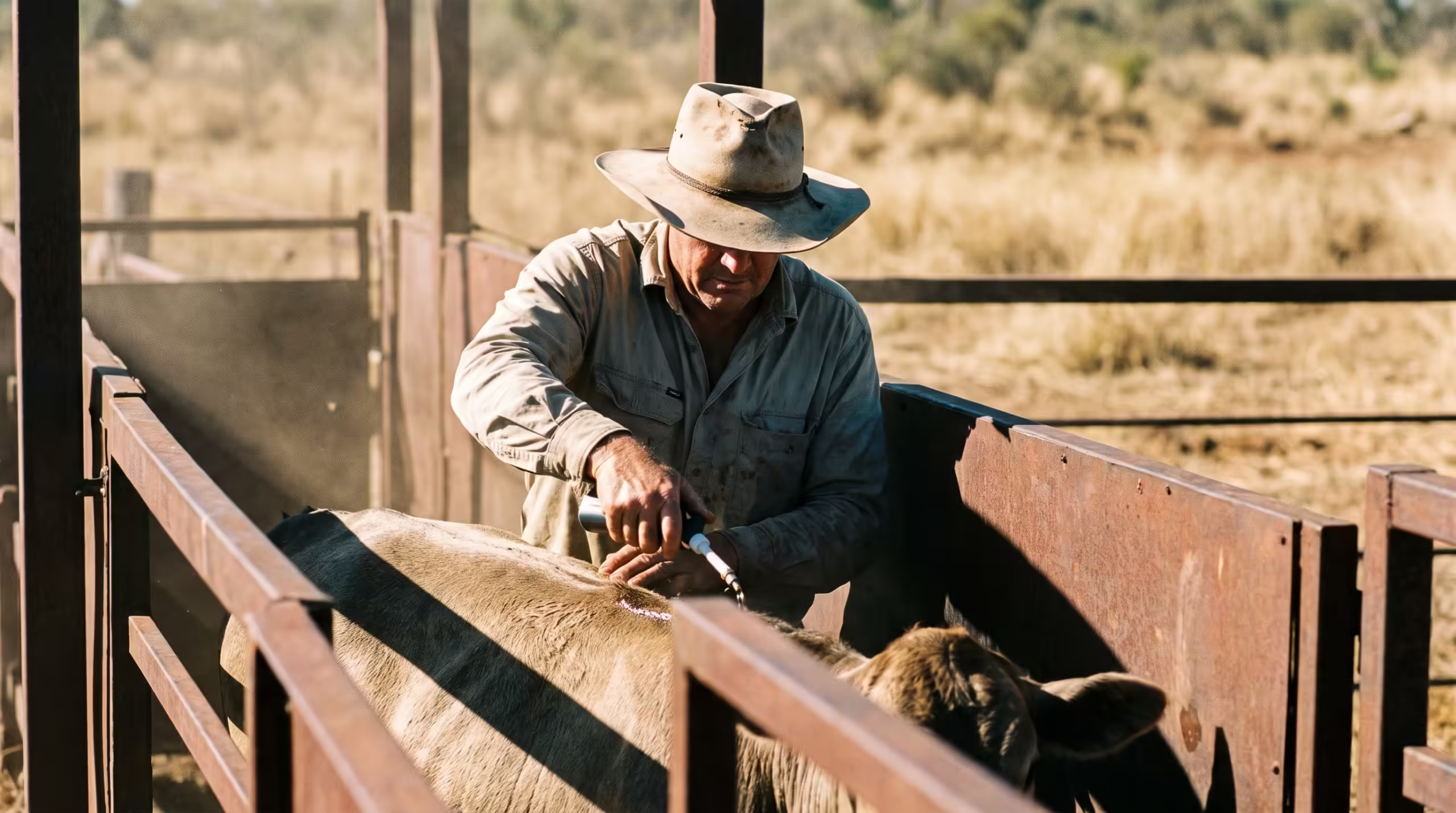

Parasite control on an Australian cattle property comes down to four decisions: which parasites threaten your district, when your stock are most at risk, which chemical group still works on your place, and which paddocks you put young cattle onto. Get those right and you treat less often with better results. Get them wrong and you build resistance while your weaners go backwards.
Which Parasites Matter, and Where
Australia is too large for one parasite program. Your postcode sets your priorities.
- Gastrointestinal worms hit hardest in the cooler, wetter south and along the east coast. Small brown stomach worm, black scour worms and small intestinal worm cause most of the production loss. Barber’s pole worm turns up in warmer, humid country.
- Cattle tick sits in the northern and coastal zones of Queensland, the Northern Territory and parts of northern Western Australia, with a regulated boundary separating infested country from tick-free country.
- Lice are a national problem with a winter peak, worst under long coats in yarded or poorly fed cattle.
- Buffalo fly runs through the northern wet season and pushes south along the coast in warm, humid weather.
- Liver fluke needs permanently wet ground for its snail host. Irrigation country, swampy flats and spring-fed gullies carry the risk.
Age changes everything. Cattle under two years old carry the heaviest worm burdens because immunity builds with exposure. Weaners and yearlings deserve the monitoring and the chemical. Mature cows in good condition rarely need routine drenching, and treating them anyway wastes money and selects for resistance. Meat & Livestock Australia’s animal health resources set out the same order of priority.
Worms: Test Before You Treat
A faecal egg count tells you whether a mob needs drenching. Collect fresh individual samples from 10 to 15 head in the mob, keep them cool, and send them to a veterinary laboratory or your local vet for a worm egg count with a larval culture. The culture names the species, which decides the active you choose.
Signs of a worm burden show up as ill-thrift before anything dramatic: flat growth rates, rough coats, scouring in a few head, weaners falling off the line. Weigh a sample of the mob monthly through the risk season. A stalled growth curve is a cheaper diagnostic than a dead animal.
Know your drench groups
Three broad chemical families treat cattle worms in Australia:
- Macrocyclic lactones, sold as injectables and pour-ons, including ivermectin, abamectin, moxidectin and eprinomectin.
- Benzimidazoles, the oral white drenches such as albendazole, fenbendazole and oxfendazole.
- Levamisole, the clear drench, often sold combined with a benzimidazole.
Resistance to macrocyclic lactones in Australian cattle worms is documented, particularly in small intestinal worm and small brown stomach worm. Rotating between products with the same active achieves nothing. Rotate between groups, and use registered combination products, which reduce the selection pressure on any single active. The Australian Pesticides and Veterinary Medicines Authority registers every product sold here and publishes the approved label, which is the legal instruction for dose rate, route and withholding period.
Get the latest cattle market updates straight to your inbox. Subscribe free to the Cattle Weekly newsletter.
Dose properly, then check it worked
Underdosing breeds resistance faster than any other mistake. Weigh the heaviest animals in the draft and dose the whole mob to the top weight, or split the mob into weight ranges. Guessing by eye underdoses the big ones every time.
Calibrate the gun before you start and again halfway through. For pour-ons, apply along the backline on a dry coat, since rain and dust change uptake. For orals, deliver over the tongue, not into the cheek.
Run a drench check: another faecal egg count 10 to 14 days after treatment. Egg counts still high means the product failed on your property, and you need a different group before the next round. Two drench checks a year tell you more about your program than any advertisement.
Cattle Tick: The Line Matters
Cattle tick carries tick fever, caused by Babesia and Anaplasma organisms, and an outbreak in naive cattle kills fast. Movement of cattle from tick infested country into tick-free country is regulated, with inspection and treatment requirements before travel. The Queensland Government publishes the current zone boundary, the approved treatments and the paperwork, and penalties apply for moving untreated stock across it. Check the rules for both the origin and the destination before you book transport.
Three tools work together in tick country:
- Breed. Bos indicus and Bos indicus cross cattle carry far fewer ticks than British breeds under the same conditions. Genetics is the cheapest long-term control in the north.
- Vaccination. Queensland operates a tick fever vaccine service supplying live blood vaccine, used on young cattle and on stock moving into tick country from clean areas.
- Strategic treatment. Acaricide dips, sprays and pour-ons reduce tick numbers. Resistance to several acaricide groups exists in Australian tick populations, so confirm your product choice with your vet or the state department rather than repeating what worked a decade ago.
Lice: A Winter Problem You See From the Ute
Lice numbers build through autumn and peak in late winter under long coats. Chewing lice sit along the topline and neck. Sucking lice cluster around the head, neck and brisket, and heavy infestations cause anaemia in weaners.
Rubbing on fences and trees, patchy hair loss and a dull, scurfy coat are the field signs. Part the hair on the neck and shoulder of a few head in poor condition to confirm.
Treat the whole mob, not the obvious cases. Untreated carriers reinfest everything within weeks, which is the usual reason a lice treatment appears to fail. Many macrocyclic lactone products registered for worms also cover sucking lice while missing chewing lice, so read the label claim instead of assuming cover. Well-fed cattle in good condition carry lighter burdens, which is one reason our guide to cattle nutrition and feeding belongs in a parasite plan.
Buffalo Fly and Dung Beetles
Buffalo fly breeds in fresh dung pads and feeds on cattle, causing lesions around the eyes, neck and flanks. Resistance to older insecticides is widespread in northern populations. Ear tags, pour-ons and buffalo fly traps all reduce numbers, and rotating chemical groups between seasons slows resistance.
Dung beetles reduce fly breeding by burying pads within a day or two, and the same activity returns nutrients to the soil and cuts worm larval survival. Products with a long residual effect on dung fauna undercut this, so weigh the trade-off before blanket treatments in summer.
Grazing Management Does Half the Work
Worm larvae live on pasture, not on the animal. Where you graze young cattle decides their intake.
- Save low-risk paddocks for weaners: hay or silage aftermath, newly sown pasture, or country grazed by mature cattle through the wet months.
- Give paddocks a long spell in hot, dry conditions, which kills larvae faster than cool, moist conditions.
- Graze adult cattle behind weaners as a clean-up mob. Immune adults eat larvae without carrying a burden.
- Avoid returning weaners to the same paddock season after season, since larval contamination accumulates.
- Keep stocking pressure off short pasture. Larvae concentrate in the bottom few centimetres of the sward.
Nutrition sits alongside grazing. Cattle meeting their protein and energy requirements mount a stronger immune response and lose less weight to the same burden. Our overview of beef cattle care and management covers the husbandry side, and the complete guide to cattle health in Australia shows where parasite control fits in the annual health calendar.
Withholding Periods and Market Compliance
Every registered product carries a meat withholding period and an export slaughter interval on the label. The two differ, and the export interval is usually longer. Selling an animal inside either window risks a residue detection, a rejected consignment and damage to market access for everyone.
Three habits keep you clean:
- Record every treatment: date, mob, product, batch, dose and the operator. Livestock Production Assurance accreditation requires the record, and your National Vendor Declaration relies on it.
- Check the withholding period against your sale date before you treat, not after.
- Mark treated mobs clearly on your paddock plan so a sale draft never pulls from the wrong group.
Agriculture Victoria and the other state departments publish chemical residue guidance alongside their parasite advice, and both are worth reading before a treatment round.
Frequently Asked Questions
What is the best antiparasitic for cattle?
No single product wins everywhere. The right choice depends on which parasite you are treating, your region, the age of the stock and which chemical groups still work on your property. Start with a faecal egg count and larval culture, pick an effective group based on those results, and confirm the outcome with a follow-up egg count.
How do you get rid of parasites in cattle?
Treat and manage together. Test the mob, use an effective chemical group at the correct dose for the heaviest animals, treat the whole mob rather than the worst affected, then move young stock onto lower-risk paddocks so they do not pick up the same burden again. Chemical alone on contaminated pasture fails within weeks.
Is ivermectin available for animals in Australia?
Yes. Ivermectin and related macrocyclic lactones are registered for cattle here as injectables and pour-ons, approved through the Australian Pesticides and Veterinary Medicines Authority. Resistance in some worm species is documented, so run a drench check rather than assuming a product still works on your place.
How do you deworm cattle naturally?
Grazing management, nutrition and genetics reduce worm burdens without chemical. Spell paddocks, graze weaners ahead of adults, feed to requirement and select for resilient stock. No herbal preparation holds registration as a replacement for a drench, so treat those claims with caution and monitor egg counts either way.
When should you treat cattle for worms in Australia?
Timing follows region and class rather than the calendar. In southern Australia, weaners face the highest risk through the cool, moist months and around weaning stress. In the north, the wet season drives worm risk while tick and buffalo fly pressure peaks at the same time. Base each treatment on an egg count and on the growth performance of the mob.