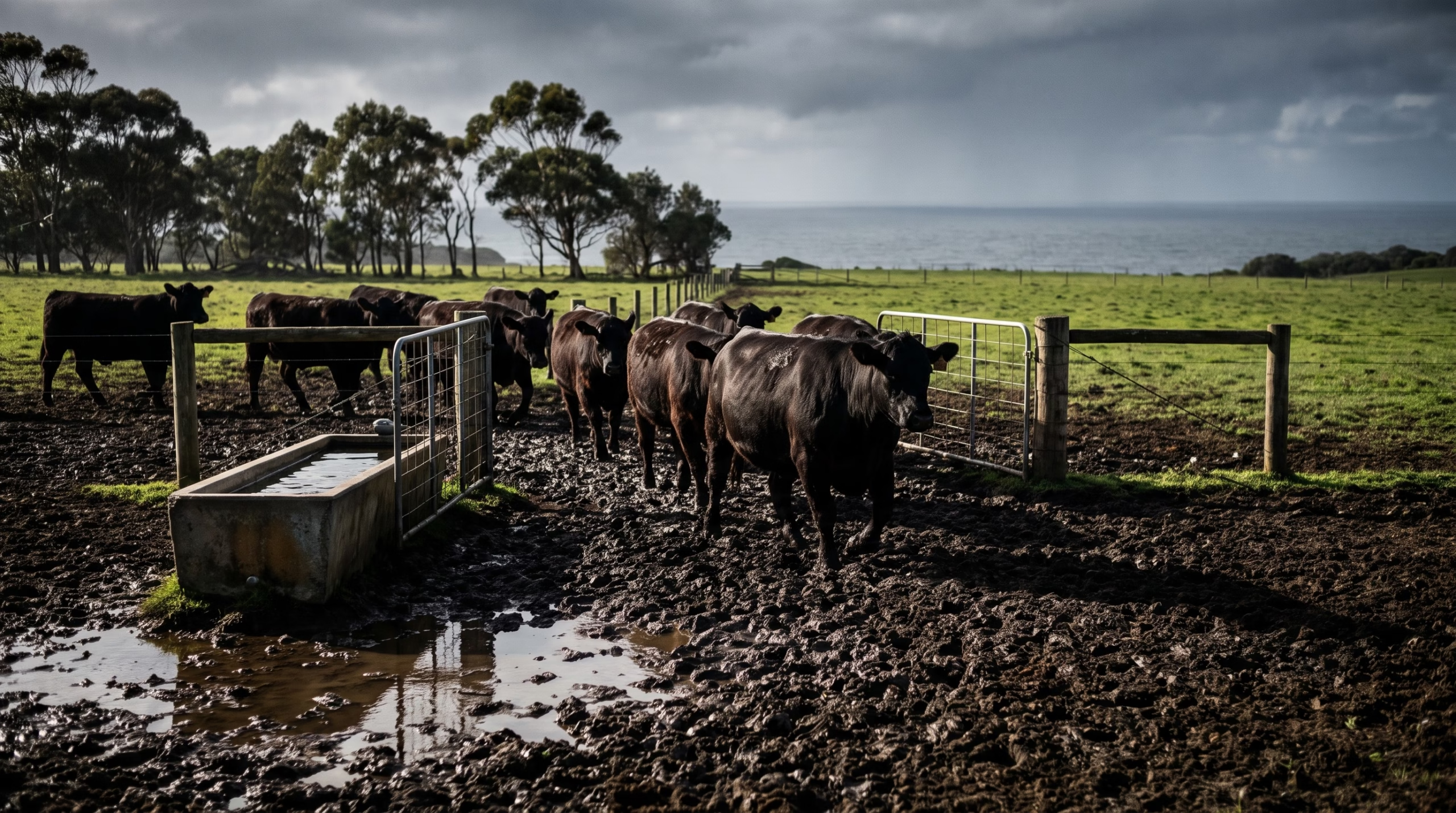

Footrot in cattle is a bacterial infection of the skin between the claws. Vets call it interdigital necrobacillosis. The main germ is Fusobacterium necrophorum. The germ gets in through soft or broken skin. Cattle go lame fast, often in a hind foot. Early antibiotic treatment from your vet clears most cases. Dry gateways, firm laneways and clean yards stop most new cases.
This guide shows you how to spot footrot and how to tell it apart from other foot problems. You get a step by step plan for the first 48 hours. You also get a prevention plan for wet seasons, dairies and feedlots.
What is footrot in cattle?
Footrot is an infection of the soft tissue between the two claws of the hoof. Meat & Livestock Australia (MLA) notes the cattle disease differs from footrot in sheep and goats. In cattle, Fusobacterium necrophorum and other bacteria do the damage. These bacteria live in manure and soil. They do no harm on healthy, dry skin.
The trouble starts when the skin breaks. A sharp stone, a stick, stubble or long hours in mud all open the skin. Bacteria move in. Within a day or two the tissue starts to die. The foot swells, and the animal stops putting weight on it.
Cattle footrot and sheep footrot are different diseases
Sheep footrot comes from a different germ, Dichelobacter nodosus. The virulent form in sheep is a notifiable disease in some states. Cattle rarely carry it. The Western Australian agriculture department has recorded a small number of cattle with virulent footrot. If you run sheep and cattle together and see lame stock in both, call your vet or your state animal health officer.
For a wider view of disease risks on your property, read our guide to common cattle diseases in Australia.
What causes footrot in cattle?
Three things line up before a case starts.
- Wet, soft skin. Mud, wet manure and standing water soften the skin between the claws. The Queensland Government guide to foot rot in cattle links outbreaks to high rainfall, wet faeces and mud.
- A break in the skin. Stones on laneways, stubble, burrs and rough concrete cut soft skin.
- A high load of bacteria. Crowded yards, feed pads, water points and gateways build up manure. More manure means more bacteria at the wound.
High-risk times and places
- Wet summers in northern and coastal districts.
- Feedlot pens after heavy rain.
- Dairy laneways and the ground around the dairy shed.
- Troughs and gateways where cattle stand in mud.
- Yards used for long muster days or for holding stock.
Cases tend to come in groups. One wet week often brings several lame cattle from the same paddock. Treat the group of cases as a sign of a problem spot on the property, then fix the spot.
Get the latest cattle market updates straight to your inbox. Subscribe free to Cattle Weekly’s weekly newsletter. Subscribe here.
Signs of footrot in cattle
MLA lists these signs:
- Sudden lameness, often in more than one animal.
- Swelling between the claws and up to the coronet, the band of skin above the hoof.
- Claws pushed apart by the swelling.
- A split in the skin between the claws with dead, grey tissue.
- A strong, foul smell.
The Queensland guide notes the hind feet are most often hit. Lame cattle often stand and walk on their toes. You also see fever and a drop in feed intake. Dairy cows give less milk. Bulls with sore feet stop working.
How to check a lame animal
- Watch the animal walk. Note which leg it favours.
- Bring it into the crush with good restraint. Lift and clean the foot.
- Look between the claws for a split, dead tissue and swelling. Smell the wound.
- Check both claws for swelling. Swelling on one claw only points to a different problem.
- Record the tag, the date and the foot. You need this for withholding periods and for repeat cases.
Footrot or another foot problem?
Many foot problems look like footrot from a distance. Each one needs a different fix. Get the call right before you treat.
| Condition | What you see | Key difference |
|---|---|---|
| Footrot | Even swelling of both claws, split skin, foul smell | Swelling sits between and above the claws |
| Sole abscess | Lame on one claw, pain when you press the sole | Pus under the sole, no split between the claws |
| Toe abscess | Tender tip of one claw | Often follows heavy wear on concrete or rough yards |
| Digital dermatitis | Red, raw, wart-like sore at the back of the heel | Mostly a dairy problem, no deep swelling |
| Stone or stick in the foot | Object wedged between the claws | Lameness eases once you remove the object |
Some cases go deep. The infection spreads into the joint or the tendon sheath. The foot stays swollen after treatment, and the animal stays lame. These cases need your vet. Some need surgery. Some animals need to be put down or culled on welfare grounds.
How to treat footrot in cattle
Treat early. A case caught in the first day or two responds best. Leave it a week and the infection goes deeper.
Step 1: Call your vet
Footrot in cattle needs antibiotics. Most antibiotics for cattle in Australia are prescription drugs. Your vet chooses the drug, the dose and the length of the course. The Queensland guide notes pastured cattle often need a long-acting injectable antibiotic. In feedlots, a medicated feed additive suits cattle still eating well. Ask your vet for a written footrot plan before the wet season, so you treat on day one.
Step 2: Clean the foot
Restrain the animal in the crush. Remove mud, sticks and stones from between the claws. Trim loose dead tissue only if your vet has shown you how. Do not cut deep.
Step 3: Move the animal to a dry paddock
Put treated cattle in a small, dry, clean paddock close to feed and water. Keep them off laneways and out of mud until they walk sound.
Step 4: Record the withholding period
Every antibiotic has a meat withholding period. Products used on milking cows also carry a milk withholding period. Read the label and check the registration with the APVMA. Write the dates in your treatment records. Do not sell or send treated cattle to slaughter inside the withholding period. Your National Vendor Declaration (NVD) relies on these dates being right.
Step 5: Check the animal each day
Look at treated cattle every day. Most walk better within a few days of treatment. If the foot stays hot and swollen, call your vet back. A deep infection needs a different plan.
How to prevent footrot in cattle
Prevention costs less than treatment. Work on the three causes: wet skin, broken skin and a high bacteria load.
Keep feet dry
- Fix drainage around troughs, gateways and feed pads.
- Raise or gravel the ground at water points.
- Move feeding sites often so mud does not build up.
- In feedlots, clean pens and repair pen slope after rain.
Protect the skin
- Take sharp stones off laneways. Top them with fine, compacted material.
- Grade dairy laneways so water runs off.
- Fix broken concrete in yards and around the dairy.
- Keep cattle off sharp stubble when their feet are soft.
Cut the bacteria load
- Clean yards and holding areas after each use.
- Run fewer head per hectare on wet ground.
- Pull lame cattle out fast so they do not seed pens and laneways.
Footbaths and nutrition
Many dairies run cows through a footbath. Zinc sulphate and copper sulphate are common products. Follow the label rate and change the bath often. A bath full of manure spreads bacteria. Talk to your vet or nutritionist about zinc in the ration. Zinc supports healthy skin and hoof horn.
Footrot in beef, dairy and feedlot cattle
The disease stays the same. The risk points change with the system.
- Beef breeders on pasture. Cases rise after heavy rain. Watch stock at troughs and gateways. Treat in the paddock crush, or bring the animal in quietly.
- Dairy herds. Cows walk laneways twice a day. Laneway surface and drainage matter most. Lameness costs milk and fertility.
- Feedlots. Wet pens after rain raise the risk. Pen riders pull lame cattle early. Treatment follows the feedlot vet protocol.
Lameness is also a welfare issue. The Australian animal welfare standards for cattle expect you to treat sick and lame stock without delay. A lame animal is often not fit to load. Check fitness to load rules before you send any animal to sale.
What footrot costs your business
Footrot costs you in four ways: treatment, lost weight or milk, labour and culls. Lame cattle walk less, eat less and lose condition. Lame bulls stop serving cows in the joining period. Each case also takes time in the yards.
Keep a simple lameness log. Count cases by paddock and by month. After one wet season, the log shows you where drainage or laneway work pays back. Add the log to your herd health plan. Our cattle health guide covers how to build a full herd health plan with your vet.
Frequently asked questions
Is footrot in cattle contagious?
Footrot bacteria live in soil and manure. A lame animal sheds more bacteria into mud, yards and laneways. This raises the risk for the rest of the herd. Pull lame cattle out early and clean up wet areas.
Does footrot in cattle heal without treatment?
Some mild cases settle. Many get worse and spread into the joint or tendon. Treat early on your vet’s advice. Leaving a lame animal untreated also breaches welfare standards.
What antibiotic treats footrot in cattle?
Your vet picks the drug and the dose. Long-acting injectable antibiotics are common for cattle on pasture. Medicated feed suits some feedlot cattle. Record the withholding period every time.
How do you prevent footrot in cattle?
Keep feet dry and the skin whole. Fix drainage at troughs and gateways. Take sharp stones off laneways. Clean yards after use. Pull lame cattle early so they do not spread bacteria.
Is footrot in cattle a notifiable disease in Australia?
Cattle footrot comes mainly from Fusobacterium. Virulent footrot in sheep comes from a different germ and is notifiable in some states. If you see lame sheep and lame cattle on one property, call your vet or state animal health officer.