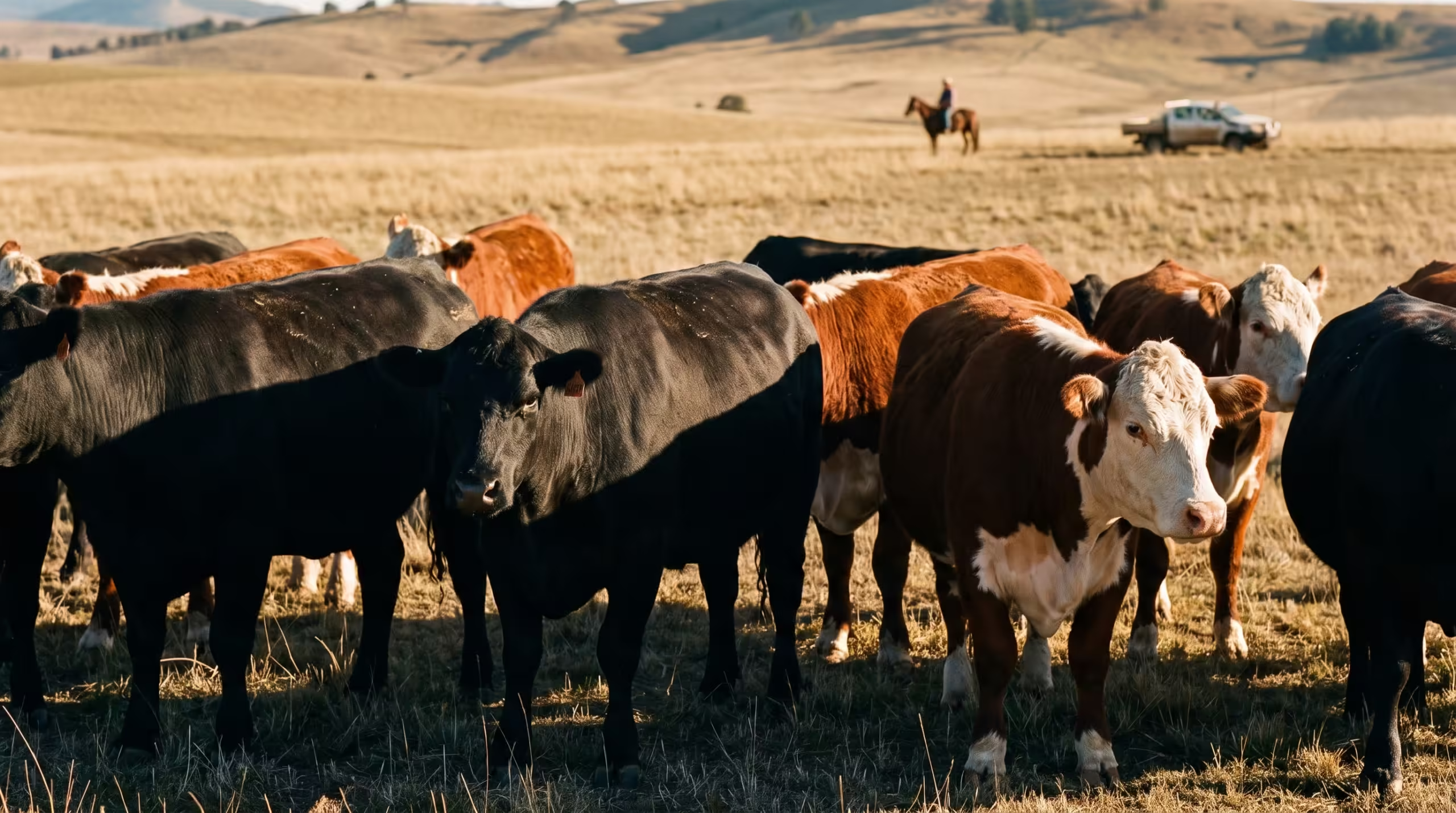

Beef cattle farming in New South Wales spans six broad grazing regions, from the Central West and New England down through the Riverina and North West, and the state carries close to 20 per cent of the national beef herd. NSW produced a record 587,686 tonnes of beef in 2024-25, a 16 per cent lift on the year before, while total cattle numbers sat at 5.5 million head.
Where NSW Sits in the National Herd
NSW is the second largest cattle state in Australia behind Queensland. Herd numbers fell 7.1 per cent to 5.5 million head in 2024-25 even as production climbed, a pattern Beef Central’s regional cattle population analysis ties to strong turn-off meeting improved seasonal conditions. Beef gross value of production in the state reached a record $3.9 billion AUD for the year, according to figures reported by Meat and Livestock Australia.
The NSW Department of Primary Industries and Regional Development notes beef cattle alone account for around 20 per cent of the national herd, spread across roughly 4 million head statewide once dairy cattle are excluded from the count.
The Grazing Regions Carrying the Herd
Six natural resource management regions account for most of the state’s cattle. The Central West holds the largest population at 705,000 head, running on open grassland country around Dubbo, Orange and Bathurst. New England and the Northern Tablelands carry heavy breeding herds on basalt and granite soils with reliable rainfall, while the North West and Border Rivers regions combine mixed farming with cattle on black soil plains suited to both grazing and opportunistic cropping.
The Riverina mixes irrigation country with dryland grazing, giving producers access to lucerne and fodder crops which smooth out seasonal feed gaps. Dry conditions through northern NSW have pushed higher yardings and turn-off from the region in recent seasons, a trend worth watching if you run cattle in the north of the state.
A Region by Region Snapshot
| Region | Herd focus | Typical country |
|---|---|---|
| Central West | Largest cattle population in the state, mixed beef | Open grassland and cropping country around Dubbo, Orange, Bathurst |
| New England and Northern Tablelands | Breeding and backgrounding | Basalt and granite soils, reliable rainfall |
| North West and Border Rivers | Mixed grazing and dryland cropping | Black soil plains, hotter, more drought exposed |
| Riverina | Finishing and fodder production | Irrigation country alongside dryland grazing |
| South East and Monaro | Breeding, higher altitude country | Colder winters, strong spring pasture growth |
| Hunter and Central Coast | Smaller holdings, lifestyle and part-time operations | Higher land values, closer to Sydney and Newcastle markets |
Each region carries a different mix of risk and opportunity. The Central West and Riverina give you scale and flatter country for machinery and infrastructure, while the tablelands regions trade a shorter growing window for more reliable rainfall. Coastal and Hunter Valley properties run smaller herds on dearer land, often alongside other enterprises, since the premium for proximity to Sydney markets and transport links pushes up the entry cost per hectare.
Mixed Farming Versus Straight Grazing
Much of inland NSW runs cattle alongside wheat, canola or other broadacre crops rather than as a standalone grazing enterprise. This mixed model spreads income across different seasons and price cycles, and cattle grazing crop stubble after harvest adds a feed source costing little beyond the yard work involved. Producers on the slopes and plains weigh up paddock rotation between crop and pasture each year, based on commodity prices, soil moisture and rainfall outlook rather than locking in one system permanently.
Straight grazing operations on the tablelands and higher country generally carry a simpler cost structure, with fencing, water and pasture improvement as the main capital items. New entrants often start here before adding cropping infrastructure, since the skill set and equipment needed for cattle alone is a smaller barrier than running both enterprises from day one.
Breeds Suited to NSW Conditions
British breeds including Angus and Hereford dominate the tablelands and higher rainfall country, where their fat cover and marbling suit the premium grass-fed and grain-fed markets. Further west and north, producers lean toward Bos indicus content for heat and tick tolerance, with Brahman cross and composite breeds holding condition better through a hot, dry summer. Our guide to cattle breeding management for top Aussie breeds covers the joining and selection decisions behind this regional split in more depth.
Get the latest cattle market updates straight to your inbox. Subscribe free to Cattle Weekly’s weekly newsletter. Subscribe here.
Seasonal Risk: Drought and Flood in the Same Decade
NSW producers manage two opposite risks within a single generation of cattle. Extended dry spells across the inland plains cut pasture growth and force early weaning or destocking decisions, while flooding along the Riverina and North Coast river systems closes roads and isolates stock from feed and water. A written feed budget, reviewed each season rather than once a year, gives you a trigger point for selling or supplementing before conditions force the decision for you.
Herd rebuilding after a dry run takes years, not months, since joining decisions made during a drought affect calving rates two seasons later. Producers who kept core breeding females through the last downturn, rather than selling the whole herd, are the ones restocking fastest now seasonal conditions have turned.
The Bureau of Meteorology publishes rolling seasonal outlooks for rainfall and temperature, and checking these against your district’s own rain gauge history gives you a useful lead indicator for stocking rate decisions. Pair the outlook with your own pasture monitoring rather than treating either source alone as a forecast you act on without question.
Health and Vaccination Across the State
Tick fever risk rises as you move north toward the Queensland border, while clostridial disease remains a baseline risk everywhere cattle are run. Our cattle vaccination schedule for Australian farmers sets out a program to adapt for your district’s specific disease pressure, built around your vet’s advice rather than a single statewide calendar.
Selling Cattle Out of NSW
NSW runs some of the busiest cattle saleyards in the country. Wagga Wagga and Dubbo regularly record the highest throughput in the state, with CTLX Carcoar and the Tamworth Regional Livestock Exchange also handling large weekly yardings. Store and prime sales run on a weekly cycle at most of these centres, and our latest cattle prices market report tracks how saleyard indicators move week to week across the state.
Producers closer to the coast or the Victorian border sometimes find better returns trucking cattle to interstate saleyards or direct to processors, so compare freight cost against the price gap before committing to your usual yard. Direct to processor sales and online platforms have also grown as an alternative to the physical saleyard, giving producers another channel to test price without the cost of trucking stock to a yard first. Whichever channel you use, an accurate National Vendor Declaration and a clean NLIS transfer at the point of sale keep the transaction moving without delay on delivery day.
Biosecurity and Traceability Obligations
Every producer running cattle in NSW operates under the National Livestock Identification System, with movements recorded at the point of sale, transfer or transport. Local Land Services handles property identification codes and biosecurity extension work across the state, and a current biosecurity plan is part of Livestock Production Assurance accreditation, which most buyers and processors expect before they will deal with you. Straying stock across a boundary fence remains one of the most common ways disease and unwanted genetics move between neighbouring properties, so fence maintenance doubles as a biosecurity measure, not only a stock control one.
Land Values and Entry Costs
Property prices across NSW grazing country vary enormously by region and proximity to the coast. Tablelands and Central West grazing land generally sells for less per hectare than coastal or Hunter Valley country, reflecting both distance to capital city markets and the smaller scale typical of coastal holdings. Leasing country, whether through agistment or a formal lease, gives new entrants and expanding operations a way to test a region or carry extra stock through a good season without committing capital to a purchase.
Getting Started or Expanding in NSW
Land values and rainfall reliability vary sharply between regions, so match your enterprise type to the country rather than forcing one model everywhere. Mixed farming operations on the slopes and plains often run cattle alongside cropping to spread income across different seasons, while higher rainfall tablelands country supports a straight breeding and backgrounding operation without the cropping overhead.
New entrants benefit from talking to Local Land Services in their district before buying, since pasture type, water security and distance to saleyards all shift the economics of a property more than the purchase price alone.
Frequently Asked Questions
How many cattle are run in New South Wales?
NSW carried around 5.5 million head of cattle in 2024-25, a 7.1 per cent fall on the previous year, making it the second largest cattle state behind Queensland.
Which region of NSW runs the most cattle?
The Central West holds the largest cattle population of any natural resource management region in the state, with around 705,000 head running on the grazing country around Dubbo, Orange and Bathurst.
What are the biggest cattle saleyards in NSW?
Wagga Wagga and Dubbo regularly record the highest weekly throughput in the state, with CTLX Carcoar and the Tamworth Regional Livestock Exchange also among the busiest selling centres.
Which cattle breeds suit NSW the best?
Angus and Hereford dominate the tablelands and higher rainfall country, while Brahman cross and composite breeds with Bos indicus content hold condition better in the hotter, drier regions toward the north and west of the state.
How has NSW beef production performed recently?
NSW produced a record 587,686 tonnes of beef in 2024-25, up 16 per cent on the year before, with beef gross value of production reaching a record $3.9 billion AUD.
More on this topic: Beef Cattle Farming in Australia, the complete guide.