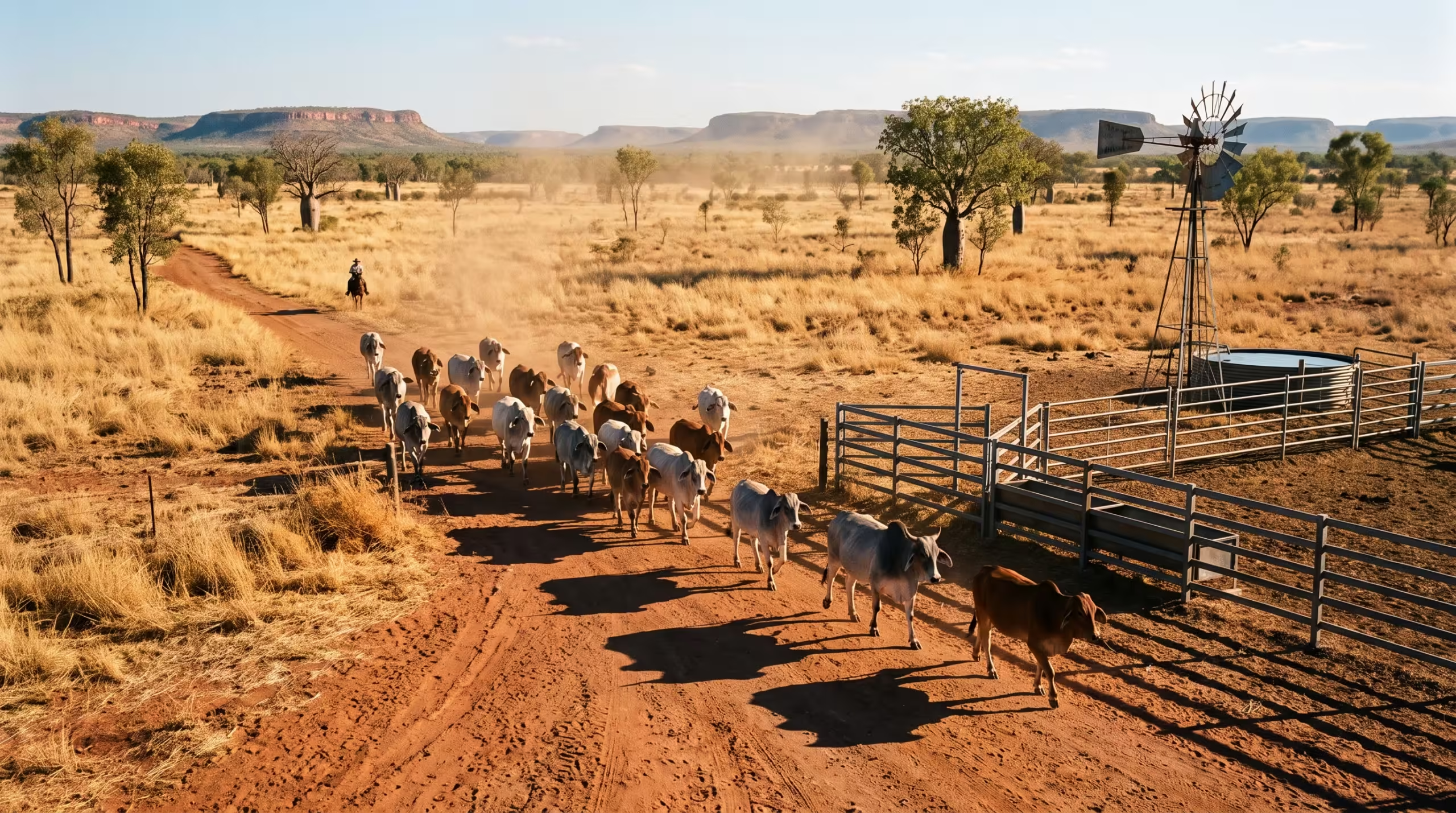

Northern Territory cattle stations run beef cattle on large pastoral leases, mostly across the Top End, the Victoria River District, Katherine and the Barkly. Cattle are the Territory’s largest agricultural industry by value and by land area. Most stations breed Brahman-type cattle and sell live export, backgrounder and feeder animals.
This guide explains how an NT station works. It covers the seasons, the cattle, the markets and the people. It also shows you what to check before you work on a station or buy into one.
How big is the NT cattle industry?
The NT Department of Agriculture and Fisheries (DAF) states the livestock industry is the Territory’s largest agricultural sector by economic value and land area. You find the department’s livestock material at nt.gov.au.
The NT Cattlemen’s Association (NTCA) is the main industry body. DAF reports the NTCA represents over 90% of the region’s pastoral sector. Its 2025 conference drew about 1,000 industry representatives.
For a current herd figure, check the latest Agricultural Commodities release from the ABS before you quote a number.
Some stations run at large scale
Heytesbury Cattle Co. is one example. In 2016, Beef Central reported it managed six stations totalling 2.5 million hectares in the Victoria River District and the East Kimberley. It ran about 160,000 Brahman cattle. Those numbers describe one company. They do not describe the average NT station.
Many NT stations are family businesses. Many are large by southern standards. Expect long distances, few neighbours and a heavy reliance on your own plant and people.
What do the seasons look like?
The Top End has two main seasons. The wet season brings heavy rain, flooded creeks and roads cut for weeks. The dry season brings clear days, falling pasture quality and the main mustering period.
Your work follows the seasons.
- Dry season: mustering, branding, weaning, sorting and trucking cattle to market or to the port.
- Build-up: hot, humid weather before the rain. Cattle carry stress. Water points and feed need attention.
- Wet season: pasture grows fast, access shuts down, and stations plan stock movements around road closures.
Season length varies from year to year and from district to district. Check the Bureau of Meteorology outlook for your district before you plan a muster or a purchase.
Get the latest cattle market updates straight to your inbox. Subscribe free to Cattle Weekly’s weekly newsletter. Subscribe here
Which cattle suit the Territory?
Heat, ticks and poor dry season feed shape the breed choice. Brahman and Brahman cross cattle dominate the north. Many other stations run Brahman crosses with Droughtmaster, Santa Gertrudis or Charbray genetics.
Choose genetics for the country you run. Tropical breeds carry more tolerance to heat and ticks. They tend to grow more slowly on poor feed than British breeds would grow on southern pasture. Our guide to cattle breed selection covers the trade-offs.
FutureBeef publishes northern breeding and nutrition material for producers. Start at futurebeef.com.au.
Where do NT cattle go?
Northern cattle move through a few main channels. Each one has its own specification and price signal.
- Live export. Cattle leave from Darwin by ship, mostly to South-East Asia. Buyers set weight and breed specifications.
- Interstate sales. Cattle move south by road train to Queensland or other states for backgrounding or finishing.
- Local processing and saleyards. Volumes depend on the season and the buyer.
Check the current specifications and prices with a buyer or agent before you commit. Market data from Meat & Livestock Australia (MLA) shows price trends across the national indicators, including the Eastern Young Cattle Indicator (EYCI). Northern cattle often sell on different specifications from EYCI cattle, so do not assume the two move together.
Biosecurity and traceability
Every property needs a Property Identification Code (PIC). Cattle need National Livestock Identification System (NLIS) devices. Northern producers also manage cattle tick rules and disease controls at state and territory borders. Check the requirements with DAF before you move stock.
What is it like to work on a station?
Station jobs include stockperson, grader driver, mechanic, bore runner, cook and manager. Many jobs are seasonal and suit people who like remote work.
Before you take a job, ask about these points.
- Pay, award and super arrangements, in writing
- Accommodation and meals
- Vehicle and phone coverage
- Safety training, first aid and remote medical access
- Wet season access and how long you stay
Read our regional hub, the regional cattle farming guide, to compare the NT with other states. Then read expert tips for beef cattle in Queensland and cattle sales in Western Australia for the neighbouring markets.
Questions to ask a station manager
If you plan a job, a lease or an investment, ask direct questions. Good managers answer them plainly.
- What is the stocking rate in a normal year, and in a dry year?
- Which paddocks lose access in the wet, and for how long?
- What weaning rate and branding rate did the station record over the past five years?
- Which buyers take your cattle, and on what specifications?
- How do you manage ticks, worms and lice on this country?
- What does supplement feeding cost you in the late dry season?
Write down the answers. Compare them across stations. Weaning and branding rates drive the number of calves you sell, so they matter more than the herd size on an advertisement.
What should you check before you buy a station?
Station purchases carry large risk. Use a rural lawyer, an accountant and an independent adviser. Check these items first.
- Carrying capacity. Ask for pasture assessments and past stocking rates. Do not rely on the advertised herd number.
- Water. Count the bores, dams and creeks. Ask which fail in a dry year.
- Infrastructure. Inspect yards, fences, roads, airstrips and houses.
- Lease terms. Pastoral leases carry conditions. Confirm them with the NT Government.
- Herd records. Check NLIS records, branding and muster history.
- Market access. Check the distance to the port or the road train route.
For a broader look at costs, read our guide on the cost to start a cattle farm in Australia.
Frequently asked questions
How many cattle stations are in the Northern Territory?
An exact current count needs an official source. Ask DAF or check the latest ABS data. DAF says the NTCA represents over 90% of the region’s pastoral sector.
What cattle breeds do NT stations run?
Brahman and Brahman cross cattle dominate the north. Droughtmaster, Santa Gertrudis and Charbray genetics also appear.
Where do Northern Territory cattle get sold?
Producers sell through live export from Darwin, interstate sales and local processing. Each market has its own specifications, so check with a buyer or agent first.
When is mustering season in the NT?
Mustering takes place mainly in the dry season, when roads open and cattle gather around water. Dates change with each year’s rain, so watch the local outlook.
Do you need a PIC and NLIS tags to run cattle in the NT?
Yes. Every property holding cattle needs a PIC, and cattle need NLIS devices before they move. Confirm the current rules with DAF.