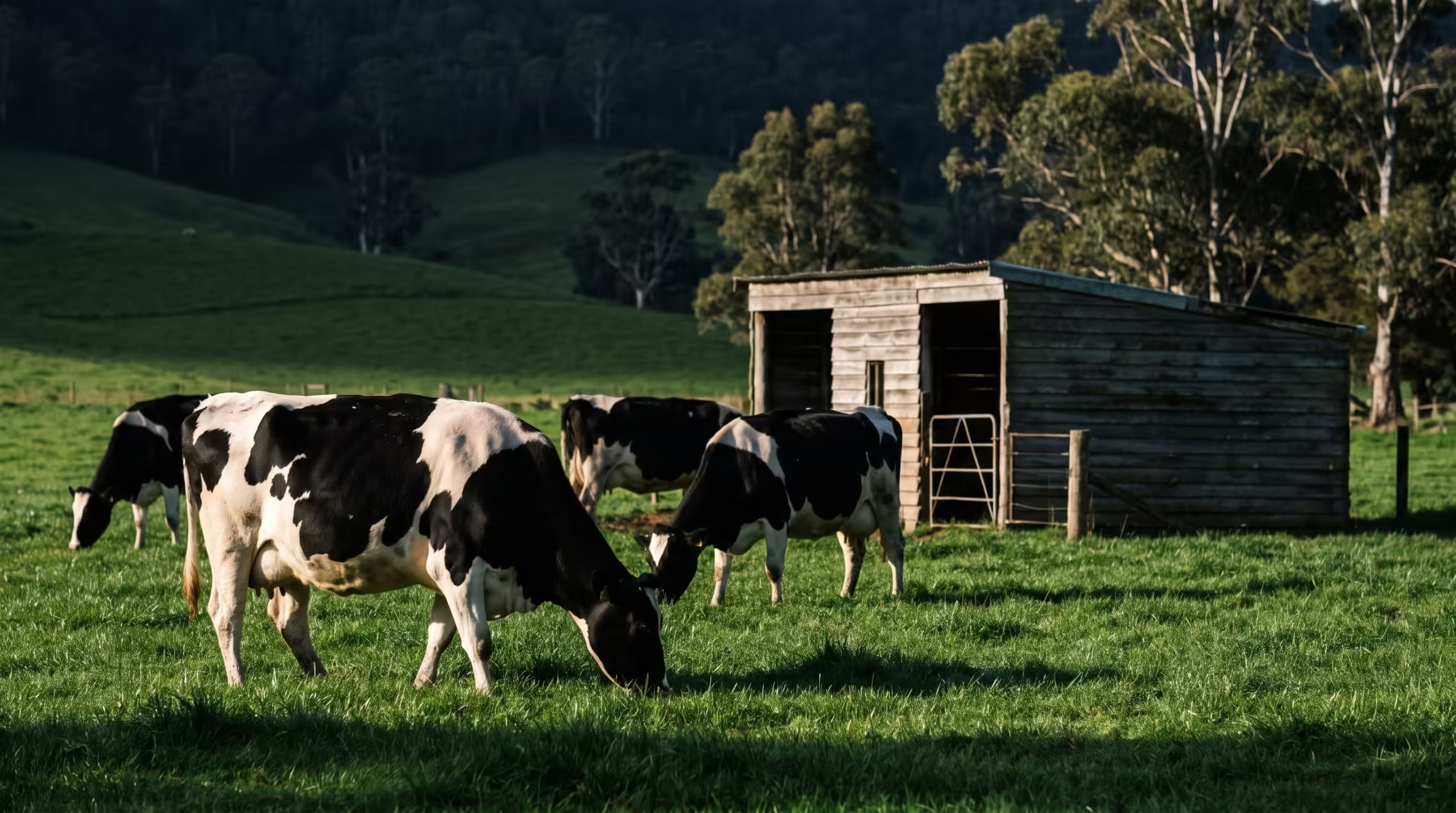

Victoria runs two distinct cattle industries side by side. It holds the nation’s largest dairy herd at 1.3 million head, producing 63.3 per cent of Australia’s milk, while its beef sector hit a record 167,401 tonnes of production in the first quarter of 2026, up 10 per cent on the same quarter the year before.
Victoria’s Two Cattle Industries
Victoria is the engine room of Australian dairy. The state’s roughly 2,476 dairy farm businesses produced 5.27 billion litres of milk in 2024-25, according to figures reported by Agriculture Victoria, and this output represents close to two thirds of the national total. The dairy herd itself sat at 1.3 million head, down 2.5 per cent on the previous year.
Beef has grown alongside dairy rather than in competition with it. Victoria led national beef production growth into 2026, lifting output 4 per cent quarter on quarter to a record 167,401 tonnes, with slaughter numbers rising 2 per cent to 552,900 head and average carcase weights climbing to 317 kilograms, a trend reported by Meat and Livestock Australia.
Where the Herds Sit Across the State
Beef production concentrates in four districts. Gippsland carries the largest share at 27 per cent of the state beef herd, followed by the Western District at 25 per cent, the Ovens-Murray district at 14 per cent and the Goulburn district at 10 per cent. Dairy follows a different map, with Northern Victoria (built around the Murray Dairy region) and South West Victoria and Gippsland running the bulk of the state’s milking herds under the Dairy Farm Monitor Project’s regional reporting.
Several districts, Gippsland in particular, run both dairy and beef at scale, which gives producers there options most single-industry regions do not have, including selling surplus dairy-cross calves into the beef supply chain.
| District | Primary industry | Share of state beef herd |
|---|---|---|
| Gippsland | Beef and dairy combined | 27 per cent |
| Western District | Beef, sheep and mixed grazing | 25 per cent |
| Ovens-Murray | Beef, irrigated pasture | 14 per cent |
| Goulburn | Beef and dairy, mixed cropping | 10 per cent |
| Northern Victoria (Murray Dairy region) | Dairy | Dairy-dominant, beef minor |
| South West Victoria | Dairy and beef | Dairy-dominant, strong beef presence |
The split between dairy-dominant and beef-dominant country tracks rainfall reliability and pasture type almost exactly. South West Victoria and Gippsland carry high, reliable rainfall supporting intensive dairy pasture, while the Western District and the drier parts of the Ovens-Murray lean toward extensive beef grazing on larger holdings.
Biosecurity and Traceability in Victoria
Victorian cattle move under the same National Livestock Identification System obligations as the rest of the country, with Agriculture Victoria handling property identification codes and biosecurity extension work across the state. A written farm biosecurity plan is part of Livestock Production Assurance accreditation, and processors increasingly expect to see one alongside a National Vendor Declaration before they accept consignments. With dairy and beef properties often sitting close together, especially in Gippsland and the Western District, boundary fence maintenance and quarantine of introduced stock matter as much here as anywhere in the country.
Land Values and Entry Costs for Victorian Producers
Dairy country in South West Victoria and Gippsland commands a premium over drier beef grazing land further north and west, reflecting both pasture reliability and the capital infrastructure, dairies, effluent systems and laneways already built into these properties. New entrants to beef in Victoria often find the Western District and Ovens-Murray districts a more accessible entry point than established dairy country, since beef infrastructure requirements are lighter and holdings come to market more regularly. Leasing or agistment arrangements remain a common way to trial a district or carry extra stock through a strong season before committing to a purchase.
Running a Dairy Operation in Victoria
Statewide average dairy farm profitability sat at $1.46 per kilogram of milk solids in 2024-25, below the 19-year average, with Northern Victoria recording a lower result than the year before and South West Victoria and Gippsland also sitting under their long-term regional averages. These figures come from the Dairy Farm Monitor Project, a joint analysis of around 80 Victorian dairy businesses run through Agriculture Victoria.
Transition cow management around calving decides much of a season’s result. Dry cow nutrition, calcium balance ahead of calving and a clean, low-stress calving area all reduce the metabolic disorders which eat into early lactation output. Our dairy cattle farming in Australia guide covers the full calendar of decisions behind a productive dairy season.
Seasonal and split calving systems both run across Victorian dairy country, each suited to a different pasture and labour pattern. A seasonal, spring calving herd concentrates work and lines up peak milk demand with peak pasture growth, while a split or year round calving system spreads cash flow and labour across the year at the cost of a tighter management calendar for two or three calving groups rather than one. Herd genetics lean heavily toward Holstein-Friesian for volume, with Jersey herds common where milk solids and component pricing matter more than litres alone.
Beef Enterprises and Finishing in Victoria
Victorian beef producers benefit from reliable temperate rainfall across much of the state, which supports pasture-based finishing without the feed gaps northern operations plan around. Grain finishing still has a place, particularly for producers targeting a specific carcase specification or feeding through a dry summer, and northern Victorian graziers have reported improved feed availability alongside continued grain fed turn-off supporting the heavier carcase weights now coming through saleyards. Angus and Angus cross cattle dominate the state’s temperate beef country, prized for the marbling and consistency export and domestic buyers pay a premium for, while dairy beef cross calves out of the Gippsland and Western District dairy herds add a growing supply line into the same supply chain.
Get the latest cattle market updates straight to your inbox. Subscribe free to Cattle Weekly’s weekly newsletter. Subscribe here.
Feed and Seasonal Planning
Victoria’s growing season still follows a spring flush and a summer and autumn feed gap, even with generally reliable rainfall compared to the rest of the country. Matching calving and joining to the pasture growth curve, rather than fighting it with supplementary feed, remains the cheapest way to lift output across both beef and dairy herds. Our cattle nutrition and feeding guide sets out the energy and protein planning behind a feed budget suited to southern pasture systems like Victoria’s.
Forage crops and conserved fodder bridge the gap for both sectors, and producers running mixed beef and dairy enterprises often find economies of scale in growing and storing fodder for both herds under one program rather than two separate ones.
Calf Rearing Across Both Systems
Dairy calves separated from their dams early, and beef calves weaned off pasture later, both depend on the same first principle: colostrum within hours of birth and a clean, dry environment through the first weeks of life. Our guide to managing weaning for stronger calves applies to both systems, even though the age and method of separation differ sharply between a dairy and a beef operation.
Where Victorian Cattle Sell
Victoria’s saleyard network shifted after the Victorian Livestock Exchange closed its Pakenham site in mid-2024, ending more than 160 years of metropolitan saleyard trading near Melbourne. Leongatha has become the state’s busiest cattle selling centre, outranked nationally only by Roma in Queensland, with Wodonga and Yea continuing to run regular store and prime sales serving producers across the north east and central districts.
Producers near the Murray River sometimes find it worth comparing prices across the border into southern NSW, since freight distance to a saleyard matters as much as the headline price once trucking cost is factored in.
Processing and Export Access
Victoria carries significant beef and veal processing capacity within the state, which shortens the trucking distance between paddock and plant for many producers compared to running cattle interstate before slaughter. This processing base, combined with the Port of Melbourne’s container and cold storage infrastructure, supports export volumes into key Asian and North American markets without the extra handling a longer domestic transport leg would add. Producers selling direct to a processor rather than through a saleyard should still weigh grid pricing against the saleyard alternative each week, since the gap between the two moves with supply and demand.
Weather and Seasonal Planning
Victoria’s climate runs milder and wetter than most of inland Australia, but it still carries real seasonal risk. A dry autumn delays the pasture break and pushes supplementary feeding costs into a season producers budgeted without them, while a wet spring brings its own challenges around pugging damage and footrot in dairy herds standing on wet laneways. The Bureau of Meteorology’s seasonal outlook, read alongside your own paddock and rain gauge records, gives a useful early signal for adjusting stocking rate or bringing joining and calving dates forward or back by a few weeks.
Frequently Asked Questions
How big is Victoria’s dairy herd compared to the rest of Australia?
Victoria holds the largest dairy herd in the country at 1.3 million head, and its roughly 2,476 dairy farm businesses produce 63.3 per cent of Australia’s milk.
Which Victorian region runs the most beef cattle?
Gippsland carries the largest share of the state beef herd at 27 per cent, followed by the Western District at 25 per cent, Ovens-Murray at 14 per cent and the Goulburn district at 10 per cent.
Where do Victorian producers sell cattle now Pakenham has closed?
Leongatha has become the state’s busiest cattle selling centre since the Victorian Livestock Exchange closed its Pakenham site in 2024, with Wodonga and Yea also running regular sales.
How is Victorian dairy farm profitability tracking?
Statewide average profitability sat at $1.46 per kilogram of milk solids in 2024-25, below the 19-year average, with Northern Victoria, South West Victoria and Gippsland all reporting results under their long-term regional averages.
Does one property run both dairy and beef cattle in Victoria?
Yes. Gippsland in particular supports both industries at scale, and producers there often sell dairy-cross calves into the beef supply chain alongside their milking operation.
More on this topic: Beef Cattle Farming in Australia, the complete guide.