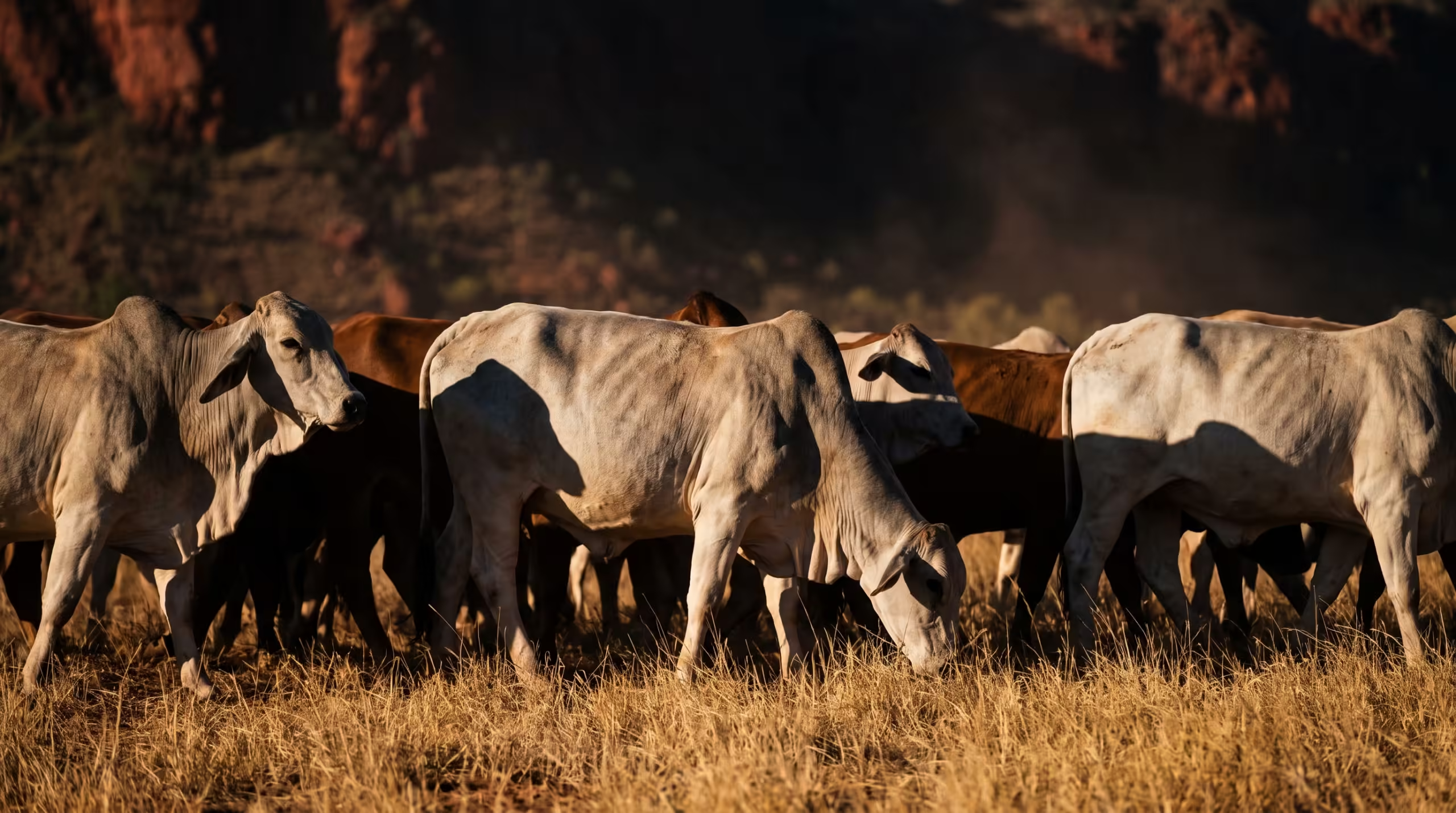

Cattle farming in the Kimberley means running tropical beef herds on large pastoral stations in the far north of Western Australia. Most stations breed Brahman and Brahman cross cattle. Most sell steers and bullocks into the live export trade or south to other WA producers. The wet season and the distance to market shape every decision you make, from when you muster to which port you truck to.
This guide explains how Kimberley stations work. It covers the country, the cattle, the markets and the risks. Use it if you plan to buy, lease or work on a Kimberley property, or if you want to know how this region fits into the national herd.
What makes the Kimberley different from other cattle regions
The Kimberley sits in the tropics. It has two seasons. The wet runs from about November to April. The dry covers the rest of the year. Rain falls in heavy bursts in the wet. Rivers flood, roads close and stations lose access for weeks. The Bureau of Meteorology publishes the seasonal outlook and rainfall records you need to plan around this.
Stations here are large. Many cover hundreds of thousands of hectares. A station near Halls Creek called Moola Bulla covers 660,811 hectares and was offered for sale with around 25,000 head, according to Countryman coverage of a Kimberley property sale. You will not find paddocks this large in Victoria or southern NSW. Fences are long, water points are far apart and a single muster takes weeks.
The soil and feed also differ. Northern pastures grow fast in the wet and lose quality quickly in the dry. Protein and phosphorus fall as the grass cures. Your cattle need supplements through the dry season to hold weight. Our guide to cattle mineral supplements covers the main options.
If you want the national picture first, read our complete guide to cattle farming by state. It places the Kimberley next to Queensland, the Northern Territory and the south.
Breeds suited to Kimberley country
Heat, ticks, flies and poor dry-season feed rule out most British breeds. Bos indicus cattle handle those conditions better. Brahman and Brahman cross cattle dominate the north for this reason.
The National Indigenous Times reported on Kimberley Agricultural Pastoral Company (KAPCO), which runs Brahman, Droughtmaster and Shorthorn cattle near Derby. The company sells steers into live export. Its herd mix shows a common pattern. Producers start with a Brahman base and add Shorthorn or other tropical composites to lift fertility and carcase traits.
Dampier Downs station, listed for sale after more than 60 years, ran between 12,000 and 15,000 head of mixed-age Brahman and crossbred cattle, according to its sale coverage. Herds of this size show the scale you work at.
When you choose bulls, look at these points:
- Fertility. Heifers must conceive and rear a calf through a hard dry season.
- Temperament. Calm cattle muster easier and lose less weight in the yards.
- Tick and fly tolerance. Choose bulls from herds with proven performance in tropical conditions.
- Frame and growth. Your buyer sets the weight range, so match your breeding to it.
Our article on tick fever management in northern Australia explains why breed choice matters for tick-borne disease.
Get the latest cattle market updates straight to your inbox. Subscribe free to Cattle Weekly’s weekly newsletter. Subscribe here
Where Kimberley cattle go
Distance sets the market. Most Kimberley cattle leave the region by road, ship or both. You have three main paths.
Live export
Live export is the backbone of the northern trade. Wyndham and Broome have export facilities. Sale material for Moola Bulla describes good access to both. KAPCO sold steers on the first vessels of the 2026 season, shipped to Malaysia and Indonesia, according to the National Indigenous Times report above.
Live export buyers want cattle in set weight ranges and in good health. Check current specifications with your exporter before you muster. Meat & Livestock Australia publishes market and price data you use to track demand.
Trucking south
Some Kimberley producers truck cattle south to backgrounders and finishers in other parts of WA. Freight is a major cost. Long trips also stress cattle, so you need good yards, rest stops and careful handling.
Local processing
Local processing has had a hard run. The Kimberley Meat Company abattoir near Wyndham closed in 2021, and reports describe a reopening under new ownership. Farm Weekly covered the effect of the closure on pastoralists in its report on the abattoir closure. Ask a local agent for the current status before you build a plan around it.
For a wider look at how WA sells cattle, read our roundup of cattle sales in Western Australia.
The yearly work calendar
The season drives the work. Most stations follow a pattern like this.
- Early dry (after the wet to July). Mustering starts as the roads dry. You wean calves, draft cattle by sex and weight, and select the first lines for sale.
- Late dry (August to October). Feed quality drops. You supplement, truck sale cattle and manage water. Fire risk rises.
- Build-up (October to November). Heat peaks. Cattle stress easily. Move work to early morning and finish before midday.
- Wet (December to April). Access closes. Staff check water, fences and cattle where roads allow. Many stations run a small crew.
Our guide on heat stress in cattle covers the signs to watch for in the build-up.
Mustering and handling
Helicopters do much of the mustering on big Kimberley stations. A pilot and ground crew move mobs to portable or fixed yards. Good yards pay for themselves. Cattle in poor yards lose weight and injure themselves, and injury cuts the price you receive.
Keep your handling calm. Brahman cattle react to noise and pressure. Slow, steady movement saves weight and time. Train new staff before the first muster, not during it.
Compliance and traceability
Every property needs a Property Identification Code, and every animal leaving the property needs an NLIS tag. The NLIS database records each movement. Buyers and exporters check these records, so keep yours accurate. The WA Department of Primary Industries and Regional Development (DPIRD) publishes the state rules for movement, biosecurity and animal welfare.
Welfare rules apply to long journeys and to export. Read our summary of the Australian animal welfare standards for cattle before you plan transport.
Costs and risks to plan for
The Kimberley rewards scale, but it punishes poor planning. Expect these risks.
- Freight. Distance adds cost to every head you sell.
- Market access. Live export depends on trade policy and shipping. One policy change shifts prices across the north.
- Weather. A weak wet season cuts feed. A strong one closes roads.
- Labour. Skilled stockmen and pilots are hard to hire and to keep.
- Infrastructure. Bores, tanks, fences and yards need constant repair.
Get current figures from your accountant, agent and bank before you buy. Prices for stations and cattle change each season. ABARES publishes farm survey results for beef producers across northern Australia, and you use them to benchmark your numbers against other northern producers.
Water and feed management
Water decides where your cattle graze. In the dry, cattle stay within a few kilometres of a water point. Distant country goes unused unless you add a bore, trough or dam. Spread your water points evenly and you spread grazing pressure with them. Cattle then use more of the country and the feed near water lasts longer.
Watch the feed, not the calendar. Walk your paddocks late in the wet and again in the early dry. Check how much cured grass remains, and match your stocking rate to it. The Queensland and NT experience shows the cost of overstocking, because erosion and weeds follow. Our guide to beef cattle farming in Queensland shares lessons from the other large northern state.
Fire is part of the calendar. Many stations burn early in the dry to cut the fuel load and prevent hot late-season fires. Plan your burns with neighbours and with the local authorities.
Breeding and herd management
Most Kimberley herds run on a continuous or seasonal joining system. Seasonal joining ties calving to the feed supply. Cows calve as the pasture grows, and they carry less condition loss into the dry. Continuous joining is simpler on big country, but it spreads calving across the year and makes it harder to wean and sell in tidy lines.
Pregnancy testing and culling pay back fast. Sell empty cows rather than carry them through the dry. Keep your best heifers and join them at a weight your own records support. Record weights, joining dates and weaning dates for every mob. Our article on cattle breeding management covers the basics.
Buying or leasing a Kimberley property
Many Kimberley stations are pastoral leases, not freehold land. A lease gives you the right to graze the land under conditions set by the state. Read the lease terms and the conditions on stocking, fencing and land care. Ask a solicitor with pastoral lease experience to check them. Ask what happens to improvements at the end of the term.
Native title and Indigenous land ownership are part of the Kimberley picture. Indigenous-owned companies such as KAPCO run large stations in the region. If you plan to buy, learn who holds interests in the country and what agreements apply.
Is the Kimberley right for you?
Run your own numbers. Start with the herd you plan to hold, the weights you plan to sell and the market you plan to sell into. Then add freight, labour, supplements and repairs. If the margin looks thin in a normal year, it will not survive a bad one.
Visit before you commit. Talk to neighbouring stations, the local stock agent and DPIRD staff. Ask what a bad wet season did to their results. The answer tells you more than a brochure.
Frequently asked questions
What cattle breeds suit the Kimberley?
Brahman and Brahman cross cattle suit the region best. They handle heat, ticks and poor dry-season feed. Many stations add Shorthorn or Droughtmaster genetics to lift fertility and carcase quality.
Where do Kimberley cattle sell?
Most go to live export through Wyndham or Broome. Others go south by road to backgrounders and finishers in WA. Local processing has been limited since the Wyndham abattoir closed in 2021.
When is the best time to muster in the Kimberley?
Most mustering happens in the dry season, from the end of the wet to the build-up. Roads are open and cattle are easier to find. Avoid heavy work in the build-up, when heat stress is highest.
How big are Kimberley cattle stations?
Many cover hundreds of thousands of hectares. Moola Bulla, near Halls Creek, covers 660,811 hectares, based on its sale listing. Herds run into the tens of thousands of head.
What rules apply to moving cattle in WA?
You need a PIC for your property and NLIS tags on your cattle. Record every movement in the NLIS database. DPIRD publishes the current state rules on biosecurity and animal welfare.
More on this topic: Beef Cattle Farming in Australia, the complete guide.