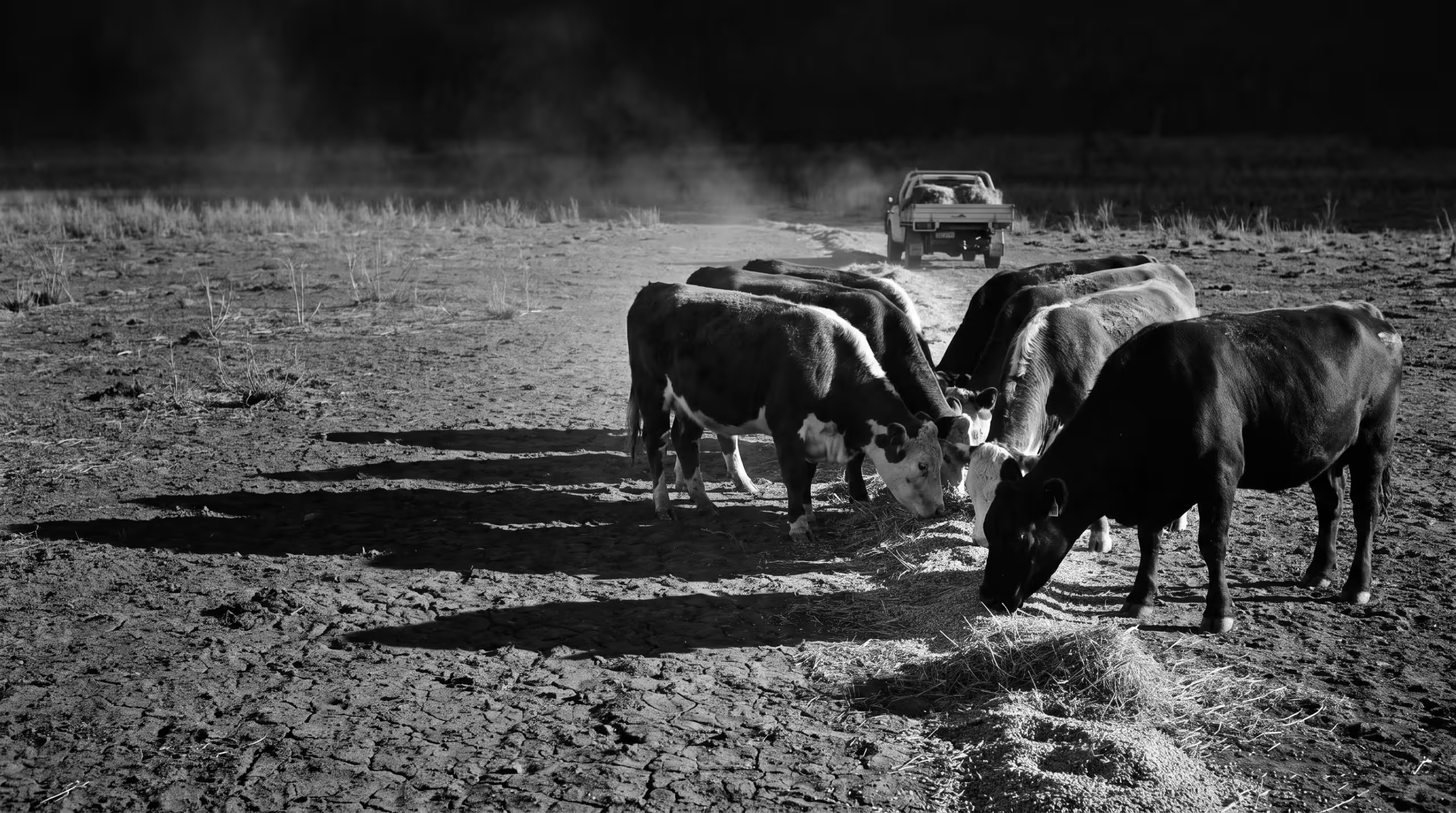

Supplementary feeding keeps cattle alive and productive when pasture runs short in a drought. You choose between three goals: maintain the whole herd, keep the breeding core in condition, or sell down to match the feed you have. Each goal needs a different ration, a different budget and a different timeline. Start planning before the paddocks fail, because feed costs rise and supply tightens once a drought is widely recognised.
This guide covers when to start, what to feed, how to introduce it, how to manage the cost and when to sell. It forms part of our cattle nutrition and feeding guide.
Decide your drought strategy first
Do not buy feed until you set a target. Three strategies cover most situations.
- Maintenance feeding. You feed enough to hold the herd’s weight. This works for short dry spells and where feed is affordable.
- Survival feeding. You feed the minimum to keep cattle alive and accept weight loss. This suits a long drought where cost rules out full maintenance.
- Destocking. You sell stock to match your remaining feed and water. Most producers combine this with one of the other two.
Work out the numbers before you commit. List each mob, its liveweight and its class. Estimate the feed you hold in paddocks, hay and silage. Price the shortfall at current delivered feed costs, then compare this total with the value of the stock you would sell. The state agriculture departments publish drought feeding calculators and guides. The NSW Department of Primary Industries and the Queensland Department of Agriculture and Fisheries both provide material built for this decision.
Know when to start feeding
Start before cattle lose condition, not after. Watch three signals:
- Ground cover. Bare soil and short pasture mean erosion risk and slow recovery after rain. Many advisers recommend keeping a minimum level of ground cover and feeding stock in a containment area when pasture falls below it.
- Body condition. Score breeders regularly. A cow in poor condition at calving rebreeds late or not at all.
- Seasonal outlook. The Bureau of Meteorology publishes rainfall outlooks. Treat them as a guide to risk, not a promise of rain.
Set trigger points on paper. For example, decide the pasture level at which you begin feeding breeders, the level at which you wean early, and the date by which you sell non-breeding stock. Written triggers stop you from waiting for rain through the decision window.
Choose the right feed
The cheapest feed per tonne is not always the cheapest per unit of energy or protein. Compare feeds on delivered cost per megajoule of metabolisable energy and per kilogram of crude protein, and check the feed test result.
Grain
Barley, wheat, sorghum and oats supply dense energy. Grain suits a drought ration because you feed small weights, store it easily and measure it exactly. The risk is acidosis. Build the ration over two to three weeks and feed at a consistent time each day. Split large amounts into more than one feed. Our article on feeding a healthy herd lists the basics of rumen health.
Hay
Hay supplies fibre as well as energy and protein, and it keeps the rumen working. Quality varies widely, so test it. Cheap low-quality hay costs more in the long run if cattle cannot eat enough of it to meet their needs. Freight is a large part of the delivered price, which makes local supply attractive.
Protein meals and urea
Dry standing pasture is low in protein. Cattle on it eat less and digest it slowly, so they lose weight even when feed is present. A protein supplement such as cottonseed meal lifts intake and digestion. Urea, mixed into a lick or a ration, supplies nitrogen for the rumen microbes at low cost. Urea is toxic when mixed unevenly or fed to cattle not adapted to it. Follow the label and take advice before you use it.
Commercial pellets and mixed rations
Pellets and ready-mixed rations cost more per tonne but save labour and reduce the risk of mixing errors. They suit small mobs, and they suit producers without feeding equipment.
Minerals
Drought diets are often short of phosphorus, salt and vitamin A. Check with your adviser which minerals apply to your district and include them in the ration or in a lick.
Get the latest cattle market updates straight to your inbox. Subscribe free to Cattle Weekly’s weekly newsletter. Subscribe here
Feed by class of stock
| Class of stock | Drought priority | Feeding approach |
|---|---|---|
| Lactating cows | Highest | Wean early to cut demand; feed the cow and the calf separately |
| Weaners | High | Feed a protein and energy ration; they have no reserves |
| Pregnant cows | High | Hold condition through late pregnancy |
| Bulls | Medium | Hold condition before joining |
| Steers and non-breeders | Lowest | Sell first, or feed only to meet a market specification |
Early weaning is one of the most effective drought tools. A calf weaned at a suitable age eats a ration and the cow’s demand falls straight away, so she recovers condition on less feed. State department guides list the minimum weight and age for weaning calves, so check them before you act.
Feed safely and evenly
Use a containment area
A sacrifice paddock or containment area protects the rest of your country. Cattle feed in one place, and your pasture and soil recover faster when rain returns. Provide water, shade where possible, a dry feeding surface and good drainage.
Give every animal access
Dominant animals take more than their share. Provide enough trough or trail length for all cattle in the mob to eat at once, or feed on the ground along a trail. Sort the mob by size and class so the smallest animals are not pushed out. Check the mob after the first feed and look for animals not eating.
Watch for health problems
Grain-fed cattle show acidosis through scouring, a stiff gait and going off feed. Cattle on poor feed carry heavier worm and lice burdens, and weakened cattle are more prone to disease. Read our cattle health guide and speak to your vet about a drought health plan. Check water daily, because feed intake falls fast when water fails.
Manage the cost
Feed is the biggest drought expense. Work to these rules:
- Test every batch of hay and grain before you pay for it.
- Price feed on energy and protein supplied, not per tonne.
- Buy in bulk with neighbours to cut freight.
- Feed the animals worth keeping, and sell the rest.
- Keep a record of feed bought, fed and left in store each week.
Check the drought assistance available in your state and federally. Government programs change, so look at current offers from your state agriculture department and the Australian Government before you plan your cash flow. Talk to your bank early if you expect a shortfall. Lenders respond better to a written plan than to a late request.
Work through a feed budget
A feed budget turns a guess into a decision. Follow these steps for each mob.
- Record the number of head and the average liveweight.
- Multiply liveweight by the daily dry matter intake from your state department guide. Multiply by the number of head and the days you expect to feed.
- Subtract the dry matter you hold in pasture, hay and silage.
- Price the shortfall using delivered quotes from at least two suppliers.
- Compare the total cost with the sale value of the mob. If feed costs approach the value of the animals, selling is the stronger option.
Repeat the budget every two to four weeks. Seasons change, feed prices move and your mob changes as you wean and sell. A budget from last month does not describe this month. Save each version so you learn what each drought costs your operation and set better triggers for the next one.
Keep notes on the sale prices you receive as well. Saleyard indicators such as the Eastern Young Cattle Indicator (EYCI) show how destocking pressure moves prices across the market, and your selling decision looks different when prices fall. Selling early in a dry run often returns more per head than selling the same cattle in poor condition later.
Plan the recovery
Rain does not end the drought for your herd. Pasture needs time to grow, and stocking too soon holds it back. Agree a restocking plan in advance, and put the herd back in numbers your feed supports. MLA (mla.com.au) publishes market and supply data. It shows what happens to cattle prices during destocking and rebuilding phases, and ABARES (agriculture.gov.au/abares) publishes the seasonal and commodity outlook you use to time your decisions. For the full picture on running a herd across seasons, see our guide to beef cattle farming in Australia, and read about how forage types affect cattle growth to plan the pasture you rebuild.
Frequently asked questions
When should I start supplementary feeding cattle in a drought?
Start before cattle lose condition. Use set triggers such as a minimum ground cover level, a body condition score for breeders and the seasonal outlook. Written triggers stop you from delaying the decision.
What is the cheapest way to feed cattle in a drought?
Compare feeds on cost per unit of energy and protein, not cost per tonne. Grain often gives the cheapest energy, and a protein supplement lifts the value of dry pasture. Test your feed to confirm what you buy.
How much grain do I feed cattle in a drought?
The amount depends on liveweight, class of stock and the pasture left. Ask your state department of agriculture or a nutritionist for a ration for your mob. Introduce grain over two to three weeks to avoid acidosis.
Should I wean calves early in a drought?
Often yes. Early weaning cuts the cow’s demand for energy and protein, so she keeps condition on less feed. Check the minimum age and weight for weaning with your state department or vet, and feed weaners a good ration.
Is urea safe for cattle?
Urea is safe when you follow the label, mix it evenly and adapt cattle slowly. It is toxic when cattle eat a large amount at once. Take advice from your nutritionist or vet before you use it.
See also: What Do Cattle Eat? A Guide for Australian Farmers.