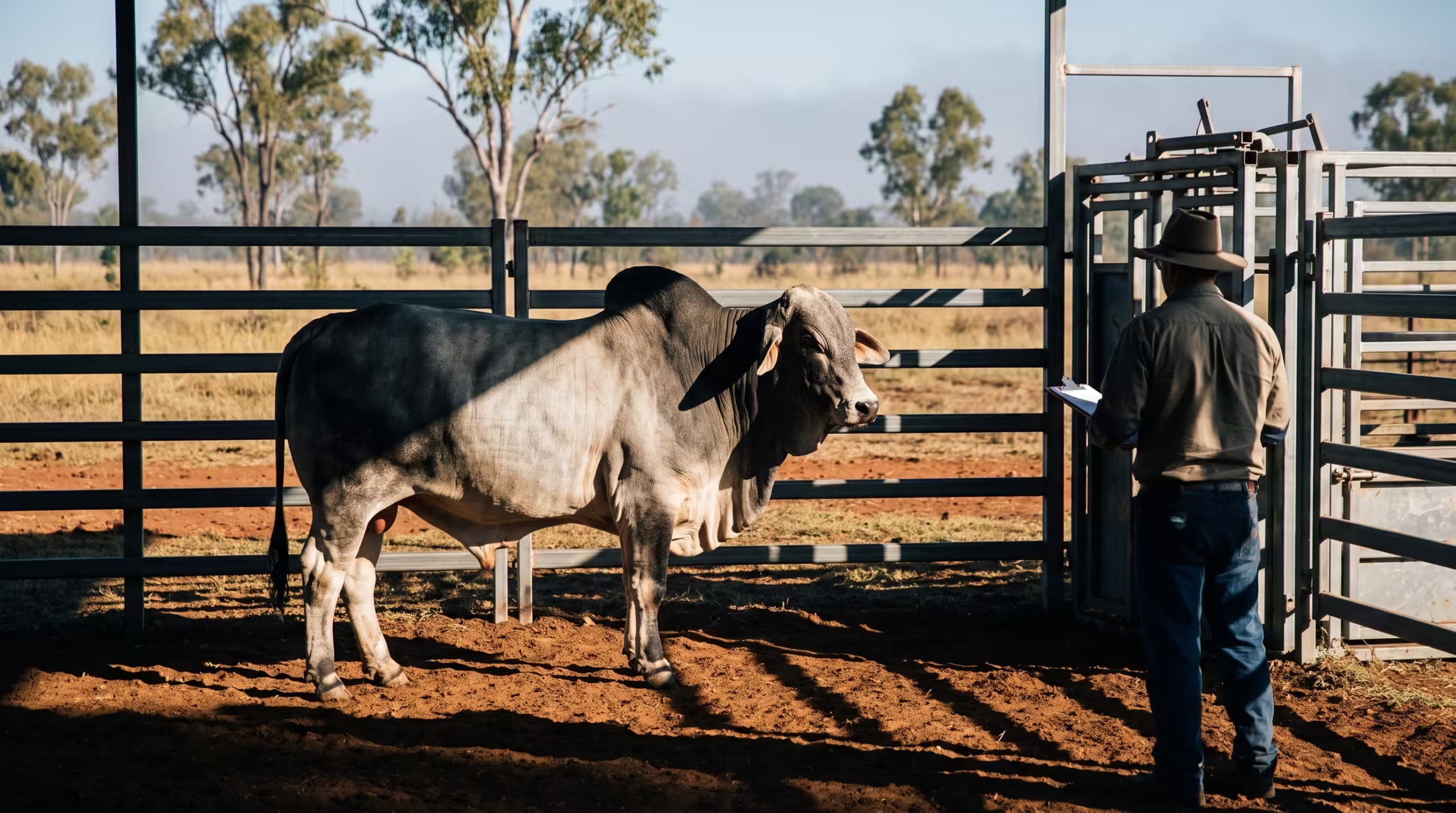

Bull fertility testing in Australia means a Veterinary Bull Breeding Soundness Evaluation, or VBBSE. An accredited vet checks the bull’s body, measures his scrotum and tests his semen. The standard comes from Australian Cattle Veterinarians (ACV) and runs under the BULLCHECK name. Test each bull six to eight weeks before joining. A bull who fails a test costs you a few hundred dollars to find. A bull who fails in the paddock costs you a season of calves.
This guide explains each part of the test, the pass marks, when to book your vet and how to read the report. It also covers what the test does not tell you.
Why Test Bulls Before Joining
One bull covers many cows. If he is infertile, every cow he serves misses a calf or calves late. Late calves wean lighter. Cows who calve late often fall behind for the next joining too. The loss runs on for more than one year.
You rarely see a problem from the yard. A bull with a sound frame and good condition still carries poor semen. A bull with good semen still has a sore foot or a damaged penis. Only a full check finds these faults before the bulls go out.
Run the numbers on your own place. Here is an example with made up figures. A bull runs with 40 cows. He fails in the paddock and half of those cows miss. Each missed calf costs you a weaner worth $1,000. You lose $20,000 from one bull. Put your own herd size and weaner value into the same sum. Then compare it against your vet’s fee per bull.
What a Bull Fertility Test Checks
FutureBeef sets out the parts of a VBBSE. Your vet records each part on a standard certificate.
1. Physical examination
The vet checks the bull’s structure, legs, feet, eyes and body condition. A bull needs to walk the paddock and mount cows for weeks. Sore feet, weak joints or a bad back stop him working. The vet also feels the internal sex glands and checks the penis and sheath for injury or disease.
2. Scrotal circumference
The vet measures the widest point of the scrotum with a tape. Larger testes produce more semen. Scrotal size also links to earlier puberty in the bull’s daughters. FutureBeef notes a recommended minimum of 32cm for a two year old tropically adapted bull, with 34 to 36cm typical. Minimums differ by breed and age, so ask your vet which table they use.
3. Semen motility
The vet collects a semen sample in the crush and looks at it under a microscope on the spot. Motility is the share of sperm swimming forward. The ACV treats 30% progressively motile sperm as a pass.
4. Sperm morphology
A lab checks the shape of the sperm. Faulty heads or tails stop sperm from fertilising an egg. Under the ACV standard, a bull needs more than 70% normal sperm for single sire joining or AI. For multiple sire joining, the threshold sits at more than 50%. Morphology is the part most bulls fail, and the part you cannot judge in the yard.
5. Serving ability
Some vets also watch the bull serve a cow or heifer in the yard. This shows whether he mounts and serves correctly. Ask your vet whether they include this test. Young bulls and bulls with past injuries benefit most from it.
Get the latest cattle market updates straight to your inbox. Subscribe free to the Cattle Weekly newsletter. Subscribe here.
Pass Marks at a Glance
| Test | ACV pass mark | Notes |
|---|---|---|
| Physical examination | No faults likely to stop him working | Covers legs, feet, eyes, penis and sex glands |
| Scrotal circumference | Breed and age minimum | FutureBeef cites 32cm minimum for a two year old tropically adapted bull |
| Semen motility | 30% progressively motile | Assessed crush side |
| Sperm morphology, single sire or AI | More than 70% normal sperm | Lab test |
| Sperm morphology, multiple sire | More than 50% normal sperm | Lab test |
Check the current standard with your vet before you act on these figures. The ACV updates its guidelines over time.
When to Book the Test
Book your vet six to eight weeks before the bulls go out. Bulls take about two months to produce new sperm. A short illness or fever damages sperm, and a bull needs time to recover. Testing early gives you time to retest a borderline bull or buy a replacement.
Test these bulls every year:
- Every bull before his first joining.
- Every older bull before each joining.
- Any bull who had an injury, illness or long trip since his last test.
- Any bull you buy without a current VBBSE certificate.
Plan the test around your calving date. Our cattle calving guide shows how to set joining dates to match feed supply.
How to Read the VBBSE Report
Each part of the certificate shows one of three results. The bull passed, failed or the vet left the part out. Read every line, not only the summary.
- Passed. The bull met the standard for this part on the day.
- Failed. The bull did not meet the standard. Ask your vet whether a retest makes sense.
- Not tested. The vet left this part out. A certificate with gaps tells you less than it seems.
A bull who fails semen tests after an illness often passes a retest a couple of months later. A bull with a structural fault or a damaged penis rarely improves. Talk the results through with your vet before you cull.
What the Test Does Not Tell You
A VBBSE is a snapshot. FutureBeef stresses this point. The test reports the bull’s state on the day. It does not promise how many calves he sires.
- Injury after testing. A bull hurt in a fight a week later fails in the paddock with a clean certificate.
- Libido. Semen tests do not measure his drive to serve.
- Disease. The test does not screen for every venereal disease. Ask your vet about vibriosis and trichomoniasis.
- Social order. In a multiple sire mob, a dominant bull blocks younger bulls. A fertile bull who never gets a chance sires nothing.
Watch your bulls in the first weeks of joining. Look for cows coming back on heat. Check bulls for lameness and injury at every muster.
Vaccinate your bulls
Disease cuts fertility as much as poor semen. Bulls need vibriosis and pestivirus protection in most herds. Follow the timings in our cattle vaccination schedule, and ask your vet which vaccines suit your district.
Buying Bulls With a Fertility Test
Ask for a current VBBSE certificate before you bid. Many seed stock sales list BULLCHECK results in the catalogue. Check the test date. A certificate from months ago tells you little about the bull on sale day.
Look at the whole certificate. A bull sold as tested might only have had a crush side semen test. Morphology needs a lab, and it catches the most failures. Ask the vendor for each part of the result.
Pair fertility with genetics. Meat & Livestock Australia (MLA) funds research and tools on bull selection and breeding values. Check scrotal size EBVs and days to calving EBVs where your breed reports them. Our breeding management tips show how fertility fits a wider breeding plan.
Track Fertility Across the Herd
Bull testing works best alongside herd records. Pregnancy test your cows and heifers after joining. Record the result against each bull mob. A mob with a low pregnancy rate points to a bull problem, a feed problem or a disease problem.
ABARES publishes beef farm survey data each year. Use it to compare your branding and weaning rates with farms in your region. If your rates sit below your region, start with the bulls and the cows’ body condition.
Look After Bulls Between Joinings
A bull’s fertility on test day depends on how you run him for the rest of the year. Small habits keep more bulls passing.
Hold body condition
Bulls lose weight during joining. A bull who goes in thin comes out poor and takes months to recover. Aim for moderate condition before joining. Avoid overfat bulls too, since fat in the scrotum holds heat and harms sperm.
Manage heat
Heat stress damages sperm for weeks after the hot spell ends. Give bulls shade and good water through summer. If a heatwave hits close to joining, talk to your vet about a retest.
Cut fighting
Bulls fight when you mix them. Mix bull mobs well before joining so they sort out their order early. Keep young and old bulls apart where you have the paddocks. Check feet, legs and sheaths after every mixing.
Bull Fertility Checklist
- Book an ACV accredited vet six to eight weeks before joining.
- Ask for the full VBBSE, including morphology.
- Retest any bull with an illness, injury or long trip since his last test.
- Keep every certificate with the bull’s records.
- Vaccinate bulls for vibriosis and pestivirus on your vet’s advice.
- Watch bulls work in the first weeks of joining.
- Pregnancy test cows and compare results by bull mob.
Bull fertility is one part of a healthy herd. For the full picture, read our cattle health guide.
Frequently Asked Questions
How much does a bull fertility test cost in Australia?
Prices vary between vet practices and depend on how many bulls you test and the travel involved. Ask your vet for a quote per head, including the lab fee for morphology.
What is a BULLCHECK?
BULLCHECK is the Australian Cattle Veterinarians scheme for bull breeding soundness testing. Accredited vets follow the ACV standard and record the results on a standard certificate.
How often should you test a bull?
Test every bull before each joining. Retest any bull after an illness, injury or long trip, since these damage sperm.
What is a good scrotal circumference for a bull?
The minimum depends on breed and age. FutureBeef cites a recommended minimum of 32cm for a two year old tropically adapted bull, with 34 to 36cm typical.
Will a bull who fails a semen test pass later?
Often, yes, if illness or heat stress caused the result. Bulls take about two months to replace their sperm. Ask your vet to retest after this period.