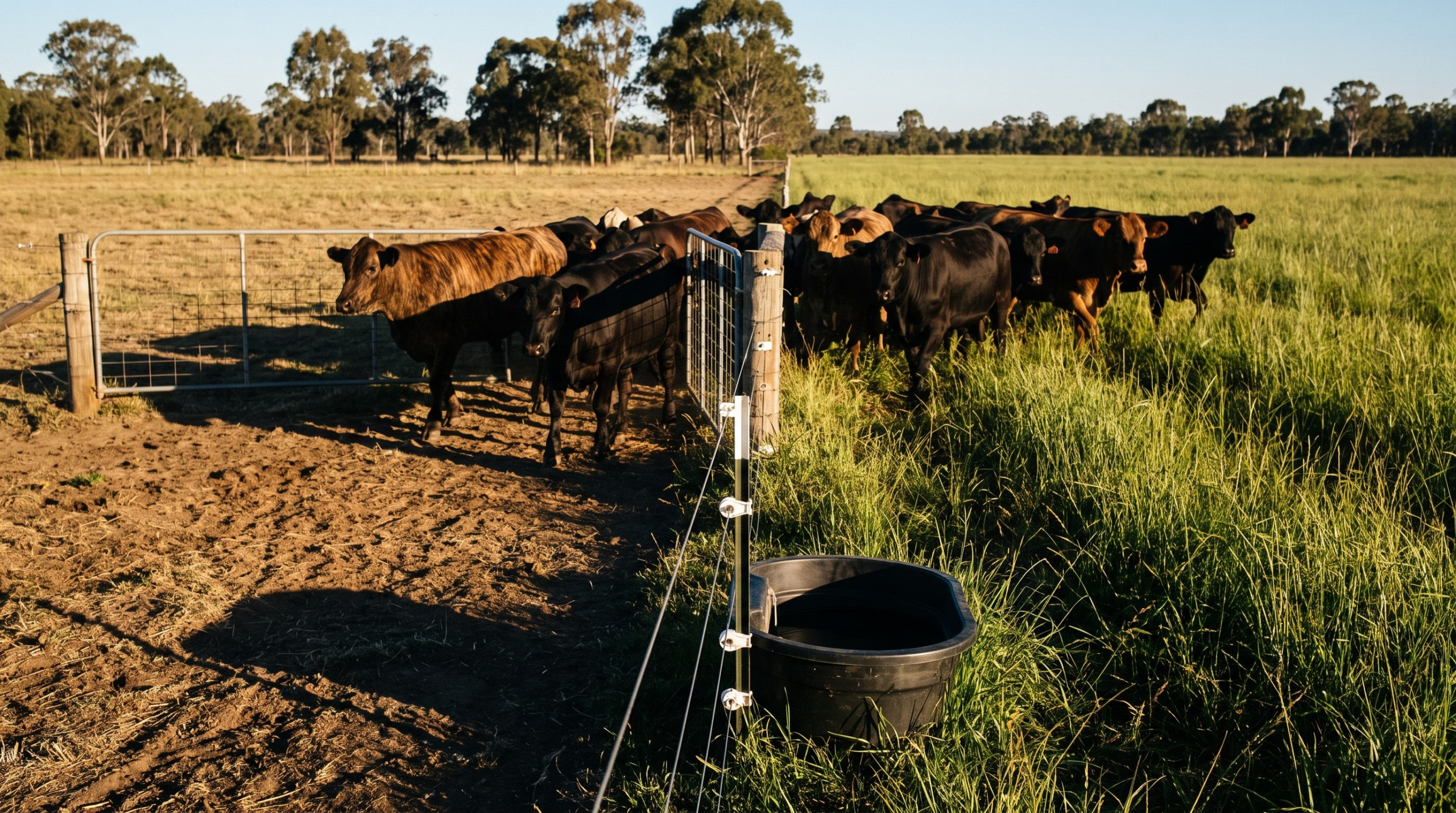

Rotational grazing moves your cattle through a set of paddocks so each one gets a rest. Pasture regrows while stock graze somewhere else. In Australia, the trials say the rest period helps pasture condition. They also say stocking rate matters more than how many paddocks you run. This guide covers what the research found and how to set up a system on your place.
You will find big claims about rotational and cell grazing. Some say it doubles carrying capacity. The Australian trial data is more modest. Read what the trials found before you spend money on fencing and water.
What Rotational Grazing Is
Continuous grazing leaves one mob in one paddock for most of the year. Rotational grazing splits the country into more paddocks. You move the mob from one to the next. Each paddock gets a rest before stock come back.
The Main Systems
- Continuous grazing. One mob, one paddock, long periods. Low labour and low infrastructure cost.
- Simple rotation. Three to six paddocks per mob. Moves every few weeks.
- Wet season spelling. Common in the north. You rest a paddock for the early part of the wet season, then graze it later.
- Cell grazing. Many small paddocks, often 20 or more per mob. Short graze periods and long rests. High stock density.
All of these sit on a range. The more paddocks you run, the more fencing, water and labour you need.
Why the Rest Period Matters
A grass plant needs leaf to grow. When cattle graze the same plant again and again, the plant runs down its reserves. The best plants go first, because stock prefer them. Over time the paddock fills with plants cattle do not want.
A rest lets the good grasses rebuild leaf and root. Our guide on how forage type affects cattle growth explains why the mix of plants in a paddock drives weight gain.
What Australian Research Found
Most rotational grazing research in Australia comes from the north. The results are consistent. Rest helps. Stocking rate matters most. Cell grazing does not lift carrying capacity on its own.
Get the latest cattle market updates in your inbox. Subscribe free to the Cattle Weekly newsletter. Subscribe here.
The MLA Northern Study
MLA funded a four-year study across nine Queensland properties. It compared cell, rotational and continuous grazing on the same places. The MLA final report found the grazing system had no consistent effect on soil surface, pastures or carrying capacity. Stocking rate came through as the bigger driver.
A paper from the same work in The Rangeland Journal found mean grazing capacity was similar across the three methods over four years. Some sites showed differences. Those differences did not follow a pattern.
Northern Territory Trials
The NT Department of Industry has run grazing trials for years. A 2016 summary of cell grazing trials across the NT found rotational paddocks carried the same number of cattle as well-watered continuous paddocks. The main gain from rotation was the chance to spell country in the wet season.
A later trial at Newcastle Waters gave a clear warning. Do not expect better pasture to lift carrying capacity for at least ten years. Cell systems also cost more to run.
The Wambiana Trial
The Wambiana trial near Charters Towers is a long-running MLA and Queensland Department of Primary Industries project. A FutureBeef summary draws three lessons from it:
- Spell early in the wet season, when plants regrow.
- Spelling will not save a paddock if your stocking rate stays too high.
- Country in poor condition needs a full wet season spell, often for several years in a row.
Is Rotational Grazing Worth It for You?
The research points to a simple test. Fix stocking rate first. Add rest second. Add paddocks only where the rest pays for the cost.
Signs Rotation Will Help
- Your best grasses are thinning out.
- Cattle camp on the same areas and ignore others.
- You have bare patches near water.
- You already run the right stocking rate for your country.
Signs to Fix Something Else First
- You carry more cattle than your long-term carrying capacity.
- Water points sit more than a few kilometres apart.
- Your fences will not hold a mob in a smaller paddock.
- You have no spare labour for frequent moves.
Not sure what your country carries? Our guide on how much land you need to farm cattle in Australia covers stocking rates by region.
How to Set Up a Rotational Grazing System
Start small. Most producers do best with a few extra paddocks and a clear plan. Build from there.
Step 1: Work Out Your Stocking Rate
Measure the feed you have. Count the stock you carry. Match the two. The MLA wet season hub covers feed budgeting and spelling. A rotation will not fix a paddock carrying too many head.
Step 2: Plan Water First
Every paddock needs water. The NT trials compared rotation against continuous paddocks with water inside three kilometres. Good water spread did as much as the rotation. Map your water points before you map fences. Water is often the bigger cost.
Step 3: Split Paddocks Where the Country Changes
Fence along land types where you are able. Cattle graze river flats, ridges and open plains in different ways. Splitting by land type lets you rest the country under the most pressure.
Step 4: Set Your Rest Periods
Rest length depends on the season and your pasture. In the north, the key spell is early in the wet season. In southern country, rest length follows growth rate. Pasture grows fast in spring and slowly in winter. Move stock when plants reach the target height, not by the calendar.
Step 5: Keep Records
Write down move dates, stock numbers and paddock condition. Take a photo from the same spot each season. After two or three years, you will see what is working.
Step 6: Get Training
MLA runs the Grazing Land Management EDGE course and Grazing Fundamentals EDGE. Both are a solid start. FutureBeef also lists local courses and field days for northern producers.
Rotational Grazing in Southern Australia
Most of the trial work above comes from northern rangelands. Southern country is different. Rainfall is more reliable in many districts. Pastures are often improved, with ryegrass, phalaris, sub clover or lucerne. Growth rates swing hard between seasons.
In this country, rotation is often about feed allocation. You give each mob a set amount of pasture and move them when it is gone. Perennial grasses such as phalaris need a rest after grazing to persist. Annual pastures need enough leaf left in autumn to set up for winter.
The same rules apply as in the north. Match stock numbers to feed first. Then use rest to protect your best species. Our guide to beef cattle farming in New South Wales covers pasture types common in the south east.
Common Mistakes to Avoid
- Building paddocks before fixing stock numbers. More fences do not fix a paddock carrying too many head.
- Moving by the calendar. Move by pasture height and condition. A set date ignores the season.
- Short rests in slow growth. In winter or a dry spell, plants need a longer rest to recover.
- Ignoring water quality. New troughs on a poor bore will hold back weight gain.
- No records. Without notes and photos, you will not know if the system works.
- Going too big too fast. MLA advice is to roll out spelling over several years. Learn on a few paddocks first.
Rotational Grazing in Drought
Drought changes the plan. In a dry year, FutureBeef advice is to skip a spell if it forces other paddocks to be overgrazed. The goal is to protect ground cover across the whole place.
Destock early. Hold your best paddocks in reserve. If you need to feed, our guide on supplementary feeding in drought covers the options. For drought trends and farm income data, ABARES publishes regular reports on beef farm performance.
Costs to Plan For
Rotation adds cost. The bigger the system, the bigger the bill. Plan for each of these:
- New fencing, often electric for internal splits.
- Extra troughs, tanks and pipe.
- Labour for moves and checks.
- Time to learn and adjust the system.
Price each item for your own place. Then weigh the cost against the pasture gain you expect. The Newcastle Waters result is a reminder. A big system takes years to pay back.
For more on running beef cattle in this country, see our complete guide to beef cattle farming in Australia.
Frequently Asked Questions
Does rotational grazing increase carrying capacity?
Not on its own. MLA research across nine Queensland properties found no consistent lift in carrying capacity from cell or rotational grazing. Stocking rate had the bigger effect. Rest periods help pasture condition over time.
What is the difference between rotational and cell grazing?
Rotational grazing uses a handful of paddocks per mob with moves every few weeks. Cell grazing uses many small paddocks, high stock density and short graze periods. Cell grazing needs more fencing, water and labour.
How long should a paddock rest?
It depends on season and pasture type. In northern Australia, the key rest is early in the wet season while plants regrow. In southern country, move stock when plants reach target height. Fast spring growth needs shorter rests than winter.
How many paddocks do you need for rotational grazing?
A simple rotation works with three to six paddocks per mob. Start there. Add more only where the extra rest pays for the fencing and water.
Is rotational grazing worth it in drought?
Rotation helps you hold feed in reserve. In a dry year, FutureBeef advice is to skip a spell if it would overgraze other paddocks. Protect ground cover across the whole place and destock early.