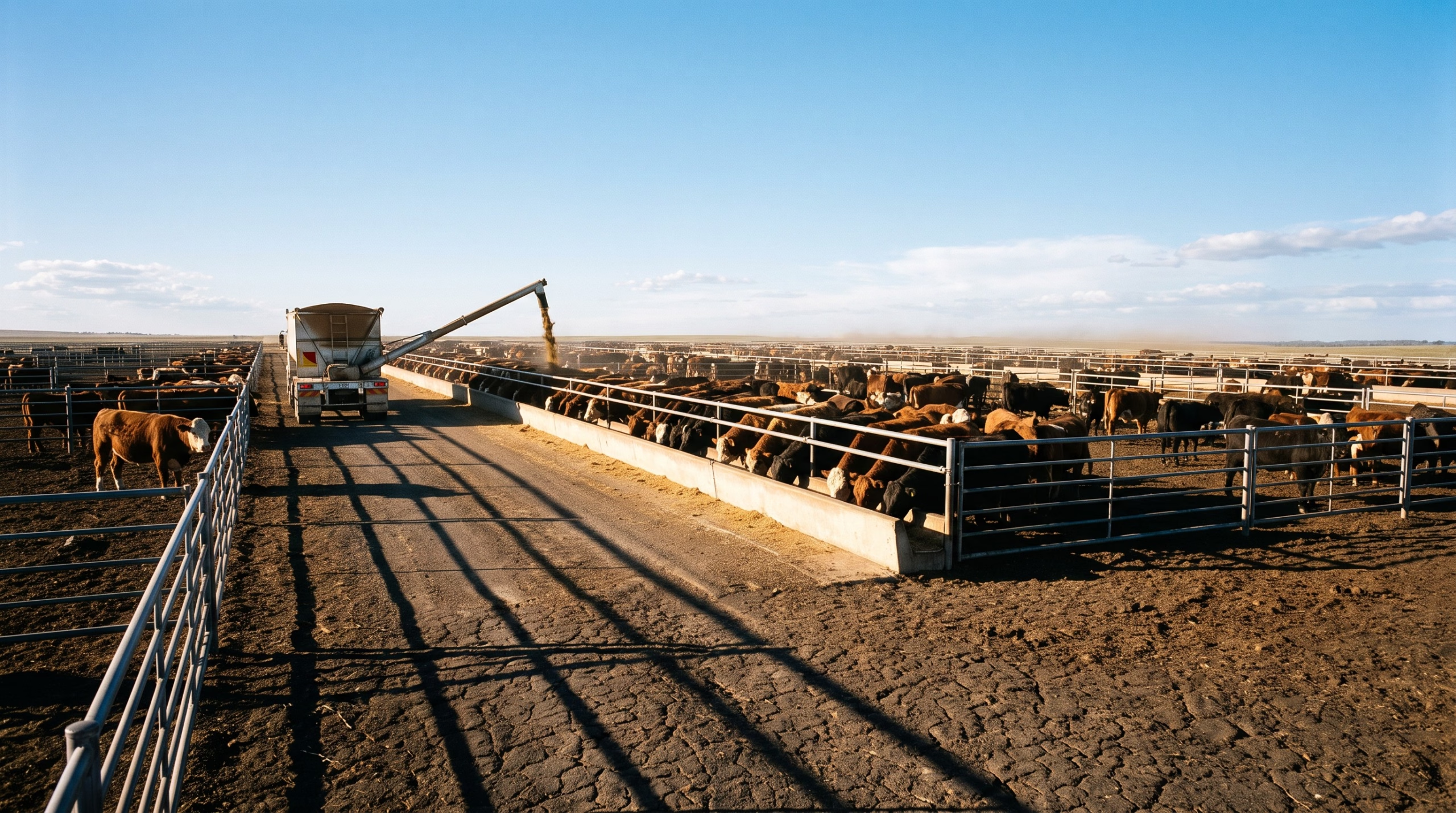

Feedlot operations in Australia take cattle off pasture and feed them a grain based ration in pens until they reach a target weight and fat cover. Feedlots buy feeder cattle from producers, or custom feed cattle the producer still owns. The finished cattle go to processors for the domestic and export trade. Programs run from about two months for the domestic trade to close to a year for Wagyu.
This guide explains how a feedlot runs, from induction to turn off. It covers what feedlots want from your cattle and how you sell to one. It sits under our guide to beef cattle farming in Australia.
How Big Is the Australian Feedlot Sector?
The sector has never been bigger. The quarterly survey by the Australian Lot Feeders’ Association (ALFA) and MLA tracks capacity and cattle numbers. Meat & Livestock Australia reports these figures for the June 2026 quarter:
- Capacity: a record 1,794,806 head.
- Cattle on feed: 1,660,513 head.
- Use of capacity: 93% nationally.
- Turn off: a record 1.05 million head for the quarter, up 17.5% on the June 2025 quarter.
The same survey showed modest growth in South Australia. Victoria and Western Australia had fewer cattle on feed than the quarter before. Queensland and New South Wales hold most of the national capacity, close to the grain belt and the big export plants.
For you, a full feedlot sector means strong demand for feeder cattle. It also means less spare pen space for custom feeding.
Why Feedlots Matter to Pasture Producers
Most feedlot cattle start life on a grass based breeding property. The feedlot buys your steers or heifers at feeder weight. It then adds weight and fat faster and more evenly than pasture allows in most seasons.
This gives you three options:
- Sell feeders straight to a feedlot on a price grid.
- Sell feeders through the saleyard or an online sale where feedlot buyers bid.
- Keep ownership and pay a feedlot to custom feed your cattle.
Feedlots also take pressure off your country in a dry year. When feed runs short, a feedlot gives you a market for lighter cattle. Our guide to grass fed vs grain fed cattle compares the two systems.
Get the latest cattle market updates straight to your inbox. Subscribe free to Cattle Weekly’s weekly newsletter. Subscribe here
How a Feedlot Runs, Step by Step
1. Buying and Arrival
Feedlot buyers source cattle to a set specification. Each feedlot lists the weight, age, sex, breed and teeth it wants for each program. Cattle arrive by truck with a National Vendor Declaration. Staff scan each NLIS device as the cattle come off the truck. This links the animal to its property history in the NLIS database.
2. Induction
Induction prepares each animal for life in the pen. Staff run cattle through the yards in the first days after arrival. A typical induction includes:
- Weighing each animal.
- Vaccination, often for respiratory disease and clostridial disease.
- Drenching for internal and external parasites.
- A health check and sorting into pens by weight and type.
Cattle arrive stressed from trucking and mixing. Good yard design and quiet handling cut the stress. Our cattle yards design guide covers the layout feedlots use.
3. Starter Rations
Cattle from pasture need time to adjust to grain. Feedlots start new cattle on a high roughage ration. They then step up the grain share over two to three weeks. Moving too fast causes acidosis, which cuts intake and growth and kills cattle in bad cases.
4. The Finisher Ration
The finisher ration carries the cattle to the end of the program. A feedlot nutritionist sets the ration for each pen. The ration mixes grain, such as barley, wheat or sorghum, with roughage such as hay or silage. Protein meals, minerals and vitamins round out the mix. Feedlots mix the ration fresh and deliver it to the feed bunks each day.
Bunk management decides how much feed each pen gets. Staff read the bunks each morning. An empty bunk means the pen needs more feed. Leftover feed means the pen needs less. Our guide to grain finishing cattle covers rations in more detail.
5. Health Checks in the Pen
Pen riders walk or ride through every pen each day. They look for cattle off feed, coughing, lame or isolated from the mob. Sick cattle move to a hospital pen for treatment.
Bovine respiratory disease is the main health cost in Australian feedlots. Most cases show up in the first weeks after arrival. Read our guide to bovine respiratory disease for prevention steps you take before cattle leave your place.
6. Turn Off
Cattle leave the feedlot once they reach the target weight and fat cover for their market. The feedlot books them into a processor. The processor grades each carcase and pays the owner on a grid.
Feedlot Programs and Markets
Feedlots run several programs at once. Each program targets a market.
- Domestic programs. Short fed cattle for Australian supermarkets and butchers. These cattle spend the fewest days on feed.
- Export programs. Cattle fed longer for buyers in Japan, Korea, China and other markets.
- Long fed and Wagyu programs. Cattle fed for marbling. A Beef Central report describes Wagyu programs of around 400 days, and many F1 programs now feed for close to a year.
Export demand drives much of the feedlot trade. Follow the beef export outlook in the quarterly forecasts from ABARES. Our Australian cattle market hub tracks prices and exports each week.
Rules Feedlots Work Under
National Feedlot Accreditation Scheme
The National Feedlot Accreditation Scheme (NFAS) sets the quality assurance standard for Australian feedlots. ALFA started the scheme. The Feedlot Industry Accreditation Committee manages it, and AUS-MEAT runs it. Each accredited feedlot passes regular third party audits of its procedures, records and facilities. The scheme covers food safety, animal welfare, the environment and traceability.
NFAS accreditation stands apart from ALFA membership. It does not replace any state or local government approval.
State Licences
State governments licence feedlots above a set size. The rules cover location, manure, effluent and distance from neighbours. In Queensland, licences measure feedlot size in Standard Cattle Units. Check with your state agriculture or environment department before you build pens of any size.
Export Programs
Some markets set their own rules. A feedlot must hold accreditation under the European Union Cattle Accreditation Scheme to supply beef for the EU.
How to Sell Cattle to a Feedlot
Feedlots pay best for cattle which settle fast and stay healthy. Use this checklist:
- Get the specs. Ask each feedlot near you for its feeder grid. Match your joining and weaning to the weights it wants.
- Background the cattle. Wean the calves well before sale. Teach them to eat from a trough and drink from a trough.
- Vaccinate before sale. Many feedlots pay more for cattle vaccinated against respiratory disease before they leave the farm. Ask your buyer what program they want.
- Keep your records clean. Tag every animal with an NLIS device and transfer it on the database. Fill in your NVD in full. Integrity Systems Company runs the NLIS and LPA programs.
- Handle the cattle quietly. Quiet cattle eat sooner and get sick less. Feedlot buyers remember which vendors send quiet cattle.
- Ask for feedback. Request weight gain and carcase data after the cattle turn off. Use it to choose bulls and change your program.
Custom Feeding: Keeping Ownership
Custom feeding lets you keep your cattle through the feedlot. You pay a daily yardage charge per head plus the cost of feed. Some feedlots add charges for induction, treatment and freight. You take the price risk at sale and the reward if your cattle grade well.
Ask for a written agreement before the cattle leave your place. Cover these points:
- The daily rate per head and how feed costs pass through.
- Who pays for treatment and who carries the cost of deaths.
- How often you get weight and cost reports.
- Who books the cattle to a processor, and when.
Pen space runs tight while use of capacity sits above 90%. Book early if you plan to custom feed.
What Drives Feedlot Margins
A feedlot makes money on the gap between what it pays for feeders plus feed, and what the processor pays for the finished carcase. Four numbers move the margin:
- Feeder price. The price per kilogram the feedlot pays for your cattle. Track the feeder steer indicator in MLA market reports.
- Grain price. Feed is the biggest running cost. A poor grain harvest lifts the cost of every kilogram of gain.
- Feed conversion. How many kilograms of feed each animal eats to put on one kilogram of weight. Healthy, quiet cattle convert better.
- Finished cattle price. The grid price at the processor, set by export demand and the dollar.
Watch these four numbers and you will read the feedlot market well. When grain is cheap and export demand is strong, feedlots bid harder for your feeders. When grain prices climb, feeder prices often soften. Time your sales with this in mind. Talk to two or three feedlot buyers each season to see where their grids sit.
Feedlot Operations FAQ
How long do cattle stay in an Australian feedlot?
Programs run from about two months for domestic cattle to close to a year for Wagyu. Export programs for Japan and Korea sit in between. The target market sets the days on feed.
How many feedlots are there in Australia?
ALFA and MLA report on feedlot capacity each quarter rather than a simple count. National capacity reached a record 1,794,806 head in the June 2026 quarter. Queensland and New South Wales hold most of the pens.
What do feedlot cattle eat?
Feedlot cattle eat a mixed ration of grain, roughage, protein meal, minerals and vitamins. Barley, wheat and sorghum are the main grains. Cattle start on a high roughage ration and step up to grain over a few weeks.
What is NFAS accreditation?
NFAS is the National Feedlot Accreditation Scheme. AUS-MEAT runs it, with independent audits of each feedlot. It covers food safety, animal welfare, the environment and traceability.
Do feedlots pay more for vaccinated cattle?
Many feedlots pay a premium or prefer vendors who vaccinate before sale. Vaccinated cattle get sick less in the first weeks on feed. Ask each buyer which vaccines and timing they want.