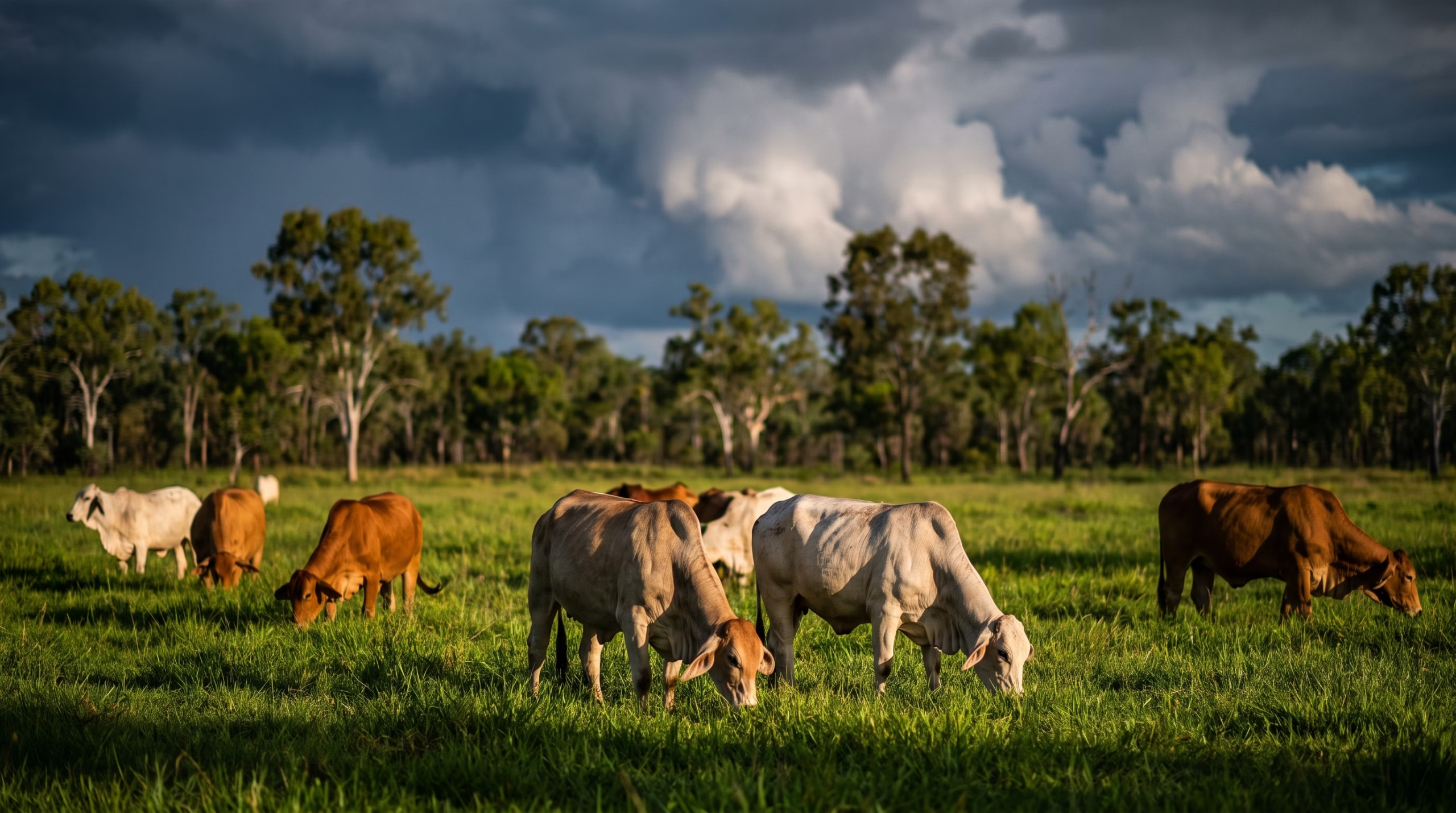

Three-day sickness is a virus disease of cattle. Its proper name is bovine ephemeral fever, or BEF. Mosquitoes and biting midges spread it. Most sick cattle get up again within three to four days. The cost comes from what happens in those days. Bulls go infertile. Dairy cows lose milk. Heavy cattle go down and damage nerves and muscle. A two-dose vaccine, given before the wet season, is the only prevention you have.
This guide covers the signs, the cattle most at risk, treatment in the paddock, and a vaccine plan you run before the season starts. It draws on advice from FutureBeef, the Queensland Government and NSW Local Land Services.
What causes three-day sickness?
A rhabdovirus causes BEF. Insects carry it from one animal to the next. The Queensland Government names mosquitoes as the most likely carrier. Biting midges play a part too.
The virus does not pass by close contact. Nose and eye discharge do not spread it. Semen does not spread it. A sick cow in the yards puts no risk on the cow beside her. The risk sits with the insects in your district.
When and where does BEF strike?
In most years, cases start at the beginning of the wet season in northern Australia. The disease then moves south and east. Rain and easterly or southerly winds help the insects live and travel. Drought years bring fewer cases.
FutureBeef notes outbreaks often follow heavy rain and flooding. In January 2024, NSW Local Land Services warned North Coast producers of cases after wet weather. The agency expected spread toward Greater Sydney as the season went on.
So your risk window depends on your rainfall. In the north, plan for the wet. Further south, watch for spring and summer storms.
Signs of three-day sickness
The disease comes on fast. A beast looks fine at the morning check and sits down by afternoon. Watch for these signs:
- Rectal temperature above 40°C
- Shivering, seen in about half of cases
- Arched back and low head
- Drooling, with discharge from the eyes and nose
- Stiff walk or lameness, often with swollen joints
- Off feed, with a sharp drop in milk
- Down and unable to rise
Some cattle also bloat while down. Check sick stock often.
Other diseases look like BEF. NSW Local Land Services advises you to get a vet diagnosis. Your vet confirms the case with a blood test. A PCR test works best in the first few days. A second option is two blood samples taken 14 days apart.
Get the latest cattle market updates straight to your inbox. Subscribe free to Cattle Weekly’s weekly newsletter. Subscribe here
Which cattle are most at risk?
Every beast in a district is exposed. Some suffer far more harm than others. The Queensland Government lists these groups:
- Bulls
- Pregnant and lactating cows
- Fat, well-conditioned cattle
FutureBeef adds bullocks to the list. Heavy cattle face the biggest risk when they go down. Their weight crushes nerves and muscle in the legs. Some never rise again.
Calves under about six months carry some protection. Young stock still face risk once the protection fades.
What BEF costs you
Deaths are uncommon. The Queensland Government puts them at about 3% of cases. The bigger losses come from cattle who survive.
| Class of stock | Main loss | Source |
|---|---|---|
| Bulls | Temporary infertility. Queensland says up to 8 weeks. FutureBeef says three to six months, sometimes longer. | QLD Govt, FutureBeef |
| Dairy cows | Milk drops of over 70% are common. Yield after recovery often stays 15% or more below normal. | QLD Govt |
| Late-pregnant cows | Abortion | FutureBeef |
| Heavy cattle and bullocks | Nerve and muscle damage from lying down | FutureBeef |
| Sale cattle | Carcase downgrades from muscle damage | NSW LLS |
Bull infertility is the hidden cost. A bull hit during joining loses his season. You see it months later as a poor pregnancy test and a spread-out calving. If your bulls get sick near joining, get them semen tested before you rely on them. Our guide to calving for Australian farmers covers how a tight joining shapes your calving.
How to treat three-day sickness
No drug kills the virus. Treatment supports the animal until the fever passes. Early care makes the biggest difference. FutureBeef says early, aggressive treatment leads to faster recovery and less weight loss.
Drugs your vet will use
Anti-inflammatory drugs shorten the course of the disease. FutureBeef also notes calcium injections help recovery. Talk to your vet before you treat. Note every withholding period. Record the drug, dose, date and tag number.
Care for down cattle
Down cattle need help to avoid lasting damage. Follow these steps from NSW Local Land Services and FutureBeef:
- Give shade, water and feed within reach.
- Roll or lift down cattle twice a day. This takes pressure off the legs.
- Prop cattle up on their chest. A beast flat on its side bloats faster.
- Move sick stock to a flat paddock. Keep them away from steep hills and gullies.
- Check them several times a day. Watch for bloat.
The Queensland Government notes most cattle recover when given water, shade and food.
Hold recovered cattle off the truck
Do not send a recovered beast straight to the works. Muscle damage leads to carcase downgrades. NSW Local Land Services advises you hold recovered cattle back for several weeks before slaughter. Also check every withholding period from treatment.
Vaccination: your only prevention
You have one tool to prevent BEF. The Northern Territory government, FutureBeef and the Queensland Government all point to vaccination. The vaccine is a modified live vaccine. You buy it through your vet.
The dose plan
- First course: Two doses for cattle never vaccinated. Both Queensland and NSW advise two to four weeks between doses. FutureBeef gives a wider range, from two weeks to six months.
- Booster: One dose every year.
- Timing: Give the booster 8 to 10 weeks before your BEF season. In the north, aim it before the wet. In Queensland, the state advises vaccinating before spring.
- Route: Under the skin of the neck.
The vaccine comes in two parts. One is a freeze-dried powder. The other is a chilled liquid you mix in. Follow the label for mixing and storage.
Which cattle to vaccinate first
Cost per head matters. Spend where the loss is greatest. NSW Local Land Services names three groups to vaccinate first:
- Stock brought in from outside your region
- Homebred stock under two years old
- High-value animals
Add your bulls to the top of the list. One sick bull costs you a season of calves. Add your milkers if you run dairy.
Plan the work, then book it. Vaccinate before the risk peaks. NSW Local Land Services warns the vaccine does not give instant protection in areas where cases have already started. Two doses and a lead time are needed.
Fit BEF into your herd health plan
Run BEF vaccine with your other yard work. Most producers give it at the same muster as other shots. Our cattle vaccination schedule lays out a full-year program. For other insect-borne risks in the north, read our guide to tick fever in northern Australia.
Buying in cattle? Plan for BEF
Cattle from a low-risk area have little or no immunity. Move them north or east into a BEF area and they face the full force of the virus. NSW Local Land Services lists introduced stock as a priority group.
Ask the seller for the vaccine history. If the cattle have no BEF vaccine on record, start the two-dose course on arrival. Keep new stock close to home for the first wet season so you see problems early.
The same goes for bulls you buy at sale. A new bull costs too much to lose to a fever in his first season with you.
A season checklist for three-day sickness
- Ten weeks before your season: Book the vet. Order vaccine for boosters and new stock.
- Eight to ten weeks out: Give the annual booster. Start the first dose for unvaccinated cattle.
- Two to four weeks later: Give the second dose.
- During the season: Check stock daily after rain. Keep a flat, shaded paddock ready for sick cattle.
- When a case appears: Call the vet. Treat early. Roll down cattle twice a day.
- After recovery: Hold cattle off the truck for several weeks. Semen test bulls before joining.
For a wider view of disease risk on your property, see our guide to common cattle diseases in Australia. For every health topic in one place, visit our cattle health hub. Meat and Livestock Australia also keeps a three-day sickness page with research updates.
Frequently asked questions
How long does three-day sickness last in cattle?
Most cattle recover in three to four days. Some take longer, mainly heavy cattle who go down. Bulls stay infertile for weeks to months after the fever ends. Dairy cows often stay below their normal milk yield.
Is there a vaccine for three-day sickness?
Yes. A modified live vaccine is sold through vets. Cattle need two doses, two to four weeks apart, then a booster each year. Give the booster 8 to 10 weeks before your BEF season starts.
Do people catch three-day sickness from cattle?
No. BEF affects cattle and buffalo. Cattle do not pass it to each other by contact either. Mosquitoes and biting midges carry the virus.
What is the best treatment for three-day sickness?
Anti-inflammatory drugs from your vet shorten the illness. Calcium injections help some cattle. Give shade, water and feed. Roll or lift down cattle twice a day. Treat early for the best result.
When is the three-day sickness season in Australia?
Cases start at the beginning of the wet season in northern Australia in most years. The disease then spreads south and east. Rain and wind drive it. Drought years bring fewer cases.