

Feed is the single biggest cost line in almost every beef and dairy enterprise in this country, and it is also the biggest lever on production. Get nutrition right and you get earlier joining weights, tighter calving patterns, heavier weaners, better carcase compliance and cattle that hold condition through a dry autumn. Get it wrong and no amount of genetics, animal health spend or clever marketing will bail you out. This guide pulls together the fundamentals of cattle nutrition in Australian conditions — from rumen function and mineral deficiencies through to supplement choice, drought feeding and feed budgeting — and it sits at the head of our wider cattle nutrition and feeding resources.
Why nutrition is the highest-return decision on most properties
Australian beef production is overwhelmingly grass based. That means the feed base is driven by rainfall, and rainfall is the one input none of us control. What we do control is stocking rate, the timing of joining and calving, the class of cattle we run, and what we put out when the paddock can no longer do the job on its own.
Meat & Livestock Australia (MLA) has spent years pushing producers toward measuring the feed base rather than guessing at it, and the logic is simple. A cow that goes into calving in good condition cycles sooner, gets back in calf, and weans a heavier calf. That same cow, run down through a dry winter, will cost you a full year of production — and you will still have fed her. Nutrition compounds, in both directions.
The economic case sharpens when you look at how cattle are priced. Restocker and feeder categories reported through the National Livestock Reporting Service, and summarised in indicators such as the EYCI, reward weight for age and consistency of line. Uneven, poorly grown mobs get discounted at the saleyard rail regardless of how good the bulls were. Feeding is what converts genetic potential into saleable kilograms in the window the market is paying for.
How the ruminant actually works
Everything in cattle nutrition follows from one fact: you are not really feeding the animal, you are feeding the microbial population in its rumen. Those microbes ferment fibre that the animal itself cannot digest, and in doing so produce volatile fatty acids that supply most of the beast’s energy, plus microbial protein that flows on to the small intestine.
The four things that matter
- Energy — expressed as metabolisable energy (ME) in megajoules per kilogram of dry matter. Energy is almost always the first limiting nutrient in southern Australia, particularly in autumn when standing feed has hayed off.
- Protein — measured as crude protein, but split practically into rumen degradable protein (feeds the microbes) and undegradable or bypass protein (feeds the animal directly). Young, fast-growing cattle and heavily lactating cows benefit most from bypass sources.
- Fibre — effective fibre keeps the rumen mat functioning, drives cud chewing and saliva flow, and buffers against acidosis. Diets stripped of fibre in the chase for energy cause more trouble than they solve.
- Minerals, trace elements and vitamins — small inclusions with disproportionate consequences, and highly regional in Australia.
Dry matter intake is the master variable
Cattle eat to a limit set by rumen capacity and feed quality. Poor quality, highly lignified dry grass sits in the rumen longer, so intake falls exactly when the animal most needs nutrients. This is why a mob can be standing in feed and still going backwards. Lifting the digestibility of the diet — through a legume, a green pick, a well-timed protein supplement or a forage crop — lifts intake as well as quality, and the two effects multiply.
The Australian nutritional year: north and south
Australia does not have one feeding system, it has at least two, and the boundary matters.
Northern systems
Through Queensland, the Northern Territory and the Kimberley, tropical grasses grow hard and fast through the wet, then decline in quality sharply once the rain stops. Protein falls below the level rumen microbes need to function well, digestion slows, intake drops and cattle lose weight even where there is a paddock full of dry standing grass. The classic response is a dry season non-protein nitrogen supplement — urea in a lick or block — which lifts rumen function and gets more out of the feed already on the ground.
Layered over this is phosphorus. Large areas of northern Australia sit on P-deficient soils, and the consequences show up as poor growth, low conception rates, bone chewing and, in severe cases, botulism risk. Both the Queensland and Northern Territory agriculture departments have long-standing extension material on identifying P-deficient country and building a wet season supplement program around it, and AgForce has consistently argued that this kind of practical extension is where producers get the best return on public research investment.
Southern systems
Across NSW, Victoria, Tasmania, southern WA and much of South Australia, the constraint flips. Temperate pastures deliver high quality feed in spring, then quality and quantity crash through summer and autumn. Energy, not protein, is usually the shortfall. Feed gaps are filled with conserved fodder, grain, forage crops, or by matching calving to the pasture growth curve so peak cow demand lines up with peak pasture supply.
Southern producers also carry the risk of specific metabolic disorders tied to lush spring growth — grass tetany in older lactating cows on rapidly growing pasture, and nitrate issues on heavily fertilised forage crops after cloudy weather. These are nutrition problems with animal health consequences, and they are managed with feeding decisions rather than a needle.
Building the feed base first
Supplements are expensive. Pasture is not. The most profitable operations spend their effort on the feed base and use supplements to fill genuine gaps rather than to prop up a permanent shortfall.
Perennial and annual pastures
Improved perennial grasses with a legume component give you quality, nitrogen fixation and persistence. Legumes are the workhorse here — they lift diet protein, improve intake and reduce the nitrogen fertiliser bill. In the north, adapted legumes in tropical grass pastures do a similar job through the late wet and early dry.
Forage crops
Forage crops are the fastest way to close a defined feed gap. Summer crops carry weaners through the hot months in the south; winter cereals fill the late autumn and winter hole; brassicas can deliver very high quality feed for finishing. Each has its own transition requirements and its own risks, and the way different feed sources influence growth rate and eating quality is worth understanding in detail — we cover that in our piece on how different types of forage affect cattle growth and meat quality.
Conserved fodder
Hay and silage are stored pasture, and they carry the quality of the day they were cut. Silage cut at the right growth stage can be genuinely high quality feed. Weathered, over-mature hay is bulk, not nutrition, and feeding it to lactating cows or growing weaners without a protein and energy supplement will disappoint. If you are buying fodder, get a feed test. Buying hay on appearance is buying blind.
Minerals and trace elements: know your country
Mineral supplementation is one of the areas where money is most often wasted, because producers feed a broad-spectrum product for a deficiency they do not have. The starting point is knowing your district, then confirming with soil, pasture or blood and liver testing through your vet or state department.
- Phosphorus — critical across large parts of northern Australia, especially for breeders in the wet season.
- Calcium — matters in grain-heavy rations and in dairy transition cows, where the calcium balance around calving drives milk fever risk.
- Magnesium — the grass tetany story, managed with magnesium supplementation ahead of and during the risk period in the south.
- Sodium (salt) — used both as a nutrient and as an intake regulator in dry licks.
- Copper, cobalt, selenium and iodine — regionally variable, with known deficient districts in parts of Tasmania, southern Victoria and coastal areas. Do not supplement copper blind; excess is toxic.
- Vitamin A — depleted during extended dry periods where cattle have had no green feed for months.
Water: the nutrient everyone forgets
Water intake drives feed intake. If water is short, hot, dirty or too saline, cattle eat less and everything else you are doing is compromised. Requirements rise steeply with temperature, with lactation, and with any dry supplement program. Before you spend money on lick, check that troughs refill fast enough for the mob to drink at the same time, that pumps and floats are sound, and that water quality has been tested where salinity is a known issue. It is the cheapest production gain on most properties.
Comparing supplement options
The right supplement depends entirely on what is missing. The table below sets out the common Australian options and where each earns its keep.
| Supplement | What it supplies | Best used when | Watch points |
|---|---|---|---|
| Urea-based dry lick | Non-protein nitrogen for rumen microbes | Dry season, low-protein standing grass, northern systems | Requires constant water; introduce gradually; toxicity risk if intake is uneven |
| Protein meal (cottonseed, canola, copra) | True protein, including bypass protein | Growing cattle and lactating cows on low-quality roughage | Cost per unit protein; storage and handling; supply variability |
| Molasses (with or without additives) | Readily fermentable energy, carrier for urea or meals | Late dry season energy shortfall, drought survival feeding | Infrastructure required; low protein on its own; intake control |
| Cereal grain | High energy, starch | Finishing, backgrounding, filling autumn energy gaps | Acidosis risk; requires careful introduction and adequate fibre |
| Hay and silage | Bulk energy and fibre; quality depends on cutting stage | Containment feeding, calving paddocks, defined feed gaps | Feed test before buying; weed seed and biosecurity risk |
| Mineral blocks and loose mixes | Targeted minerals and trace elements | Known regional deficiency, confirmed by testing | Do not substitute for energy or protein; verify intake |
Feeding by class of stock
Breeders
The breeder herd is where nutrition pays or costs the most. Condition at calving determines how quickly a cow returns to cycling, and condition at joining determines conception. Body condition scoring, done regularly and by the same person, is the practical tool. Score the mob, draft off the tail, and feed the ones that need it rather than feeding the whole herd to look after a quarter of it.
First-calf heifers deserve separate management. They are still growing, they are lactating, and they are competing with mature cows at the feeder. Run them apart and feed them better — the return shows up in second-round conception rates.
Weaners
Weaning is the most nutritionally sensitive transition in the beef calendar. A weaner has a small rumen, high requirements per kilogram of liveweight, and no maternal buffer. Early weaning in a dry year is a nutrition decision as much as a welfare one — it takes the lactation load off the cow and lets you feed a small amount of high-quality feed to the calf instead of a large amount of average feed to the pair. Yard weaning with quality hay and a small grain or pellet ration sets calves up to eat supplements later in life without hesitation, which is worth real money in a drought.
Growing and finishing cattle
Backgrounding is about consistent, moderate growth on forage, positioning cattle to hit feeder specifications on time. Finishing, whether on grass, forage crop or grain, is about hitting fat cover and weight for the target market without discount. Compliance to specification is where the money is, and that means knowing your growth path rather than hoping the season delivers.
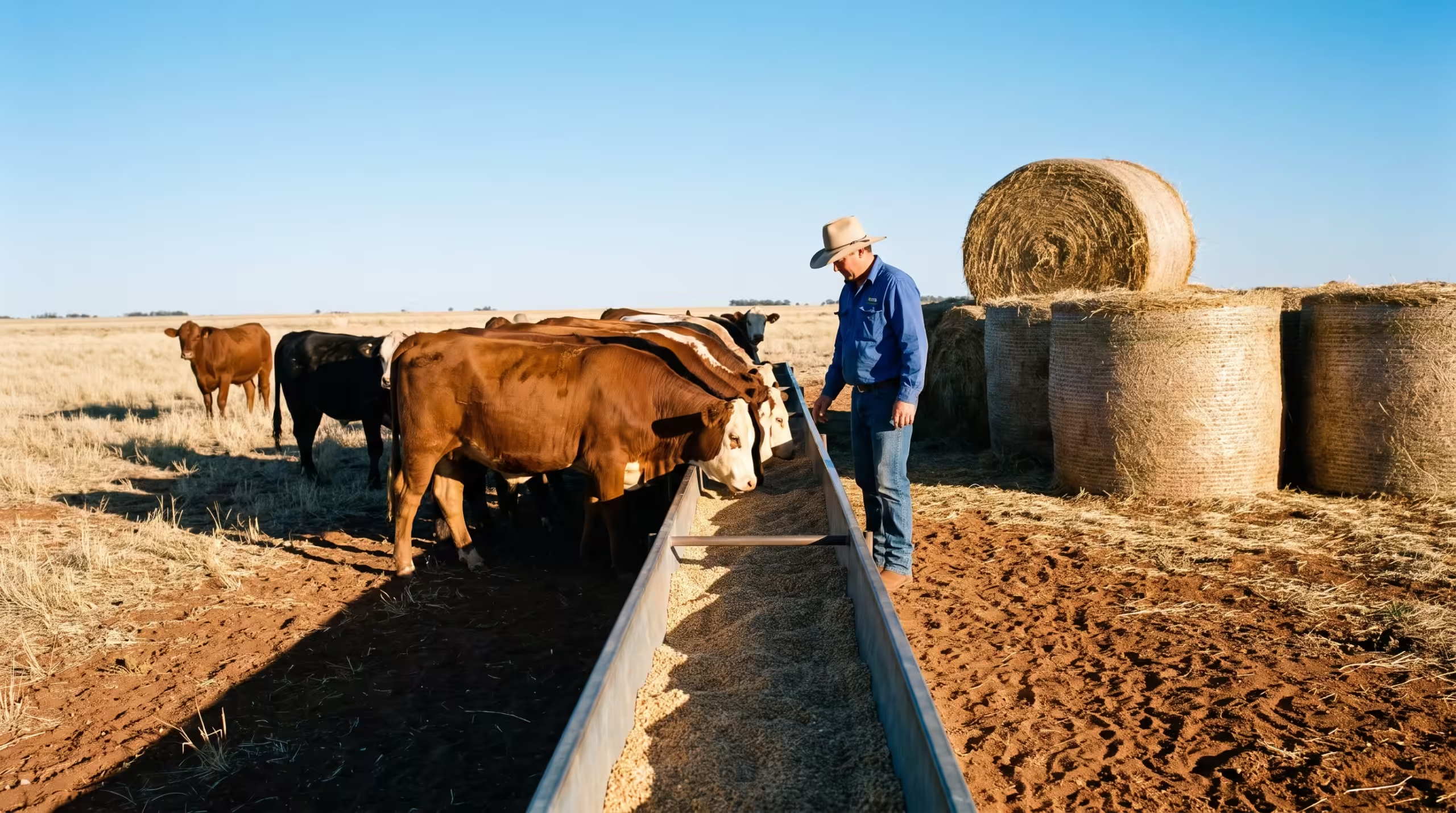
If grain is going in, introduce it slowly over a couple of weeks with adequate effective fibre alongside, keep the ration consistent, and never let cattle come to the trough hungry after a break. Acidosis is a management failure, not bad luck. For a broader run-through of day-to-day feeding practice, see our guide to cattle nutrition tips for feeding a healthy herd.
Bulls
Bulls are often over-fed before a sale and under-fed afterwards. Overly fat bulls have poorer semen quality and break down structurally; bulls that lose heavy condition during a long joining come back needing months of recovery. Feed them to work, and give them a recovery period on decent feed once they come out.
Dairy cows
Dairy nutrition adds the complexity of a partial mixed ration, transition cow management and the tight relationship between energy density and milk components. The principles are identical, the tolerances are just narrower, and the feed cost per litre needs watching weekly rather than seasonally.
Drought and containment feeding
Every Australian producer will feed through a drought at some point. The decisions that matter are made early.
- Decide what you are feeding for. Survival feeding keeps stock alive at maintenance. Production feeding keeps them growing or lactating. They are different rations at very different costs, and confusing the two burns cash.
- Set trigger points before the dry sets in. Nominate the pasture level, the date, or the condition score at which you sell, wean early, or start feeding. Decisions made under pressure are almost always late.
- Use a containment area. Feeding in a sacrifice paddock or purpose-built containment area protects ground cover, reduces feed wastage and makes daily stock inspection practical. State agriculture departments in NSW, Victoria and Queensland all publish design guidance on containment feeding, and the paddock recovery benefit alone usually justifies the setup.
- Watch the classes you cannot replace. Core breeders and retained heifers carry the genetics. Trading stock can go.
- Keep an eye on the market. When the EYCI and saleyard indicators soften on the back of widespread destocking, the sale option gets more expensive by the week. ABARES commodity reporting and MLA market information are both useful for reading whether you are early or late in a national turn-off cycle.
Feed budgeting and the cost of gain
Nutrition decisions are investment decisions. The question is never “can I afford to feed?” but “does this feed return more than it costs?”
Work in cents per megajoule of energy and cents per kilogram of protein, not dollars per tonne. A cheap tonne of poor hay is often dearer per unit of nutrition than a dearer tonne of grain. Then calculate cost of gain: total feed cost divided by expected kilograms of liveweight gained, compared against the price per kilogram the market is offering for that class. If cost of gain sits above the market price, you are feeding for welfare or for herd retention, not for profit — and that is a legitimate decision, provided you know you are making it.
A basic feed budget needs four numbers: how many head, for how long, at what intake, and at what delivered cost. Add cartage, wastage and labour, because all three are real. Update it monthly.
Compliance, records and market access
Feeding decisions carry regulatory obligations that go straight to market access:
- The ruminant feed ban. Feeding restricted animal material to cattle is prohibited nationally. This underpins Australia’s BSE status and, by extension, our export markets.
- Commodity Vendor Declarations. Obtain and keep a CVD for purchased feeds and by-products, so you can demonstrate the chemical and contaminant status of anything that went into your cattle.
- Livestock Production Assurance. LPA accreditation requires records of feed inputs, treatments and withholding periods, and it is audited.
- NLIS. Every movement gets recorded. Where cattle have been fed by-products with withholding or export slaughter intervals, traceability through NLIS is what keeps a problem contained rather than industry-wide.
Good feeding records are not bureaucracy. They are the evidence that keeps the whole supply chain saleable.
Common and expensive mistakes
- Feeding a mineral supplement to fix an energy or protein shortfall.
- Starting supplementation after condition has already been lost.
- Buying fodder without a feed test.
- Letting a lick or block program run out for a fortnight, then putting it back in front of hungry cattle.
- Feeding the whole mob at the rate the poorest quarter needs.
- Ignoring water infrastructure while spending heavily on supplements.
- Introducing grain too quickly and blaming the season for the deaths.
Where to get local advice
Nutrition is regional. What works on Mitchell grass will not work on the Northern Tablelands. Use your state agriculture department’s extension staff, MLA’s producer resources and demonstration sites, ABARES for the broader commodity and seasonal outlook, and your local reseller agronomist or independent nutritionist for ration formulation. Producer groups and organisations such as AgForce are also worth engaging with, because the fastest learning in this industry still happens between neighbours comparing what actually worked.
Frequently asked questions
What is the most limiting nutrient for cattle in northern Australia?
Across much of the north, phosphorus is the classic limiting mineral because the soils and the tropical grasses growing on them are naturally deficient. Energy and protein still drive dry season performance, but on known P-deficient country a wet season phosphorus supplement is one of the highest-return inputs available to a breeder herd.
When should I start supplementary feeding my breeders?
Start before condition is lost, not after. Monitor body condition score and pasture quality through late summer and autumn, and begin supplementing when the feed base has hayed off and cows are heading into the last third of pregnancy. Putting condition back on a lactating cow costs far more feed than holding it in the first place.
How much water do cattle need each day?
Requirements vary widely with class of stock, weather, distance walked and the salinity of the water itself, so design supply for peak summer demand rather than for an average. Check trough capacity and flow rates before the hot months, and remember that any dry lick or urea program lifts water intake.
Is urea supplementation safe?
Urea is safe and effective when cattle are introduced gradually, when intake is controlled and consistent, and when stock have unrestricted access to water. Most poisonings trace back to broken feeders, poorly mixed product, or hungry cattle gaining sudden access after a supply gap. Management discipline matters more than the product itself.
Can I feed cattle meat and bone meal or other animal by-products?
No. Australia has a national ruminant feed ban that prohibits feeding restricted animal material to cattle and other ruminants, and it is a cornerstone of our disease-free status and export access. Always obtain a Commodity Vendor Declaration with purchased feeds and keep it with your LPA records.
See also: Cattle Mineral Supplements: What Australian Farmers Need.
See also: Grain Finishing Cattle: A Guide for Australian Feedlots.
See also: Silage vs Hay for Cattle: Which Is Best?.

4 comments
[…] producers running cattle through a feedlot phase, read our guide to cattle nutrition and feeding for detail on transition feeding, which supports the immune system through the highest-risk […]
[…] of assuming cover. Well-fed cattle in good condition carry lighter burdens, which is one reason our guide to cattle nutrition and feeding belongs in a parasite […]
[…] and cancel or delay non-urgent yard work altogether during an extended hot spell. Our guide to cattle nutrition and feeding covers ration adjustments reducing fermentation heat load through summer, alongside year-round […]
[…] supplementary feed, remains the cheapest way to lift output across both beef and dairy herds. Our cattle nutrition and feeding guide sets out the energy and protein planning behind a feed budget suited to southern pasture systems […]