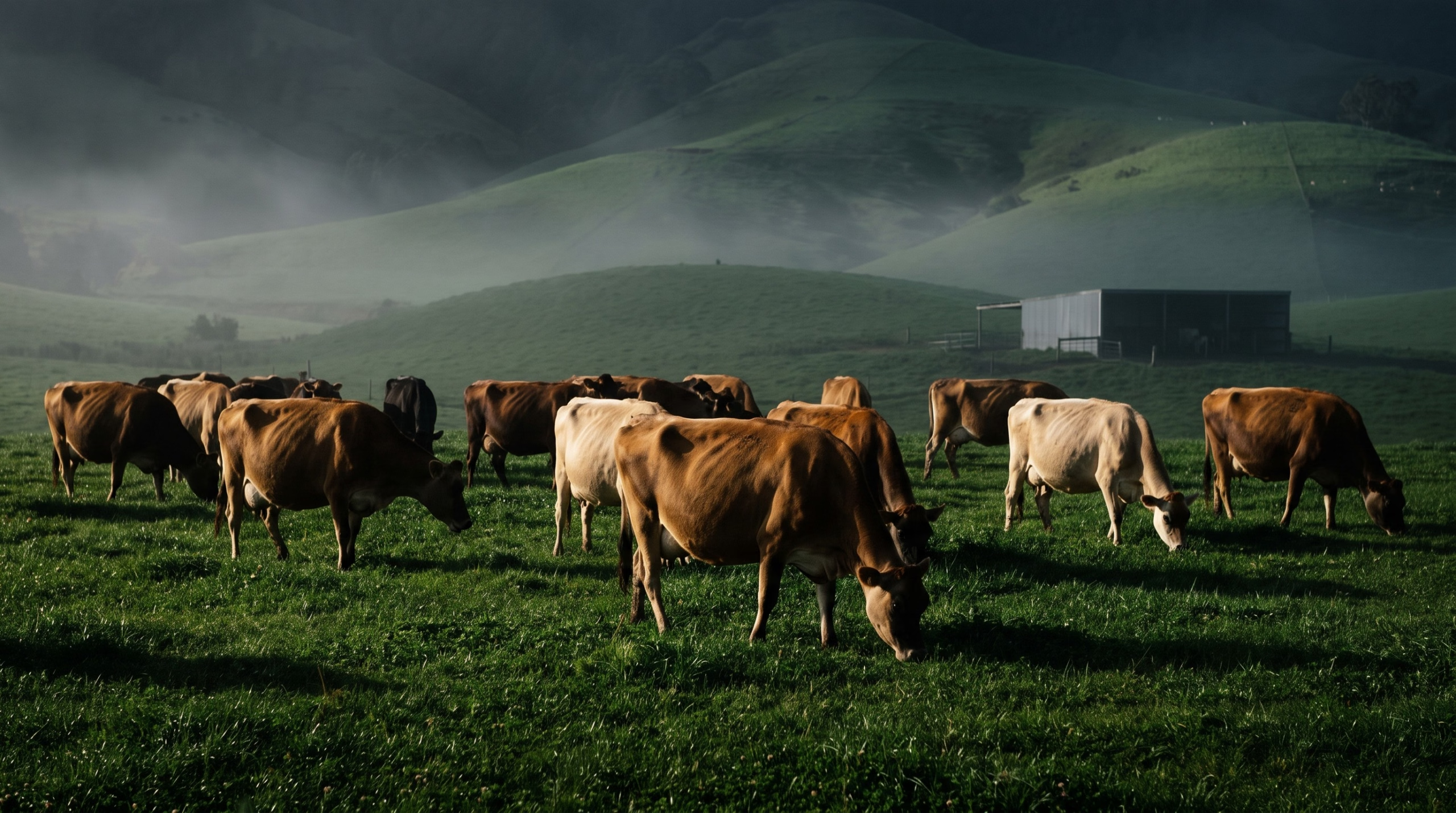

Organic dairy farming in Australia asks more of you than a conventional system. You give up synthetic fertiliser, synthetic herbicides and routine antibiotics. You wait around three years before you sell milk as organic. In return, you supply a niche market. Processors pay a premium at the farm gate once you hold certification and a contract.
This guide covers certification, conversion, feed, herd health and markets. It sits under our wider guide to dairy cattle farming in Australia. That guide covers the core systems every dairy runs on. Read both before you commit your herd.
What Organic Certification Means for a Dairy Farm
Organic certification governs everything on your farm: soil, pasture, feed, animals, the dairy shed and your records. You manage the whole system to a written standard, and an auditor checks your work every year.
The Australian Standards
Two standards set the rules. The National Standard for Organic and Bio-Dynamic Produce governs organic exports. The Australian Standard AS 6000 covers organic and biodynamic products sold here. Australian law does not force local sellers to certify before they use the word organic. Processors and retailers still insist on it. In practice, no certification means no organic milk cheque.
Who Certifies You
The Department of Agriculture, Fisheries and Forestry approves certifying organisations for export. Australian Certified Organic (ACO) and NASAA Certified Organic rank among the main bodies. Each one publishes its own standard, fees and list of allowed inputs. Ask two or more certifiers for an application pack and compare costs before you sign.
Records Run the System
Your auditor wants paper trails. You record every input: fertiliser, feed, animal treatments, cleaning products and pest control. You also trace every animal from birth or purchase. Your NLIS records form the backbone of this trail, so keep tag data and property transfers current.
The Conversion Period
You sell no organic milk on day one. Conversion takes time, and you carry the costs through it.
The Steps
- Contact certifiers and request their standards and application packs.
- Write an organic management plan covering land, livestock, feed, weeds and pests.
- Start managing your land to the standard. The conversion clock starts here.
- Pass your first audit. Your certifier places you in a pre-certification or in-conversion stage.
- Convert the herd. Cows need their own period on organic feed and management before their milk qualifies.
- Reach full certification and sell under the organic label.
Your certifier sets the exact timeline. Land conversion under Australian standards runs over about three years. Plan your herd conversion so it finishes as your land certification lands.
Cash Flow Through Conversion
Conversion costs you money before it pays you. Without synthetic nitrogen, you rely on legumes, manure and compost to grow grass. Organic grain and hay cost more than conventional feed. You pay certification fees from the first year. Yet your processor pays you the conventional price until you hold full certification.
Budget for the gap. Use the ABARES dairy farm survey and Dairy Australia farm data to check your costs, milk income and debt. Do this before you start. Talk to your bank early. A lender who understands the conversion timeline gives you room to get through it.
Organic Versus Conventional: The Key Differences
The table sets out where your management changes. Check every detail against your certifier’s standard. Each body writes its own rules within the national framework.
| Area | Conventional dairy | Certified organic dairy |
|---|---|---|
| Fertiliser | Synthetic nitrogen, phosphorus and potassium permitted | Approved inputs only: legumes, manure, compost and listed mineral products |
| Weed control | Synthetic herbicides permitted | Grazing, slashing, cultivation; synthetic herbicides banned |
| Feed | Any feed meeting food safety rules | Certified organic feed only; no genetically modified ingredients |
| Animal treatments | Antibiotics and drenches with label withholding periods | Treat sick animals; extended withholding periods; repeat treatments risk organic status |
| Milk price | Processor’s conventional farmgate price | Organic premium under a supply contract |
| Audits | Dairy food safety audits | Food safety audits plus an annual organic audit |
| Start-up period | None | About three years of conversion |
Feed and Pasture Management
Feed decides whether your organic dairy pays. Bought-in organic feed costs more and runs short in dry years. The more feed you grow, the less exposed you sit.
Grow Your Own Nitrogen
Clovers, lucerne and other legumes fix nitrogen and feed your grass. Build your pasture mix around them. Rotational grazing lets plants recover and spreads manure across paddocks. Match your stocking rate to the feed your farm grows without synthetic nitrogen. Do not base it on what it grew before.
Test Your Soil First
Soil test every paddock before you convert. Your results show which nutrients run low and where you need lime or other approved minerals. State agencies such as Agriculture Victoria and NSW DPI publish soil and pasture guidance for dairy regions. Check every product against your certifier’s allowed input list before you spread it. One unapproved product costs you certification on the paddock.
Secure Bought-In Feed
Line up organic hay, silage and grain suppliers before you need them. Ask each supplier for their certificate and keep a copy on file. Build a fodder reserve in good seasons. When drought hits, organic feed supply tightens faster than conventional supply, and you have fewer places to buy.
Herd Health Without Routine Chemicals
Organic standards put prevention first. You lose the option of routine treatments, so your management has to stop problems before they start.
Mastitis Control
Mastitis hits your milk quality and your cell count payments. Focus on the basics:
- Clean teats before cups go on, and dip after milking with a product your certifier allows.
- Keep lanes, yards and calving paddocks clean and dry.
- Service your milking machine on schedule and replace liners on time.
- Track individual cow cell counts and cull chronic cases.
Dairy Australia’s Countdown program sets out mastitis control steps for Australian herds. Work through it with your vet before conversion.
Parasite Control
Without routine drenching, you manage worms through grazing. Graze calves ahead of adult cows, rotate paddocks, and avoid overstocking. Use faecal egg counts to decide when an animal needs treatment. MLA publishes worm and parasite control guidance for cattle, and the principles carry across to dairy young stock.
When You Must Treat
Animal welfare comes first. Australian organic standards require you to treat a sick or injured animal, with antibiotics if needed. Withholding treatment to protect organic status breaches the standard. After treatment, you apply an extended withholding period before the milk enters the organic vat. Your certifier’s rules set how many treatments an animal receives before it loses organic status. Record every treatment, the product, the dose and the date.
Breeds and Breeding for Organic Systems
Organic dairies favour cows built to last. Select for fertility, longevity, sound feet and strong udders ahead of peak yield. A cow who calves every year and stays healthy on pasture earns more over her life. A high-yielder who needs frequent treatment earns less.
Many organic producers run Jerseys, crossbreds or other pasture-adapted cows. Compare the options in our guide to the best dairy cattle breeds for Australian conditions. For joining, heat detection and calving targets, read our cattle breeding management tips for top Aussie breeds.
Some organic milk on Australian shelves also carries an A2 label. If you plan to target both markets, read A2 milk farming in Australia: is it worth it? and our explainer, A2 milk: a healthier dairy option. Genotype your herd before you make the call.
Markets and Milk Price
The organic milk pool in Australia sits well below the conventional pool. Processors add organic suppliers when their own sales need the volume, not before.
Get a Contract Before You Convert
Do not start conversion without a buyer. Ask any organic processor for:
- The price structure and the premium over the conventional price.
- Volume caps and how they handle milk above the cap.
- Contract length and exit terms.
- Support during conversion, such as an in-conversion payment.
- Collection frequency and distance limits for your region.
Get every term in writing. A verbal promise does not pay your feed bill.
Cull Cows and Surplus Calves
Your cull cows and surplus calves add income. Certified organic beef buyers pay more for organic animals, but only when you have a buyer lined up. Without one, your animals sell at conventional prices through the saleyard. Track MLA’s cow indicators and the Eastern Young Cattle Indicator (EYCI) on mla.com.au to time your sales. Record every movement off your property on the NLIS database.
Is Organic Dairy Right for Your Farm?
Run through this list honestly before you apply:
- You hold, or have a written offer for, an organic supply contract.
- Your farm grows most of its own feed in an average season.
- Your soils test well enough to carry pasture without synthetic nitrogen.
- Your cash reserves or finance cover about three years of conversion costs.
- Your herd already runs low cell counts and few treatments.
- You keep accurate records and welcome an annual audit.
- Your neighbours’ spraying poses no drift risk, or you have room for buffer zones.
Tick every box and organic dairy suits your business. Miss two or more and fix those gaps first. Start with your soil tests, your cell count history and a conversation with a processor.
Frequently Asked Questions
How long does it take to convert a dairy farm to organic in Australia?
Land conversion under Australian organic standards runs over about three years from the date you start managing to the standard. Your herd also needs its own conversion period on organic feed and management. Your certifier sets the exact timeline for your property.
Do organic dairy farmers get paid more for their milk?
Organic processors pay more than the conventional farmgate price. You only get it once you hold full certification and a supply contract. The size of the premium depends on your processor and your contract terms. Get the price structure in writing before you convert.
Do organic dairy cows get antibiotics?
Yes, when they need them. Australian organic standards require you to treat any sick or injured animal, then apply an extended withholding period. Your certifier’s rules set how many treatments an animal receives before it loses organic status.
Who certifies organic dairy farms in Australia?
The federal Department of Agriculture, Fisheries and Forestry approves certifying organisations for export. Australian Certified Organic (ACO) and NASAA Certified Organic rank among the main certifiers. Both run annual audits of your records, paddocks, dairy and feed.
What do organic dairy cows eat?
Organic cows graze certified organic pasture and eat certified organic hay, silage and grain. The standards ban genetically modified feed and feed grown with synthetic fertiliser or synthetic sprays. Most organic dairies run pasture-based systems to keep bought-in feed costs down.