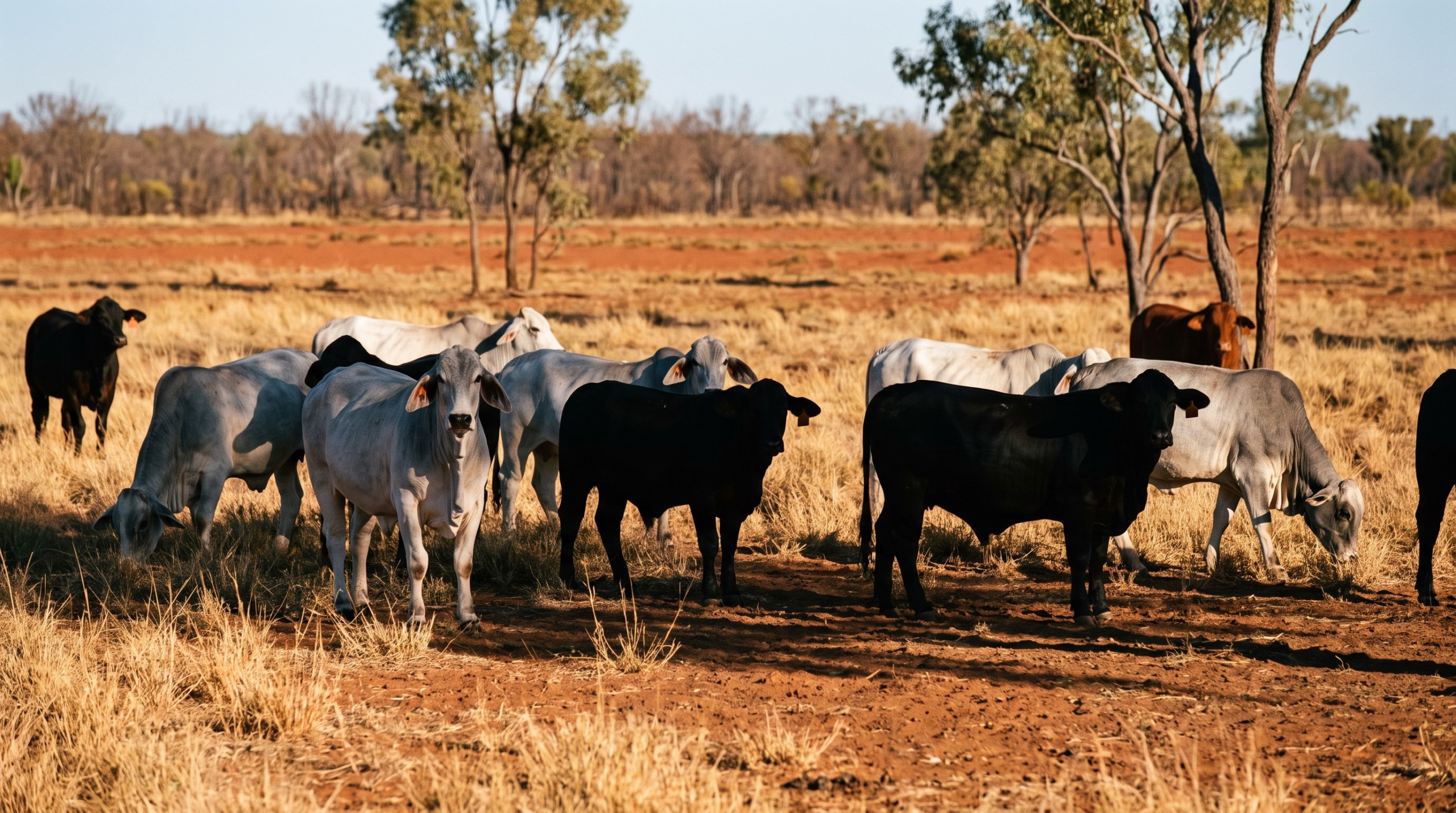

Pick the wrong breed for the north and you pay for it each year. You see it in poor conception rates, tick treatments and price discounts. The Brangus vs Brahman Australia debate runs at bull sales across Queensland, the Northern Territory and the Kimberley. Both breeds carry Bos indicus genetics. Both handle heat and parasites better than British breeds. They differ on fertility, carcase quality and temperament. They also differ in how well each holds condition on harsh country. This guide compares the two. Use it to match your bulls to your rainfall, your parasites and your market.
For the bigger picture on herd management, read our guide to beef cattle farming in Australia.
Where Each Breed Comes From
Brahman
US breeders bred the Brahman from Indian Bos indicus cattle. These included Gir, Nellore, Guzerat and Krishna Valley cattle. Queensland producers began importing Brahmans in the 1930s, and the breed spread across the north over the following decades. MLA reports Bos indicus and Bos indicus-cross cattle form the core of the northern herd.
Brahmans carry a hump, loose skin, a large dewlap, long ears and a short, dense coat. Colours run from light grey to red. Studs breed horned and polled lines. The Australian Brahman Breeders’ Association keeps the herdbook and runs BREEDPLAN analysis for the breed.
Brangus
Brangus combine Angus and Brahman genetics in a stabilised composite. Breeders wanted Angus fertility, early maturity and marbling. They paired it with Brahman heat tolerance and tick resistance. For the Angus side of the story, read why Angus cattle dominate in Australia.
The Australian Brangus Cattle Association registers black and red Brangus. Most herds run polled cattle. Brahman content differs between studs, and the figure drives most of the trade-offs below. Ask each breeder for the content of the bulls on offer.
Brangus vs Brahman at a Glance
| Trait | Brahman | Brangus |
|---|---|---|
| Origin | Indian Bos indicus breeds, developed in the US | Angus and Brahman composite |
| Heat tolerance | Highest of the two | Good; falls with lower Brahman content and a black coat |
| Tick and buffalo fly resistance | High | Moderate to high; tracks Brahman content |
| Heifer puberty | Later | Earlier |
| Marbling | Lower | Higher |
| MSA eating quality | Reduced by higher tropical breed content | Less reduction at lower Brahman content |
| Temperament | Varies by bloodline; select for docility | Varies by bloodline; select for docility |
| Horns | Horned and polled lines | Mostly polled |
| Live export fit | Core breed for northern export trade | Accepted; check exporter specifications |
| Best country | Harsh, high-tick country with long dry seasons | Better-watered northern and central country |
Heat, Ticks and Parasites
Tick resistance
Cattle tick (Rhipicephalus australis) costs you money. It brings weight loss, hide damage, chemical costs and tick fever. On the same country, Bos indicus cattle carry far fewer ticks than British breeds. Purebred Brahmans sit at the top of the resistance scale.
Brangus resistance tracks Brahman content. A bull with high Brahman content throws progeny closer to Brahman tick levels. A bull with low content throws progeny closer to Angus levels, and you treat more often.
Tick movement rules apply in Queensland. Check the current zones and inspection rules with Biosecurity Queensland before you move cattle.
Buffalo fly
Buffalo fly irritates cattle, cuts grazing time and causes skin lesions. Bos indicus cattle show more tolerance than British breeds. Watch lower-content Brangus closely in wet seasons.
Heat load and coat colour
Brahmans shed heat through a short, glossy coat, loose skin and a high density of sweat glands. They keep grazing through hot days while British cattle seek shade.
Coat colour matters. A black coat absorbs more solar radiation than a light grey coat. On open country with little shade, black Brangus show heat stress sooner than grey Brahmans. Red Brangus lines sit between the two. If your paddocks lack trees, factor this into your choice.
Fertility and Reproduction
Fertility drives profit in a breeding herd. Each empty cow costs you a year of feed with no calf to sell.
Brahman heifers reach puberty later than British and composite heifers. On poor northern pasture, many Brahman heifers do not cycle as yearlings, so producers join them at two years old. On poor country, many first-calf Brahman cows do not get back in calf while they feed a calf.
Brangus heifers tend to cycle earlier. On better-watered country with improved pasture, you have a stronger case for yearling joining with Brangus.
Brahmans earn their place on hard country. Cows hold condition and rear calves on dry-season feed where higher-taurus cattle fall away.
MLA’s CashCow project studied reproduction across northern breeding herds by country type. Use its benchmarks to compare your pregnancy rates and calf loss with herds on similar land.
For either breed, select bulls on these figures:
- Days to Calving EBV: shorter figures mean daughters conceive earlier in the joining.
- Scrotal Size EBV: larger figures link to earlier puberty in daughters.
- Semen and physical soundness: get your vet to test each bull before joining.
Growth, Carcase and Eating Quality
Brangus tend to finish earlier and lay down more marbling. They suit grainfed programs and markets paying for MSA grades.
Brahmans dress out well and give lean carcases. They grow well on tropical pasture where British cattle struggle. They take longer to finish.
MSA and tropical breed content
Meat Standards Australia (MSA) grading predicts eating quality from carcase traits. Graders measure hump height, and the MSA model treats a taller hump as a sign of higher tropical breed content. Higher content lowers the predicted eating quality score for some cuts. MLA explains the full model on its MSA pages.
Some feedlot and brand programs set limits on Bos indicus content. Ask your buyer for the specification before you choose bulls.
Our guide to beef cattle production in Australia covers the full supply chain from pasture to processor.
Market Fit
Live export
Brahman and Brahman-cross steers form the bulk of the live cattle trade from northern ports to Indonesia and other South-East Asian markets. Importers value heat tolerance and feedlot performance in tropical conditions. Exporters set weight, condition and breed specifications for each shipment. Talk to your agent before weaning.
ABARES forecasts cattle numbers, slaughter and live exports each quarter. Read its reports before you set your turnoff plan.
Domestic and grainfed
Brangus steers suit feedlot entry and domestic supermarket trade. Brangus with lower Brahman content fit more grainfed brand specifications.
Price signals
MLA publishes the Eastern Young Cattle Indicator (EYCI). It also tracks saleyard prices for feeder steers, heavy steers, restockers and cows. Track the indicator for the class you sell. Compare your sale results with it over several seasons to see whether your breed earns a premium or takes a discount at your local yards.
Export demand supports northern prices. Read our report on how Aussie beef is on track to break records.
NLIS
Each animal needs an NLIS device. You must record each move on the National Livestock Identification System database. Exporters, feedlots and processors rely on these records to trace cattle and keep markets open.
Temperament and Handling
Temperament affects your mustering costs, yard safety, weight gain and how tender the beef is. Northern research links flighty cattle with slower growth and tougher beef.
Brahmans have a name for being flighty. But temperament varies between bloodlines. It improves with selection and quiet handling from weaning. Brangus herds vary too. Ask breeders for flight time or docility records and inspect the cattle in the yards yourself.
Good handling starts with weaner training. Our guide to mustering cattle without losses covers yard design, timing and stock work.
Matching the Breed to Your Country
Let your country decide, ahead of breed loyalty. Use these broad guides as a starting point:
- Gulf, Cape York, Top End and Kimberley: high heat, humidity, heavy tick and fly pressure and long dry seasons on native pasture. Run Brahman or high-content Brahman crosses.
- Central Queensland brigalow and improved buffel or leucaena country: better feed and an MSA or grainfed target. Run Brangus or Brahman-cross cattle with more taurus content.
- Coastal tick country in southern Queensland and northern New South Wales: moderate heat with tick pressure. Run Brangus with moderate Brahman content.
- Pastoral country targeting live export: run Brahman and Brahman-cross steers.
AgForce runs extension events and policy work for Queensland cattle producers. Use them to compare notes with producers on country like yours.
Crossbreeding Options
You do not have to pick one breed outright. Many northern producers join Brahman cows to Brangus or British bulls to capture hybrid vigour. Crosses between Bos indicus and Bos taurus cattle show more hybrid vigour than crosses of two British breeds. The first-cross cow gains in fertility, calf survival and growth.
Other tropical composites include Droughtmaster, Santa Gertrudis, Charbray and Braford. Each sits at a different point between tropical adaptation and carcase quality.
Plan the system before the first joining. A crossbreeding plan needs the right paddocks, good records and a clear plan for replacement heifers.
Questions to Ask Before You Buy Bulls
- What is the Brahman content of this bull, and of his sire and dam?
- Which BREEDPLAN figures does the stud record, and how accurate are they?
- Has a vet tested the bull for semen quality and physical soundness?
- Did the bull grow out on country similar to yours?
- What flight time or docility records does the breeder keep?
- Is the bull tick-free and compliant with your state’s movement rules?
- Will the stud transfer the bull’s NLIS record on sale?
Frequently Asked Questions
Are Brangus or Brahman better for northern Australia?
Brahmans suit the harshest country, with high heat, heavy tick pressure and long dry seasons. Brangus suit better-watered northern and central country where you target MSA grades or feedlot entry. Match the breed to your rainfall, pasture and market.
Do Brangus resist cattle tick as well as Brahman?
Brangus tick resistance rises with Brahman content. High-content Brangus approach Brahman levels, while low-content Brangus carry more ticks and need more treatment. Ask each breeder for the Brahman content of their bulls.
Do Brahman cattle get lower MSA grades?
The MSA model uses hump height as a measure of tropical breed content. Taller humps lower the predicted eating quality score for some cuts. Brahman carcases still grade, but higher Bos indicus content pulls the predicted score down.
Why do live exporters prefer Brahman-cross cattle?
Brahman-cross cattle handle the heat and humidity in South-East Asian feedlots. They do well on tropical feed. They make up the bulk of the trade out of northern ports. Check weight and condition specifications with your agent before weaning.
How much Brahman is in Brangus cattle?
Brahman content differs between studs and bloodlines. Ask each breeder for the exact figure on the bulls you inspect. The content drives tick resistance, heat tolerance and carcase quality.