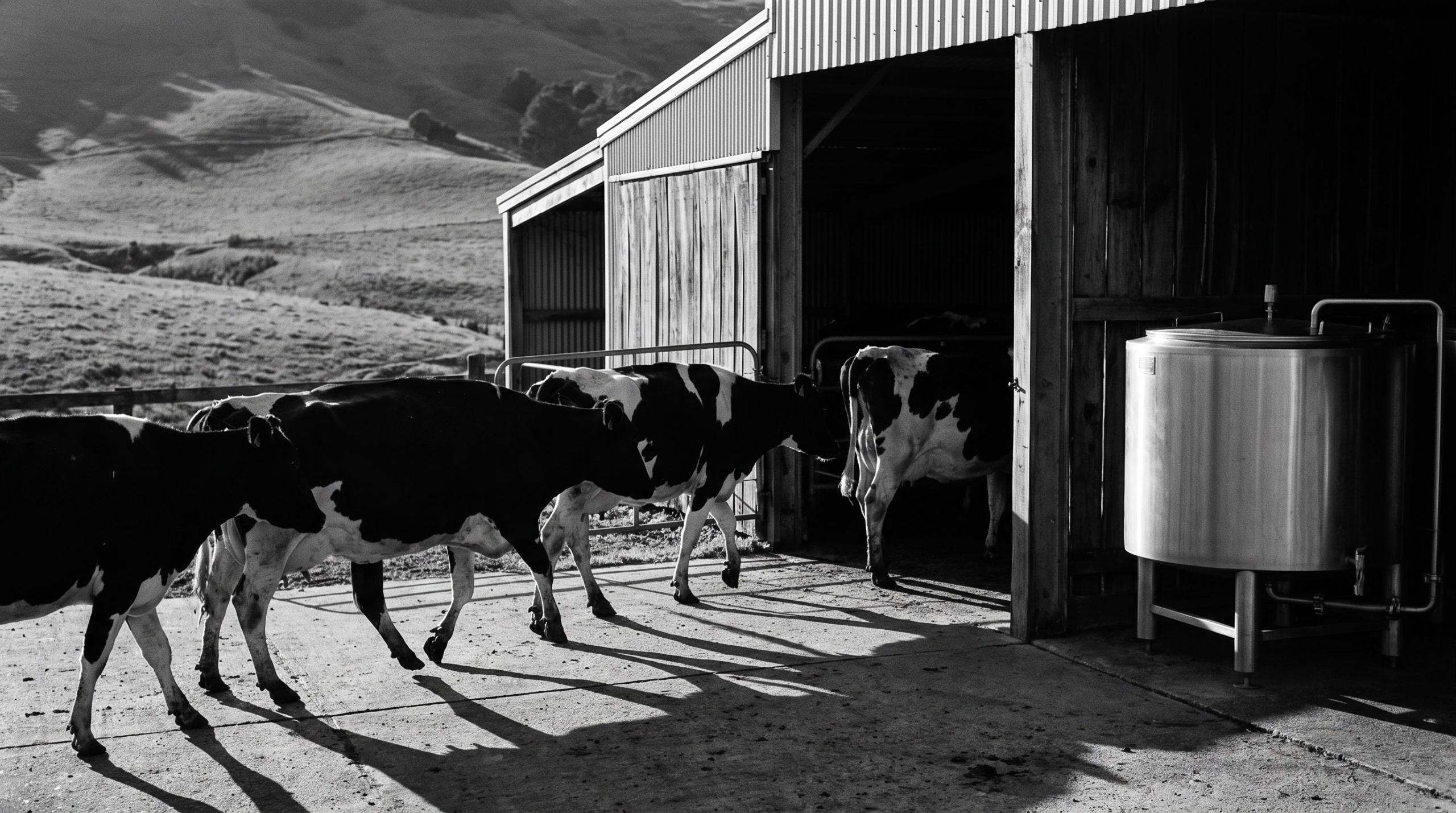

Selling raw cow’s milk for people to drink is illegal in every Australian state and territory. The national Food Standards Code requires milk to be pasteurised before sale. Raw milk cheese is the one legal exception, and it comes with strict controls. This guide sets out the law, the 2014 Victorian case, the risks, and what the rules mean for your dairy.
The debate keeps coming back. Some buyers want raw milk and will pay for it. Regulators say no. If you milk cows, you need to know where the lines sit before anyone asks you for a bottle.
What the Law Says About Raw Milk in Australia
Two layers of law cover raw milk. The national code sets the standard. Each state enforces it through its own Food Act and food safety regulator.
The Food Standards Code
The rules for dairy farms and factories sit in Standard 4.2.4 of the Food Standards Code. This standard covers primary production and processing of dairy. It requires milk to go through pasteurisation or an equal process before it reaches the public. Food Standards Australia New Zealand (FSANZ) writes the code. The states and territories enforce it.
Standard 4.2.4 does not cover retail sale. Retail rules sit in Chapter 3 of the code. The result is the same. Milk sold for drinking must be heat treated.
State Regulators Enforce It
Each state has its own regulator for dairy food safety. The NSW Food Authority sits inside NSW Primary Industries. Dairy Food Safety Victoria states plainly: selling raw milk for people to drink is illegal in Victoria. Queensland Health gives the same advice.
Penalties sit under each state’s Food Act. They are heavy, and they apply per offence. Check your own state regulator for the current figures before you make any plan.
Who the Rules Apply To
- Licensed dairy farms supplying a processor.
- Farmgate sellers and small direct-to-buyer dairies.
- Anyone who sells milk labelled for another use, such as bath milk or pet milk.
- Market stalls and shops stocking those products.
The rules target sale. They exist to stop raw milk reaching the public as a drink.
Bath Milk and the 2014 Victorian Case
For years some sellers got around the ban with a label. They sold raw milk as a cosmetic product called bath milk. Buyers knew what it was for. Many drank it.
In late 2014 a three-year-old boy in Victoria died after drinking raw bath milk. Other children in the state fell ill in the same period. The Victorian Government acted fast. From 1 January 2015, all bath milk sold in Victoria had to be pasteurised or have a bitter agent added to stop people drinking it, as Food Safety News reported.
In 2016 the coroner found raw milk was the probable cause of the boy’s death. Later reporting questioned how firm the link was, since tests on the milk itself did not match it to the bacteria in the child. The law did not change back. The bitter agent rule still stands in Victoria.
Get the latest cattle market updates in your inbox. Subscribe free to the Cattle Weekly newsletter. Subscribe here.
Raw Milk Cheese: The Legal Exception
You cannot sell raw milk to drink. You are allowed to make and sell some raw milk cheese. The rules are tight.
In late 2014 FSANZ approved Proposal P1022. The change added a new Division 5 to Standard 4.2.4 for raw milk cheese. It set rules for how you produce, move and process the milk. It also replaced the old Roquefort-only standard, 4.2.4A. FSANZ narrowed the proposal during consultation. Raw drinking milk was outside its scope from the start, as the FSANZ approval report notes.
What Division 5 Asks of You
- Control over the whole chain, from the cow to the finished cheese.
- Herd health and milking hygiene records.
- Limits on the time and temperature of milk between the cow and the vat.
- Testing of the finished cheese against microbe limits for Salmonella and Staphylococcal toxin.
- Approval from your state regulator before you start.
Queensland Health notes raw milk cheese for sale must meet the FSANZ rules. In practice this suits a farmhouse cheesemaker with tight systems. It does not suit a farm wanting to sell a few litres at the gate.
Why Regulators Hold the Line
Raw milk carries bacteria from the cow, the udder, the yard and the gear. Pasteurisation kills most of them. Without it, the risk stays in the bottle.
The Better Health Channel lists the main bugs found in raw milk:
- E. coli, including strains linked to kidney damage in children.
- Listeria, a serious risk in pregnancy.
- Salmonella.
- Campylobacter.
Young children, older people, pregnant women and people with weak immune systems face the worst outcomes. A clean shed and a healthy herd lower the risk. They do not remove it. One sick cow, one cracked liner or one slow cool-down is enough.
How Pasteurisation Works
Standard 4.2.4 sets the benchmark. Milk must be heated to at least 72°C and held there for at least 15 seconds. Another process with the same effect also meets the rule. The milk then gets cooled fast.
This kills the main disease bugs. It does not make milk sterile. Milk still needs to stay cold after it leaves the plant. Long life milk goes through a hotter process to last on the shelf.
What This Means for Your Herd Health Work
Raw milk risk links back to the same jobs you do every day. Mastitis control, teat prep, plant cleaning and fast cooling all matter. Our guide to mastitis prevention and treatment covers the herd side.
The Raw Milk Debate
Raw milk advocates make a few common points. They say raw milk tastes better. They say heat treatment changes the milk. They want the right to choose what they drink. Some want to buy straight from a farmer they know.
Regulators answer with the case records. FSANZ, the state regulators and health departments all point to illness outbreaks linked to raw milk. They also point to the people most at risk, who often do not choose what they drink. A child does not pick the milk in the fridge.
Calls to change the law come up every few years. None has shifted the ban on raw drinking milk. If you plan around a future change, you plan around something with no date and no draft.
What the Rules Mean for Your Dairy
If you supply a processor, the rules change little for you. Your milk goes to the factory and gets heat treated there. Your job is clean milk and a cold vat.
If you want to sell direct, raw milk is not the path. Look at these options instead.
Options for a Premium Price
- Pasteurise on farm. Small-scale pasteurisers exist. You need a licence from your state regulator and a food safety program.
- Farmhouse cheese. Pasteurised cheese is the simpler start. Raw milk cheese under Division 5 is possible with strong systems.
- A2 milk. Some farms earn a premium from A2 herds. Read our guide on whether A2 milk farming is worth it.
- Organic certification. This brings a premium in some markets and more paperwork.
Each option costs money to set up. Run the numbers against your herd size first. Our guide to dairy farm profitability in Australia sets out the main cost lines. For industry data on farmgate prices and supply, Dairy Australia publishes regular reports.
Before You Sell Anything Direct
- Call your state dairy regulator. Ask what licence your plan needs.
- Get a food safety program in place.
- Price the gear, the testing and the time.
- Check your processor contract. Some limit what milk you keep back.
- Talk to your insurer about product liability.
When a Buyer Asks You for Raw Milk
Sooner or later someone will ask. A neighbour, a tourist or a market customer wants a bottle from the vat. Have your answer ready.
- Say no, and say why. Selling raw milk to drink is against the law in every state.
- Do not give it away as a workaround. Labels such as bath milk or pet milk did not protect sellers in Victoria.
- Point them to a pasteurised product. If you make one, offer it instead.
- Keep a note of the request. A pattern of requests tells you there is demand for a legal product.
The rules protect your licence and your name. One sick child traced back to your farm would end your direct sales and harm your standing with your processor.
For the wider picture on running a dairy in this country, see our complete guide to dairy cattle farming in Australia. If you are new to the industry, start with how to start a dairy farm in Australia.
Frequently Asked Questions
Is raw milk legal in Australia?
No. Selling raw cow’s milk for people to drink is illegal in every state and territory. The Food Standards Code requires milk to be pasteurised or treated in an equal way before sale.
Why is raw milk banned in Australia?
Raw milk carries bacteria such as E. coli, Listeria, Salmonella and Campylobacter. Pasteurisation kills most of them. Regulators ban raw drinking milk to protect children, older people and pregnant women, who face the worst illness.
Is raw milk cheese legal in Australia?
Yes, with strict controls. Since FSANZ approved Proposal P1022 in late 2014, Standard 4.2.4 allows some raw milk cheese. Makers must control the whole chain and meet microbe limits. You need approval from your state regulator.
What is bath milk?
Bath milk is raw milk sold as a cosmetic product. Some sellers used the label to get around the ban. Since 1 January 2015, Victoria has required bath milk to be pasteurised or to contain a bitter agent.
Are dairy farmers allowed to sell milk at the farm gate?
Only if the milk is pasteurised and you hold the right licence. Raw milk sold for drinking is illegal at the farm gate, as it is anywhere else. Contact your state dairy regulator before you start.