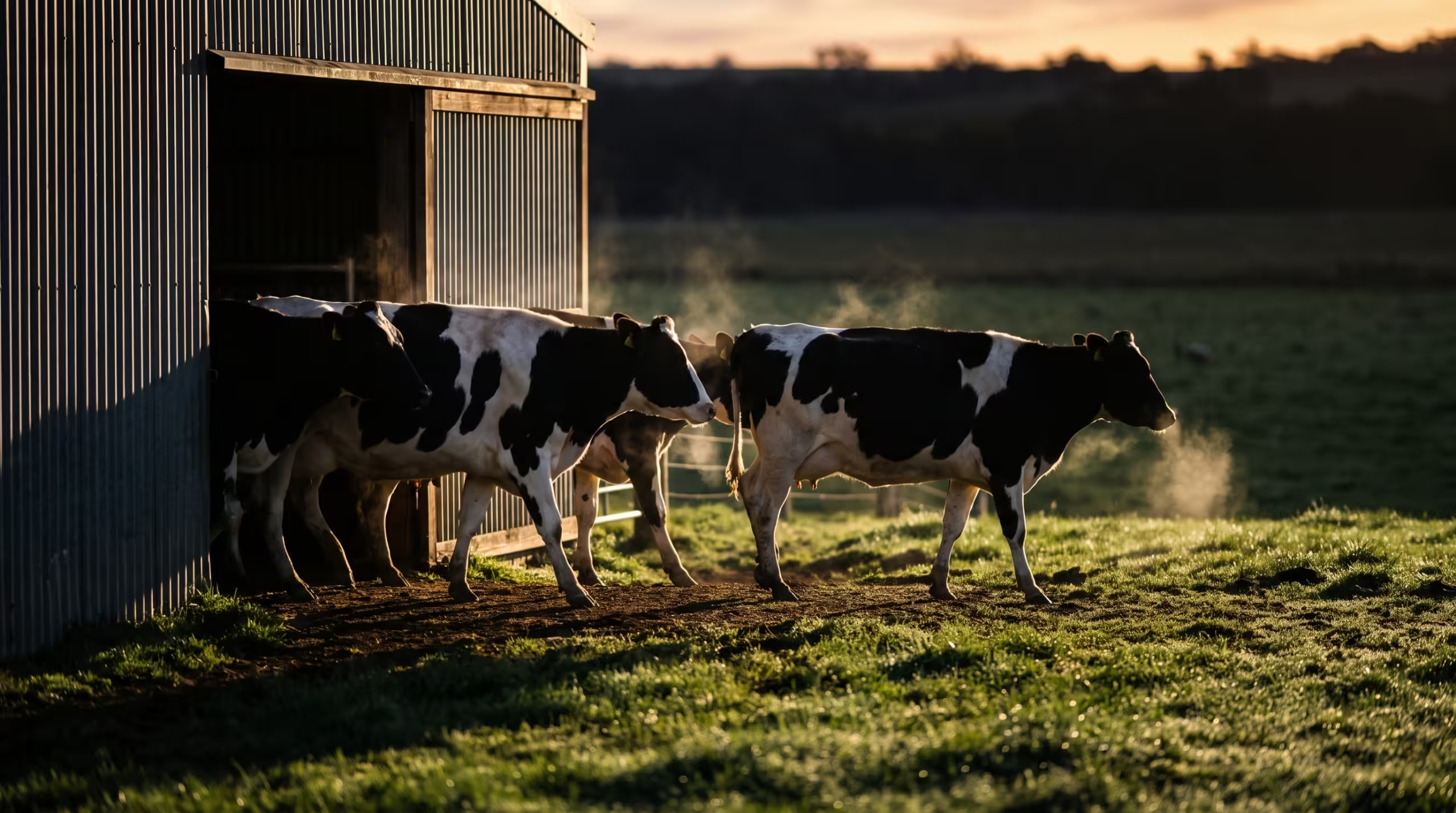

Mastitis is an infection of the udder. It is the most common disease in Australian dairy herds. It cuts milk yield, lowers milk quality and adds treatment costs. Prevention costs less than treatment. The core steps are clean milking routines, teat dip after every milking, a working machine and a dry cow plan. This guide covers each step and what to do when a cow is already sick.
The advice here supports your vet. It does not replace one. Your vet knows your herd, your bugs and your district. Use this article to ask better questions and to tighten your routine.
What mastitis is and why it matters
Mastitis means inflammation of the mammary gland. In nearly every case, bacteria cause it. The bacteria enter through the teat canal. The cow’s immune system responds, white blood cells flood the quarter and the milk changes.
There are two forms.
Clinical mastitis
You see it. The milk has clots, flakes or a watery look. The quarter feels hot, hard or sore. Severe cases make the cow dull, feverish and off her feed. A cow with severe signs needs a vet the same day.
Subclinical mastitis
You do not see it. The cow looks well and the milk looks normal. The infection still lowers production and raises the somatic cell count (SCC). Most of the cost of mastitis sits here, because it runs for weeks without a warning sign. It also spreads to other cows through the milking routine.
The somatic cell count is the number of cells in each millilitre of milk. Most are white blood cells. A high count means the udder is fighting infection. In Australia, factories pay on milk quality, and a high bulk milk cell count brings penalties or a loss of supply. Check your factory contract for the exact limit and the penalty. Dairy Australia also publishes a national limit and guidance on its site at dairyaustralia.com.au.
The bugs behind mastitis
Different bacteria need different control. Your vet or milk lab tells you which ones sit in your herd. Culture a sample from clinical cases before you treat. It takes a few days. The result guides every decision after it.
Mastitis bugs fall into two groups.
Contagious bugs
These live in the udder and spread from cow to cow at milking. The main ones are Streptococcus agalactiae, Staphylococcus aureus and Mycoplasma bovis. The spread happens through teatcup liners, milkers’ hands and cloths. Control means milking order, hygiene and culling of repeat cases.
Environmental bugs
These live in the bedding, mud, manure and water around the cow. The main ones are Streptococcus uberis and Escherichia coli. A cow picks them up between milkings, often when she lies in a wet, dirty spot. Control means clean lanes, dry pads and a clean calving area.
Knowing which group you face changes your plan. A herd with a contagious problem needs milking hygiene and culling. A herd with an environmental problem needs better yards, races and bedding.
Prevention: the milking routine
Most mastitis control happens twice a day in the shed. Dairy Australia’s Countdown program sets out a mastitis control plan for Australian farms. It covers the shed routine, the machine, nutrition, the dry period and record keeping. Find the Countdown resources through Dairy Australia.
Get these basics right first.
- Start with clean teats. Wash or wipe dirty teats. Dry them before you attach the cups. Wet teats let bacteria run up into the cup.
- Strip the first squirts. Look at the milk from each quarter. Catch clinical cases early. Do not strip onto the floor where other cows stand.
- Wear gloves. Clean gloves cut the spread of contagious bugs from hands to teats.
- Dip every teat after every milking. Cover the whole teat with an approved dip. The teat canal stays open for a short time after milking. Dip closes the gap for bacteria.
- Milk clinical and high-count cows last. Keep a separate cluster for them if you are able. Wash the cups after.
- Feed after milking. Cows stay standing when they eat fresh feed. Standing keeps the teat canal closed while it seals.
Our guide to milk quality for dairy farmers covers more of the shed routine.
Get the latest cattle market updates straight to your inbox. Subscribe free to Cattle Weekly’s weekly newsletter. Subscribe here
Prevention: the machine
A faulty machine causes mastitis. Liners wear out. Vacuum levels drift. Pulsation fails. Each fault stresses the teat end and makes infection easier.
- Replace liners on the schedule the maker gives you. Use the cow count, not the calendar alone.
- Have a qualified technician test the plant every year. Test it again after any major repair.
- Watch for cups which slip, fall off or climb up the teat. Each one points to a fitting or vacuum problem.
- Do not leave cups on after the milk flow stops. Over-milking damages the teat end.
Look at teat ends often. Rough, ringed or cracked ends mean the machine settings need attention. Our guide to dairy cattle farming in Australia explains how milking systems fit into the whole farm.
Prevention: the dry period and calving
New infections rise sharply in two windows. They are the early dry period and the weeks around calving. The udder changes fast in both.
Dry cow management
At dry-off, you stop milking and the udder begins to rest. Two tools protect the cow.
- Internal teat sealant. It forms a plug in the teat canal. It guards against new infection through the dry period.
- Dry cow antibiotic. It clears infection from the lactation now ending. Current industry guidance asks farms to match the treatment to the cow. Treat cows with a known infection. Use sealant alone for cows with a clean record. Ask your vet to set the rule for your herd, based on your cell count records.
Antibiotic use is under close watch in Australia. Use antibiotics only where they are needed. Follow the label and your vet’s advice every time.
Close-up and calving
Move cows to a clean, dry paddock before calving. Avoid mud and crowded camps. Check heifers and cows for udder swelling and leaking. Keep calving pads clean. Feed a balanced dry cow diet. Poor mineral balance weakens the udder’s defences. Your nutrition adviser or vet is able to set this up. Our guide to cattle mineral supplements gives a starting point.
Treating a clinical case
Act fast. The sooner you treat, the better the result. Use this order.
- Identify the cow and the quarter. Mark her and write it down.
- Take a sample before treatment. Keep it clean and cold. Send it for culture. The result shows which bug you face and which drug works.
- Follow your vet’s treatment plan. Use only registered products. Give the full course. Do not stop when the milk looks clear.
- Keep her milk out of the vat. Every treated cow has a milk withholding period. It is printed on the label. Test the milk if you are unsure. A single antibiotic residue breach is costly for the whole supply.
- Record the case. Note the date, the quarter, the bug and the treatment.
- Call the vet at once for severe signs. A cow with fever, a swollen quarter and loss of appetite is at risk. She needs fluids and support, not only a tube of antibiotic.
Not every cow responds. Some infections do not clear, especially Staphylococcus aureus and Mycoplasma bovis. A cow with repeat cases is a source of infection for the herd. Cull her. Keep an eye on the cost of holding her in the herd against the cost of each new case she causes.
Mycoplasma bovis needs special care. Talk to your vet at once if you suspect it. Milk and equipment spread it, and cows often fail to respond to treatment. Your state agriculture department gives advice on reporting and control. See Agriculture Victoria or your own state department for local rules.
Use your records to find the problem
You manage what you measure. Three records show you where the problem sits.
- Herd test cell counts. Review the individual cow counts each time you get a test result. Flag cows above your target for two tests in a row.
- Clinical case log. Count new cases each month. Note the quarter and the days in milk. A spike in the first 30 days of lactation points to dry period or calving problems.
- Bulk milk cell count trend. A slow rise signals a spreading subclinical problem. A sudden jump points to a single event, such as a machine fault.
Look at when infections appear. Cases in fresh cows point to the dry period. Cases in late lactation point to the shed or the machine. Cases after wet weather point to the environment. Each pattern leads to a different fix.
What mastitis costs you
The direct costs are discarded milk, drugs, vet fees and extra labour. The hidden costs are larger. They include lost production, lower milk quality payments, early culling and replacement cost. Subclinical cases drive most of this loss, because they run unseen.
Put a number on it for your own farm. Count the cases last year. Multiply by your cost per case. Then add the milk you discarded and the cows you culled early. Compare the total with the cost of new liners, a plant service and a teat sealant program. Most farms find prevention is cheaper.
If you are planning a new dairy, build mastitis control in from day one. Our guide on how to start a dairy farm in Australia covers the set-up decisions. Breed choice also plays a part. See the best dairy cattle breeds for Australian conditions.
A simple mastitis action plan
Write your plan down. Put it in the dairy. Share it with every milker.
- Set a target for bulk milk cell count and clinical cases per 100 cows.
- List the routine steps for each milking.
- Name the person who tests the machine and the date.
- Set your dry cow rule with your vet.
- Decide when to cull repeat cases.
- Review the records every month.
Check the numbers against your results each quarter. Change one thing at a time so you learn what works.
Frequently asked questions
What causes mastitis in dairy cows?
Bacteria enter the udder through the teat canal. Contagious bugs spread from cow to cow at milking. Environmental bugs come from bedding, mud and manure. Poor milking hygiene, a faulty machine and a dirty calving area all raise the risk.
How do you tell if a cow has mastitis?
Look for clots or flakes in the milk, and for a hot, swollen or sore quarter. Severe cases bring fever and a drop in appetite. Subclinical mastitis shows no sign in the milk. Herd test cell counts and a cow-side test pick it up.
Is milk from a cow with mastitis safe to use?
Do not send it to the vat. Treated cows have a withholding period printed on the product label. Milk from a clinical case is also unfit for sale or use. Keep it out of the supply until the withholding period ends and the milk tests clean.
How do you prevent mastitis in a dairy herd?
Use a clean milking routine, dip teats after every milking and service the plant each year. Keep calving areas clean and dry. Set a dry cow plan with your vet. Cull cows with repeat infections. Record every case.
What is a normal somatic cell count in Australia?
Your processor sets the limit in your supply contract. Dairy Australia publishes national quality standards and guidance. Aim well below the limit, not close to it. Review individual cow counts at every herd test.