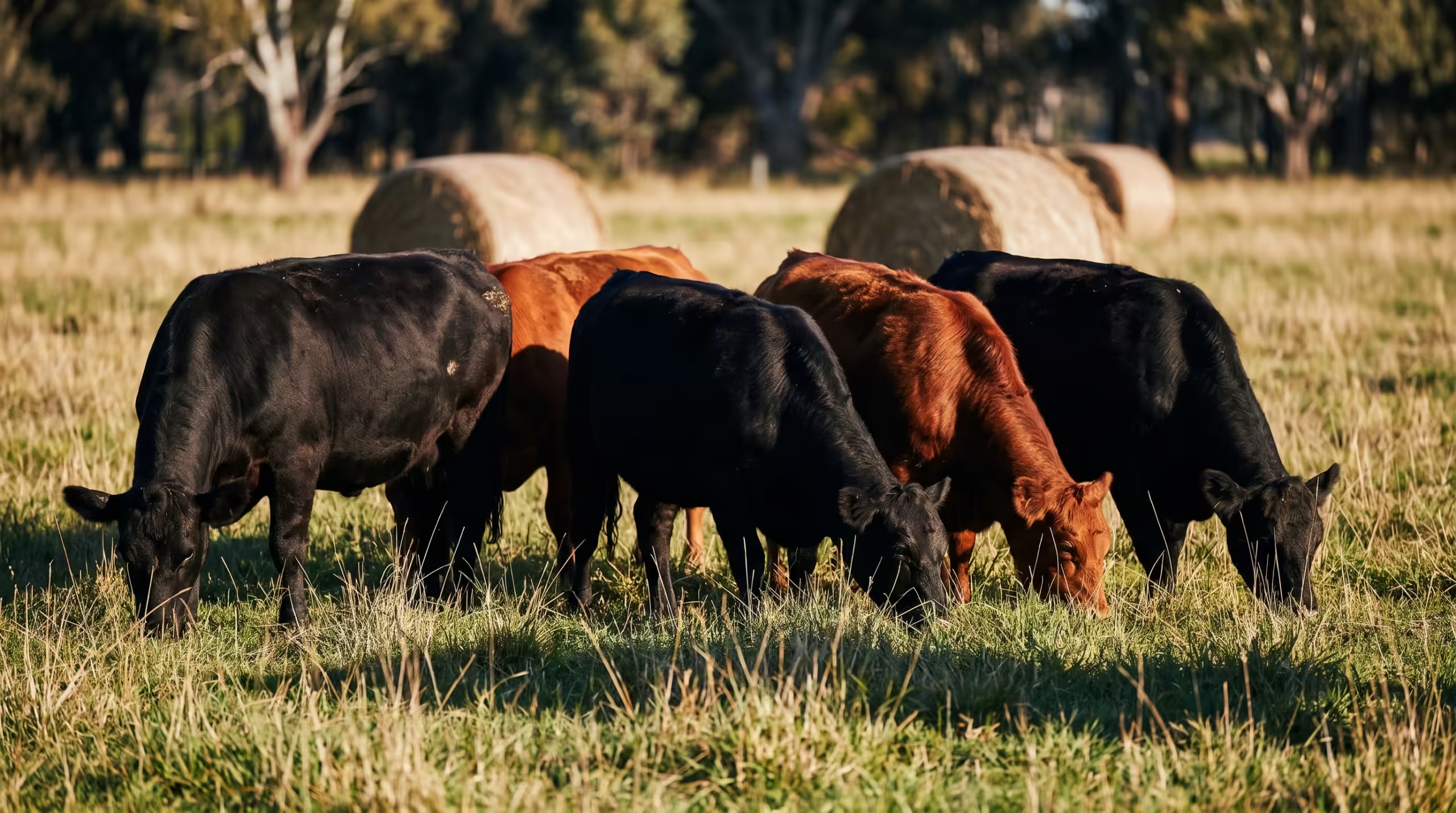

Cattle eat grass, legumes, hay, silage, grain and supplements. Pasture and forage supply most of the diet on Australian beef and dairy properties. Grain, protein meals and minerals fill the gaps when pasture quality or quantity falls short. Cattle also need clean water every day, and they need it in larger volumes than any feed.
This guide sets out what cattle eat in Australia, why each feed matters, and how you match the ration to the class of stock and the season. It sits inside our cattle nutrition and feeding guide, which links every feeding topic on the site.
How a cow turns feed into beef and milk
Cattle are ruminants. Their stomach has four compartments: the rumen, reticulum, omasum and abomasum. The rumen holds billions of microbes. These microbes break down fibre from grass and hay, and they produce the protein and energy your cattle absorb. You feed the rumen first and the animal second.
This matters for every decision you make. A sudden change in feed upsets the microbes. A diet short of protein slows fibre digestion, so cattle eat less and lose condition even with dry feed in front of them. A diet heavy in grain with too little fibre drops rumen pH and causes acidosis.
Four nutrient groups drive production:
- Energy for growth, lactation, pregnancy and maintenance. It comes from pasture, hay, silage and grain.
- Protein for growth, milk and reproduction. It comes from green pasture, legumes and protein meals.
- Minerals and vitamins for bone, fertility, immunity and growth. Pasture supplies some; supplements supply the rest.
- Water for every function above.
Pasture: the base of the Australian diet
Most Australian cattle graze for most of their lives. Meat & Livestock Australia (MLA) reports the grass-fed share of the national herd is large, and only a portion of cattle spend time in feedlots before slaughter. Pasture is the cheapest feed you own, so the first job is to grow and manage it well.
Native pasture
Native grasses cover much of the northern and inland grazing country. Species such as Mitchell grass, Flinders grass and kangaroo grass are adapted to local rainfall and soils. Quality falls quickly as the plant matures and dries off. In northern Australia, protein and phosphorus in standing dry grass drop below what cattle need, and stock lose weight through the dry season unless you supplement.
Improved and sown pasture
Sown species lift both the quantity and the quality of feed. Southern producers rely on perennial ryegrass, phalaris, cocksfoot and fescue, often with clovers and lucerne. Northern producers use buffel grass, Rhodes grass and legumes such as stylo and leucaena. Legumes fix nitrogen, raise the protein level of the diet and improve liveweight gain.
Growth stage matters more than species
Young green leaf carries high energy and protein and digests quickly. Mature, rank or frosted feed carries low protein and digests slowly. Your cattle fill up on it and still go backwards. Check what is in the paddock, not what the paddock looked like three months ago. Our guide to how different types of forage affect cattle growth and meat quality covers the species in more detail.
Get the latest cattle market updates straight to your inbox. Subscribe free to Cattle Weekly’s weekly newsletter. Subscribe here
Conserved fodder: hay and silage
Hay and silage store the surplus from good seasons for use when pasture is short. They carry your herd through winter in the south and the dry season in the north.
Hay
Hay is dried forage, baled and stored. Cereal hay, lucerne hay, pasture hay and grass hay all differ in energy and protein. Lucerne hay carries the most protein. Cereal hay such as oaten hay carries less protein and more fibre. The only way to know what you have is to send a sample for feed testing. A test reports dry matter, metabolisable energy and crude protein, and it costs little compared with a wrong feeding decision.
Silage
Silage is forage cut green and fermented without air. It keeps more of the nutrient value than hay when you make it well, and it suits wetter regions and dairy herds. Poorly sealed silage spoils, so pay attention to wrapping, compaction and storage. Silage costs more to make, but it suits wetter regions.
Grain and concentrates
Grain gives cattle dense energy. Barley, wheat, sorghum, oats and maize are all fed in Australia. Feedlots finish cattle on grain-based rations to meet market specifications for marbling and carcase weight. On a grazing property, grain serves as a drought ration, a finishing feed or a short-term supplement for weaners and breeders.
Introduce grain slowly. Start with a small amount and build the ration over two to three weeks so the rumen microbes adapt. Feed grain at a steady time each day, and split large amounts into more than one feed. Cattle given too much grain too fast develop acidosis, which kills stock and ruins the survivors’ performance.
Protein meals such as cottonseed meal, canola meal and soybean meal lift the protein level of a low-quality diet. Urea is a cheaper source of nitrogen for the rumen microbes. Urea is toxic if you mix it badly or if cattle are not adapted to it, so follow the product label and your adviser’s instructions.
Minerals and vitamins
Cattle need calcium, phosphorus, magnesium, sodium, potassium and sulphur in relatively large amounts. They need cobalt, copper, iodine, selenium and zinc in small amounts. Soils and pastures differ across Australia, so the gaps differ too.
- Phosphorus is short across large areas of northern Australia. Deficiency lowers growth and conception rates.
- Salt (sodium) is short in many inland districts and is the usual carrier for other minerals in lick blocks.
- Cobalt and selenium are short in parts of the south and east, depending on soil type.
- Magnesium matters for cows on lush spring pasture, where grass tetany is a risk.
Ask your state agriculture department or your local agronomist which deficiencies apply in your district. The NSW Department of Primary Industries and the Queensland Department of Agriculture and Fisheries both publish feeding and nutrition guidance for beef and dairy producers. Blood and liver tests confirm a suspected deficiency before you spend money on supplements.
Water: the nutrient you cannot skip
Cattle drink more as temperature, dry matter intake and milk production rise. A lactating cow in summer drinks far more than a dry cow in winter. Water quality matters as well. High salinity, blue-green algae and fouled troughs all reduce intake and performance. Check troughs every day in hot weather.
What cattle eat by class of stock
| Class of stock | Main feed | Priority nutrient |
|---|---|---|
| Calves on the cow | Milk, then pasture | Energy and protein from the cow’s milk |
| Weaners | Good quality pasture, some grain or hay | Protein and energy for growth |
| Growing cattle and steers | Pasture, with supplements as needed | Energy for liveweight gain |
| Pregnant dry cows | Pasture and hay | Maintenance energy and minerals |
| Lactating cows | Best pasture, hay or silage, grain | Energy, protein, calcium, water |
| Bulls before joining | Good pasture, supplements | Body condition, zinc, energy |
| Feedlot cattle | Grain-based ration with roughage | Energy density and fibre balance |
Lactating cows have the highest demand. A cow in early lactation needs more energy and protein than at any other time, and her condition at calving decides how quickly she returns to oestrus. Feed her for the calf you want next year, not only for the calf at foot.
Plan feed against the season
Feed budgeting keeps you ahead of shortages. Estimate the dry matter in each paddock, compare it with what your herd eats, and count the days of feed left. A common planning figure puts daily dry matter intake at roughly two to three per cent of liveweight, with higher intake for lactating cows. Check the figure for your class of stock against state department guides. Our guide on how much land you need to farm cattle in Australia shows how stocking rate ties into feed supply.
Set trigger points before the season turns. Decide in advance at what pasture level you start supplementary feeding, at what level you destock, and which cattle you sell first. Decisions made under drought pressure cost more than decisions made on a calm day.
Common feeding mistakes
- Changing the diet overnight instead of over two to three weeks.
- Feeding mature dry grass without a protein supplement.
- Skipping feed tests on hay and silage.
- Letting dominant animals take most of the supplement at a shared feeder.
- Ignoring water quality until intake falls.
- Waiting for cattle to lose condition before acting. Weight lost in cows is slow and costly to regain.
Where to get help
Your state agriculture department, a local livestock officer or a nutritionist will help you build a ration for your cattle and your country. MLA publishes feeding and nutrition tools for producers, and ABARES (agriculture.gov.au/abares) publishes seasonal and market outlook data you use to plan stocking and feed costs. For the wider picture on running a herd, read our complete guide to beef cattle farming in Australia.
Frequently asked questions
What is the main feed for cattle in Australia?
Pasture is the main feed. Most Australian cattle graze native or sown pasture for most of their lives. Hay, silage, grain and supplements fill the gaps when pasture quality or quantity drops.
How much do cattle eat each day?
A common planning figure is two to three per cent of liveweight in dry matter each day. A 500 kilogram steer eats roughly 10 to 15 kilograms of dry matter. Lactating cows eat more. Confirm the figure against your state department guidance.
How much water do cattle need?
Cattle need constant access to clean water. Intake rises with heat, dry feed and lactation. Check troughs daily in summer and treat a drop in intake as an early warning of a water quality or supply fault.
Do cattle need mineral supplements?
Often yes. Phosphorus is short across much of northern Australia, and cobalt and selenium are short in some southern and eastern districts. Confirm the need with a blood or liver test and your local adviser before you buy supplements.
Is grain bad for cattle?
No. Grain is a standard feed in Australian feedlots and drought rations. The risk lies in feeding too much too fast, which causes acidosis. Build up the ration over two to three weeks and keep roughage in the diet.
See also: Supplementary Feeding Cattle in Drought: Australian Guide.