
https://www.youtube.com/watch?v=2_NAY4Bvfwo
Curious which global shifts will most affect your paddock this season?
This short report cuts through the noise to hand producers the signals that matter right now.
Global production has more than quadrupled since 1961 and the world now shows clear shifts: poultry growth, a smaller share for beef, and Asia as a leading producer region.
For Australian producers, that matters in practical ways — from feed budgeting to when to turn off stock.
This section sets the scope: a plain view of market context, on‑farm performance, biosecurity and value‑chain moves that shape margins for red meat and livestock in Australia.
Readers will get timely, actionable insight to protect cashflow and lift productivity over the next 6–12 months, plus pointers to data and tools they can use today.
Key Takeaways
- Global production shifts change local pricing — know how world consumption affects your choices.
- Focus on controllable on‑farm actions: stocking rate, finishing weights and carcase performance.
- Use simple data tools to turn market news into practical plans for feed and turnoff timing.
- Biosecurity, sustainability and governance trends will influence margins — prepare now.
- Expect updates as new figures land; this report aims to keep advice direct and useful.
Executive overview: present-day signals shaping Australia’s red meat sector
Producers face a near-term test: steady global appetite meets seasonal constraints on processing and feed.
Demand and supply. Strong world demand supports medium-term confidence, yet producers must plan for variability in slaughter space and turnoff timing as processors manage throughput across the year.
On-farm drivers. Production settings are sensitive to rainfall, feed availability and cost of gain. Monitor feed budgets and finishing calendars to protect carcase quality and margins.
Market signals. High‑income market dynamics support average per‑capita consumption, but cost pressures can shift buyers toward value formats. Be ready to pivot product mixes as figures change.
| Signal | Near-term impact | Practical action |
|---|---|---|
| Strong world demand | Supportive price levels | Stage turnoff to match stronger bids; track export tonnes |
| Feed & rainfall sensitivity | Variation in finishing rates | Pressure-test budgets; adjust stocking to pasture growth |
| Input inflation & labour | Margin compression risk | Simplify routines; seek seasonal labour plans |
| Data-driven price discovery | Sharper seasonal spreads | Use saleyard and consignment figures to time sales |
Planning lens. Use FAO‑style per‑capita thinking to gauge where demand may hold or soften. The headline: stay nimble, keep cost discipline, and let objective carcase and weight data guide sale decisions rather than short‑term noise.
Industry governance and representation across the red meat value chain
A clear governance map helps producers know who speaks for them and where levy dollars go. This section outlines the peak bodies, their roles and how service companies are held to account.
Peak bodies and who they represent
- AMIC — processors and smallgoods
- ALEC — livestock exporters
- ALFA — lot feeders
- Cattle Australia — grass‑fed producers
- GICA — goat producers
- SPA — sheep producers
Roles, levies and oversight
Peak organisations provide leadership, policy advice and levy motions. They consult members, then advise the Minister on whole‑of‑sector matters.
Service companies — MLA, AMPC and LiveCorp — deliver research, market development and resources. Peak bodies assess their performance so levy payers see value.
Why structure matters to producers
Strong governance protects market access and integrity, keeps consumer trust intact and helps match research to on‑farm needs.
Producers who know the right source for research, extension and market support shorten the path from question to practical answer.
Global context: production, consumption and species mix trends influencing Australia
The last six decades saw dramatic growth in global production, with regional shifts now driving market cycles.
World output has scaled sharply since 1961. Asia’s rise (roughly a 15‑fold increase) now sets much of the tone for feed markets, processing investment and seasonal price swings.
Europe roughly doubled and North America rose about 2.5‑fold. That change in scale alters how Australian exporters compete for tonnes and market share.
Who eats what
Per‑capita consumption generally rises with income. Higher‑income markets show steady average demand, while middle‑income countries are adding more consumers each year.
Species shifts and planning
Poultry’s share has climbed notably. Pigmeat’s share stayed fairly stable, while beef and buffalo lost share even as absolute volumes rose.
Practical takeaways:
- Read regional figures, not just global totals, when timing turnoff and export focus.
- Expect poultry growth to temper price spikes for red meat in some markets, but premium niches remain.
- Use a simple form of market mapping to find where Australian red meat holds value — premium, provenance or service channels.
| Trend | What changed | Producer action |
|---|---|---|
| Scale-up in world production | More supply; larger seasonal swings | Align turnoff with export demand windows |
| Asia’s rapid increase | Higher feed and processing demand | Monitor feed costs; target appropriate markets |
| Species mix shift | Poultry up, pigmeat steady, beef share down | Plan cuts and marketing for premium positions |
Australia’s red meat production snapshot: beef, sheep and goat today
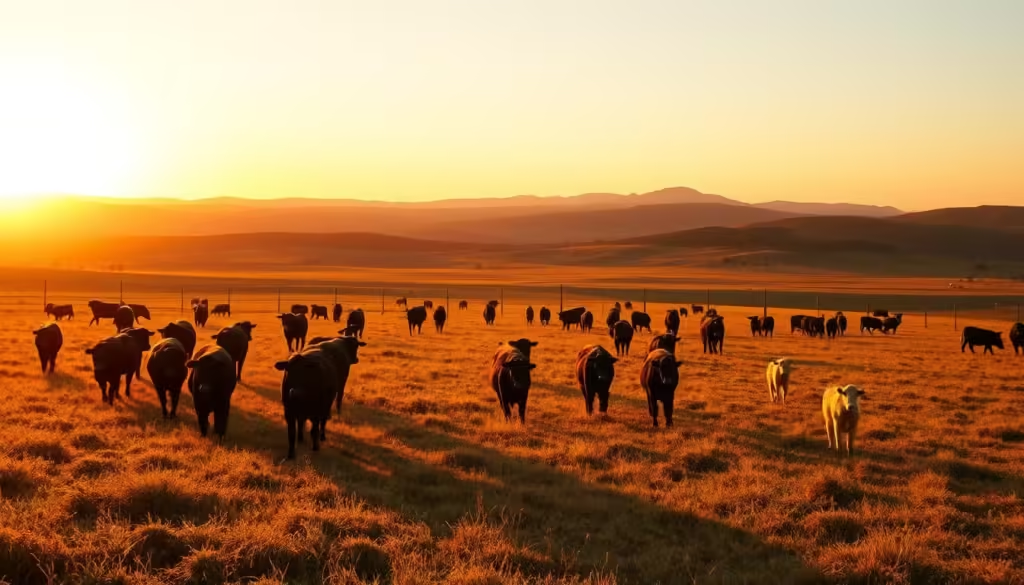
Australia’s herd and flock picture this season shows clear regional contrasts driven by rainfall and feed availability.
Beef and cattle: Australia among leading global producers
Australia remains a top beef producer, with cattle performance tied to pasture growth, feed cost and seasonal rainfall.
Aligning turnoff to abattoir schedules and lot‑feeder capacity improves grid results and carcase consistency.
Sheep, mutton and goat: volumes, regions and seasonal dynamics
Sheep and mutton cycles follow lambing windows and pasture curves. Timing drafts to weight and fat score lifts saleability.
Goat supply is regionally concentrated. Knowing local muster windows and buyer preferences helps optimise returns for goat producers.
Practical checklist
- Use regional rainfall outlooks to set stocking rates.
- Feed strategically in troughs to protect growth curves.
- Close the loop on carcase data to refine breeding and finishing targets.
| Species | Key driver | Producer action |
|---|---|---|
| Beef / cattle | Rainfall & feed cost | Stage turnoff with plant capacity; monitor weight trends |
| Sheep / mutton | Lambing windows & pasture | Draft to fat score targets; use carcase feedback |
| Goat | Regional muster timing | Match local buyers; plan musters for peak condition |
Production planning that blends regional outlooks and carcase data keeps Australia competitive. Consistency and integrity often beat volume alone in premium markets for red meat.
Consumption and export dynamics: value, volumes and destination markets

Domestic demand and export routes together set timing and price for many producers this season.
Domestic demand: average consumption levels and preferences
Per‑person supply in high‑income countries like Australia stays relatively high, though growth slows.
Shoppers move between cuts and formats when prices change. Watch retail promotions and foodservice traffic; they flag demand for value lines ahead of broader shifts.
Practical note: average consumption can hide substitution. Be ready to meet demand for mince, slow‑cook and convenient packs if household budgets tighten.
Exports and competitiveness: tonnes shipped, price signals and market access
Export competitiveness rests on reliability, clear documentation and meeting buyer specs. Track tonnes shipped by destination to time sales windows.
Price discovery improves when producers follow cattle and small‑stock indicators, currency moves and shipping conditions.
| Signal | Near‑term effect | Action for producers |
|---|---|---|
| Retail promotions | Shift to value formats | Prepare mince and convenience packs |
| Destination rules | Spec compliance required | Tighten presentation and paperwork |
| Tonnes shipped by market | Timing and capacity signals | Align forward bookings with processor slots |
| Currency & freight | Alters price signals | Monitor rates; hedge where sensible |
Building trusted buyer relationships that cover multiple destinations smooths exposure to seasonal and policy changes. Good presentation reduces downgrades and protects returns.
Livestock health and biosecurity: safeguarding herd performance
On‑farm biosecurity is the first line of defence for herd performance and market access.
Producers should treat daily routines as risk controls. Simple habits limit disease spread and keep production steady.
Current health landscape: risks, surveillance and integrity in the chain
Surveillance matters. Report unusual symptoms quickly and use lab diagnostics to confirm issues before they spread.
Life‑cycle analysis shows pre‑farm and on‑farm inputs affect system risk. Clear records protect integrity through the supply chain.
Preparedness and response: producer-level protocols and resources
“Prevention is cheaper than treatment — and it protects access.”
- Keep visitor logs, quarantine new stock and clean vehicles and equipment.
- Maintain accurate NLIS records, vendor declarations and treatment histories.
- Work with a vet on vaccination and parasite control tailored to local conditions.
- Build a simple response plan: isolation area, PPE and neighbour/buyer communication.
- Match stocking decisions to biosecurity risk; avoid commingling without health histories.
- Use state and peak body resources to keep protocols current and aligned to market rules.
Practical note: treat biosecurity as an everyday habit, not an annual task. Routine vigilance keeps the sector resilient and supports consistent sale outcomes.
Sustainability, integrity and transparency in industry Australia
Practical sustainability starts with clear boundaries: use cradle-to-farmgate logic to separate what a producer controls from upstream inputs. That keeps action focused and affordable.
Life‑cycle analysis (LCA) highlights the main on‑farm sources of emissions and footprints: feed production, fertiliser, on‑farm energy, manure and enteric methane. Producers can target these areas for the biggest gains.
Feed, protein and energy conversion are measurable. FCR and protein‑conversion ratios show how much input produces a kilogram of product. Practical levers include pasture quality, ration balance and animal health to lift efficiency.
Traceability and assurance rest on robust records. Integrity Systems data underpins traceability and market confidence; accurate logs validate sustainability claims and open higher‑value channels.
“Small changes to feed and grazing often cut inputs per kilogram more cheaply than large capital projects.”
- Use FAO‑style sheets to separate on‑farm control from upstream inputs and set clear targets.
- Benchmark cattle with weight gain/day, days on feed and carcase yield to track progress.
- Apply the same approach to goat meat and small stock: grazing plans, water points and targeted supplements matter.
Figures should inform action: prioritise measures that lower energy and fertiliser per unit without harming welfare or production levels. This keeps margins healthy and access to premium markets open.
Value chain economics: pricing signals, costs and margins
Margins from paddock to plate hinge on where value is captured in processing and retail.
From livestock to retail: value-adding, carcass utilisation and costs
Reading multiple buyer signals helps producers know when to sell. Grid specs, weight bands and fat score preferences tell which drafts fit best.
- Read pricing signals from different buyers and match turnoff weights to the most profitable band.
- Improve carcass utilisation by negotiating trim, offal and secondary cuts to lift total return per head.
- Map costs per head and per kilogram so break‑evens are clear at different tonnes processed.
- Recognise that mutton and beef behave differently; plan drafts to avoid penalties and chase seasonal demand.
“Small gains in yield often add more to the bottom line than chasing sporadic premium bids.”
Friction costs — freight, compliance and processing — matter. Build them into budgets and use simple dashboards to track margin per head. Reliable supply and clear specs strengthen Industry Australia competitiveness and keep value flowing back to producers.
Technology, research and producer resources
Practical digital tools and trusted data make day-to-day decisions clearer for graziers and feedlot operators. Producers benefit when research and tools are filed into routines they already use.
MLA programs, tools and extension for cattle, sheep and goat
MLA and partner services offer guides, webinars and templates aimed at production improvements and traceability.
Tap those resources for extension notes on weight targets, feeding rates and carcase feedback. Regularly weigh stock, calibrate feeders and keep treatment records to lift accuracy.
Using Food Balance Sheets and market figures
Food Balance Sheets track how production becomes available supply after imports, exports, stock changes and non-food uses. They help translate world figures into per‑person supply metrics and market context.
On-farm practice: build a simple dashboard to track cattle weight gains, feed use and cost per kilogram liveweight gain. Match seasonal forecasts with stocking plans to align finishing to demand windows.
| Tool / source | Use | Quick action |
|---|---|---|
| MLA guides & webinars | Practical protocols | Adopt templates; join extension sessions |
| Food Balance Sheets | Supply-to-consumption context | Use to set marketing windows |
| On-farm dashboard | Performance tracking | Monitor gains, feed rates, costs |
“The right number at the right time drives action.”
Risks, challenges and opportunities in the meat industry
Seasonal shocks and global demand swings make clear risk planning essential for every producer.
Volatility drivers:
Volatility drivers: weather, input costs, world demand and policy
Weather remains the top short-term risk. Dry spells and floods change pasture and fodder availability fast.
Feed and energy costs can increase production expenses overnight. Currency swings and export rules also shift returns.
Policy or market-access changes create abrupt demand moves. Have trigger points so action is quicker than reaction.
Market opportunities: premium, welfare, provenance and new formats
Premium programs reward consistency and documentation. Buyers pay more when welfare, provenance and eating quality are verified.
New formats — convenient packs and value cuts — open domestic and export channels. Diversify formats to smooth seasonal demand.
Capability building: skills, data literacy and on-farm innovation
People skills matter. Simple measurement — regular weighing, record-keeping and cost tracking — builds an operational edge.
Low-cost innovations such as pasture budgeting, water upgrades and better drafting lift production without heavy capital spend.
“Build a simple risk register with triggers and actions so decisions are faster when markets move.”
| Risk / Opportunity | Near-term effect | Practical action |
|---|---|---|
| Weather & feed | Variable gains; price movement | Adjust stocking, secure feed lines |
| Input costs & currency | Margin pressure | Hedge where sensible; reduce waste |
| Premium & provenance | Higher per-head returns | Document supply chain; meet specs |
| Skills & data | Better decisions, steady gains | Weigh regularly; keep simple dashboards |
Practical register: list triggers (sell, feed, defer) and set pre-agreed actions. For beef and cattle, small gains in daily growth compound into a meaningful increase in seasonal margin.
Conclusion
This year’s data point to steady global demand, but rewards go to those who choose channels wisely.
Practical actions: measure what matters — growth rates, carcase specs and cost per kilogram — and stage turnoff to buyer windows for the best returns.
Target markets that value provenance and consistent quality. For mutton, goat meat and sheep enterprises, align drafts to weight and spec windows where buyers are active.
Keep biosecurity and documentation tight to protect livestock health and market trust. Use peak bodies and service companies for tools, extension and timely news that turn world production signals into simple, on‑farm choices.
Bottom line: consistency in cattle and small‑stock performance compounds into better returns across the red meat industry — stay informed, measure often and act early.