
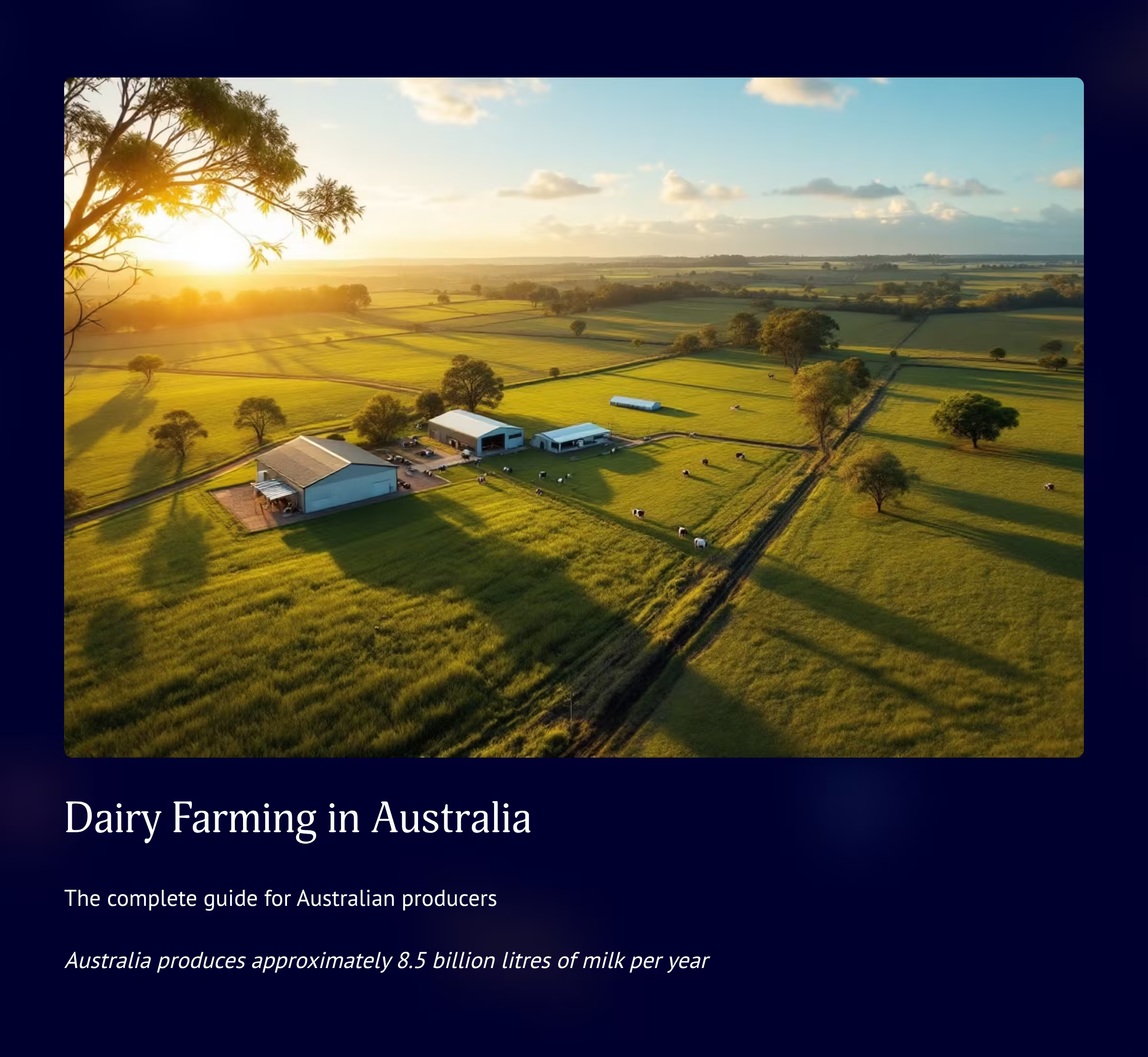
Dairy cattle farming in Australia is a major agricultural industry producing approximately 8.5 billion litres of milk per year, with Victoria alone generating around 65 per cent of national output. From small family operations in Tasmania to large-scale farms along the Murray-Darling Basin, Australian dairy farming spans six states and supports thousands of rural communities. This guide covers everything a new or aspiring dairy farmer needs to know — breeds, regions, startup costs, management, profitability, and the regulations that govern the industry.
The Australian Dairy Industry: A Snapshot
In fact, Australia is one of the world’s major dairy exporters, with approximately 30 per cent of its milk production exported internationally. In 2022–23, Australia’s dairy exports were valued at $3.3 billion AUD, according to the Australian Department of Agriculture, Fisheries and Forestry. Key export markets include China, Japan, and Southeast Asia, with cheese, butter, whole milk powder, and infant formula making up the bulk of exports.
Moreover, the industry supports thousands of farm businesses across Australia, employing tens of thousands of workers directly and many more in downstream processing and logistics. Over the past two decades, the number of farms has declined as average herd sizes have grown — a consolidation trend driven by the need for economies of scale in a competitive global market.
Dairy Australia — the national services body funded by farmer levies and matched government contributions — is the primary source of industry data, research, and extension support for Australian dairy farmers. Their annual Australian Dairy Industry In Focus report is essential reading for anyone entering or operating in the industry.
To summarise, key industry facts (Dairy Australia, Australian Dairy Industry In Focus 2025):
- National milk production: approximately 8,315 million litres per year
- Number of dairy farms: approximately 3,772 farms nationally
- Average herd size: approximately 345 cows per farm nationally
- Dairy cattle population: approximately 1.3 million cows
- Victoria’s share of national production: approximately 63.3 per cent
Key Dairy Farming Regions in Australia
Geographically, Australian dairy farming is concentrated in the southern states, where reliable rainfall and temperate climates support year-round pasture growth. The six dairying states each have distinct conditions that shape breed selection, feeding systems, and seasonal management.
Victoria
Of all the states, Victoria is the engine room of Australian dairy, producing roughly two-thirds of all milk nationally. The key dairying regions are:
- Gippsland (south-east Victoria): High-rainfall coastal region known for high-quality pasture and year-round grass growth. Gippsland farms tend to run seasonal calving systems aligned to spring pasture flush.
- Northern Victoria (Murray-Darling Basin): Irrigation-supported dairying in the Goulburn Valley, Murray Valley, and surrounding areas. However, irrigation enables summer production when dryland pastures fail, but water costs and availability are ongoing management considerations.
- South-West Victoria: High-rainfall zone around Warrnambool, Hamilton, and Colac — another major production hub with a strong pasture base.
New South Wales
Similarly, NSW dairying is concentrated in the Riverina (irrigated), the Hunter Valley and Manning River areas (smaller-scale mixed farming), and the South Coast Bega Valley — famous for Bega cheese and predominantly pasture-based seasonal systems.
South Australia
Meanwhile, SA dairy is centred on the South-East region around Mount Gambier and Millicent — a high-rainfall zone producing predominantly for the domestic cheese and fluid milk market — and the Murray Plains irrigation zone.
Western Australia
Furthermore, WA dairy is almost entirely in the South-West agricultural zone, predominantly serving the domestic Western Australian market, insulated from eastern state competition by distance.
Tasmania
In particular, Tasmania’s cool, high-rainfall climate produces some of Australia’s finest pasture conditions. Tasmanian dairy farming is predominantly pasture-based with seasonal systems, exporting significant volumes to mainland Australia and internationally.
Queensland
Finally, Queensland is the smallest dairying state, with farms concentrated in South-East Queensland (Darling Downs and Lockyer Valley). Heat stress is a significant production issue, and higher supplementary feeding costs are typical compared to southern states.
Get the latest dairy market updates and industry news straight to your inbox — subscribe free to Cattle Weekly’s weekly newsletter. Subscribe here
Best Dairy Cattle Breeds for Australian Conditions
Commercially, Australia’s dairy herd is dominated by a small number of breeds, each suited to different farming systems and climates. Therefore, understanding breed characteristics is essential for matching genetics to your region and production goals.
Holstein Friesian
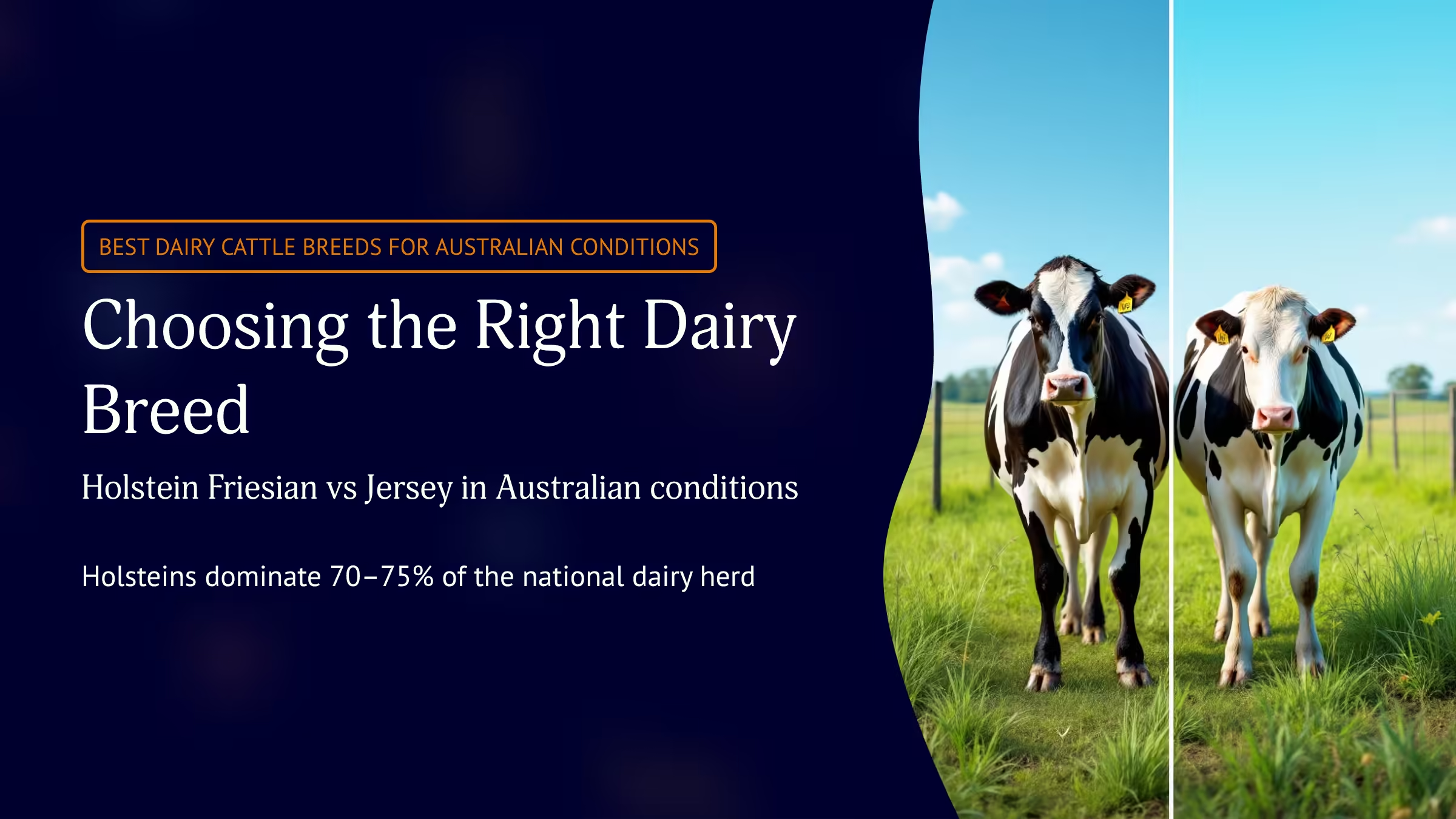
Without doubt, the Holstein Friesian is the dominant breed in Australia, accounting for approximately 70 per cent of the national dairy herd. Holsteins are the world’s highest-producing dairy breed, with Australian cows typically averaging 6,000 to 8,000 litres per lactation depending on feeding system and management. Holsteins are the world’s highest-producing dairy breed.
Suited to: High-input systems, irrigated regions, and farms with reliable supplementary feeding capacity.
Pros: Highest milk volume of any breed; well-adapted Australian genetics available; widely supported by AI genetics companies.
Cons: Higher maintenance requirements; more susceptible to heat stress than tropically-adapted breeds; body condition management requires attention.
Jersey
By contrast, the Jersey is Australia’s second most popular dairy breed, valued for its milk quality rather than volume. Notably, Jersey milk has significantly higher butterfat (typically 5.0–5.5%) and protein content than Holstein milk, making it particularly valuable for cheese and specialty milk products.
Suited to: Pasture-based systems, lower-input farms, and producers supplying premium milk pools paying on composition.
Pros: Excellent heat tolerance; efficient feed conversion relative to body size; strong fertility; premium returns in composition-based milk pricing.
Cons: Lower total milk volume than Holsteins; smaller frame can be a disadvantage in cull cow returns.
Holstein-Jersey Cross (H×J)
As a result, crossbreeding between Holsteins and Jerseys has become increasingly common in Australian herds, seeking to capture hybrid vigour, higher milk solids than pure Holstein, and improved fertility and longevity versus purebred Holsteins. Many Australian farmers operate H×J herds in a two-breed rotation.
Australian Friesian Sahiwal (AFS)
For this reason, the Australian Friesian Sahiwal (AFS) is a composite breed developed specifically for tropical and subtropical conditions, crossing Sahiwal (a heat-tolerant Indian breed) with the Friesian. As a result, AFS cattle are well-suited to Queensland and northern NSW, where heat stress significantly reduces Holstein performance.
Other Breeds
- Guernsey: Very high butterfat (4.5%+); relatively rare in Australia but valued by specialty milk producers.
- Brown Swiss: Dual-purpose breed with good milk solids; used in some smaller specialty operations.
- Ayrshire: Hardy Scottish breed with good grazing ability; small but established presence in Australia.
How to Start a Dairy Farm in Australia
First and foremost, starting a dairy farm is a significant capital commitment. Unlike beef cattle farming, where basic operations can begin with relatively modest infrastructure, dairy farming requires substantial fixed investment in milking infrastructure, refrigeration, and effluent management systems before a single litre of milk can be sold.
Land and Location
Above all, the most important decision for a new dairy farmer is location. Key questions to answer before committing to land:
- Is there a milk processor willing to take your supply? Contact processors — Saputo, Bega, Fonterra, Lion, and regional co-ops — before purchasing land to confirm they are taking new suppliers in your region.
- What is the reliable annual rainfall? Dairy farming on dryland pasture generally requires a minimum 600–700mm annually in temperate regions.
- Is irrigation water available and affordable? Irrigation dramatically increases production certainty in summer that fluctuate with seasonal conditions and policy changes — seek current pricing from a water broker or your state water authority before committing.
- What is the land’s carrying capacity? Pasture-based dairy systems in high-rainfall zones typically carry 2–4 cows per hectare.
Infrastructure Requirements and Startup Costs
| Infrastructure Item | Estimated Cost (New) |
|---|---|
| Dairy shed (rotary, 40-bail) | $500,000–$1.5M+ |
| Dairy shed (herringbone, 20-aside) | $150,000–$400,000 |
| Milk vat and refrigeration | $50,000–$150,000 |
| Effluent management system | $80,000–$250,000 |
| Laneways | $30,000–$100,000+ |
| Feed storage | $30,000–$100,000 |
| Water infrastructure | $20,000–$80,000 |
| Fencing | $50,000–$200,000+ |
| Land (200ha, varies by region) | $1M–$5M+ |
| Cattle (100 cows + heifers) | $200,000–$500,000 |
Total startup cost estimate for a 100-cow pasture-based operation: $2M–$8M+ depending on region, land price, and whether land and infrastructure are purchased or leased.
Consequently, most new entrants begin by leasing an established dairy farm with existing infrastructure — this dramatically reduces startup capital. For a broader comparison of startup costs across Australian farming enterprises, see our guide to how much it costs to start a cattle farm in Australia.
Regulatory Requirements for Dairy Farmers
- Dairy food safety licence: Required in all states. In Victoria, this is Dairy Food Safety Victoria (DFSV).
- Property Identification Code (PIC): Required before any livestock can be bought, sold, or moved. Register through your state agriculture department.
- NLIS tags: An NLIS-accredited RFID ear tag must be applied to the right ear before any animal is moved off a property. Breeder tags are white; post-breeder replacement tags are orange. Full requirements at integritysystems.com.au.
- Effluent management: All dairy farms must have an approved effluent management system. Non-compliant effluent disposal is one of the most common compliance failures in the industry.
- Milk supply contract: Sets quality standards, pricing formula, and supply volume — read this carefully before signing.
Dairy Farm Operations and Day-to-Day Management
In practice, running a dairy farm is physically demanding and operationally complex. Unlike beef cattle farming, dairy requires twice-daily milking — 365 days a year, in all weather conditions.
Milking Systems
- Herringbone dairy: Most common on small to medium-sized Australian farms. For example, a 20-aside herringbone can milk 200–300 cows per session with one operator. Suits farms up to approximately 400 cows.
- Rotary dairy: A rotating platform — a 40-bail rotary can milk 500–800+ cows per session. Higher capital cost but lower labour per cow in large herds.
- Automatic Milking Systems (robotic milking): Voluntary milking where cows present to a robot on their own schedule. Typically, one robot per 60–70 cows costs $250,000–$400,000 per unit. Increasingly adopted given regional labour shortages.
Seasonal vs Year-Round Calving
Traditionally, most pasture-based Australian dairy farms operate seasonal calving systems, calving within a 6–10 week window in autumn or spring to align peak production with peak pasture growth. Irrigated farms in the Murray-Darling Basin typically operate split or year-round calving systems to spread income more evenly.
Herd Reproductive Management
Crucially, reproductive efficiency is one of the biggest drivers of dairy farm profitability. Therefore, key targets for Australian dairy herds (Dairy Australia InCalf program benchmarks):
- 3-week submission rate (seasonal herds): >85% of eligible cows joined in the first three weeks of the mating period
- 6-week in-calf rate: >78% confirmed pregnant within 6 weeks of mating start date
- Not-in-calf rate: <12%
Dairy Cow Nutrition and Feeding
Notably, feeding accounts for the largest variable cost on a dairy farm. Australian dairy nutritionists use feed budgeting — estimating available feed supply against the herd’s nutritional requirements — to manage costs and avoid under-feeding (which reduces production and fertility) or over-feeding (which wastes money).
Pasture as the Base
As a foundation, most Australian dairy diets are built on ryegrass-based pasture. Pasture ME values:
- Young, leafy ryegrass (vegetative stage): 11–12 MJ ME/kg DM
- Mature or stemmy pasture: 8–10 MJ ME/kg DM
- Dry summer pasture: 6–8 MJ ME/kg DM
For example, a high-producing Holstein cow at peak lactation (>35 litres/day) requires approximately 200–220 MJ ME/day — pasture alone at typical Australian stocking rates cannot meet this requirement, making supplementary feeding essential.
Supplementary Feeds
In addition, common supplements in Australian dairy systems include maize silage (high energy, highly digestible), cereal silage (wheat, oats, triticale), lucerne hay (18–22% crude protein), grain mixes (wheat, barley, canola meal), and Total Mixed Ration (TMR) in intensive operations.
Common Dairy Cattle Health Issues
Mastitis
Among dairy health issues, mastitis (inflammation of the udder) is the most economically significant disease in Australian dairy herds, causing direct milk loss, treatment costs, and culling of chronic cases. Dairy Australia reports that more than $150 million is lost to Australian dairy farmers each year through poor udder health. The cost of a single clinical mastitis case has been estimated at $277 per incident. Consequently, prevention focuses on milking hygiene, teat condition scoring, dry cow therapy, post-milking teat disinfection, and regular dairy plant maintenance.
Lameness
Additionally, lameness is a major welfare and production issue. Common causes include digital dermatitis, white line disease, sole ulcers, and foot rot. Management: regular hoof trimming, foot-bathing programmes, and laneway maintenance.
Milk Fever (Hypocalcaemia)
In particular, milk fever is a metabolic condition occurring around calving, when calcium demand for colostrum and milk production exceeds the cow’s mobilisation capacity. Prevention: transition cow nutrition management, DCAB programmes, and oral calcium supplements at calving.
Bovine Respiratory Disease (BRD) in Calves
Similarly, respiratory disease in calves and young heifers can cause significant mortality and long-term production losses. Prevention: proper calf housing with good ventilation, colostrum management within 6 hours of birth, and vaccination programs.
Is Dairy Farming Profitable in Australia?
Ultimately, profitability in Australian dairy farming depends heavily on four variables: the milk price received, the cost of production, the herd’s production per cow, and the level of debt carried by the farm business.
Milk Pricing
In terms of pricing, Australian dairy farmers are paid by processors on a per-litre or per-kilogram-of-milk-solids (MS) basis. Milk solid content (butterfat + protein) is rewarded at a premium in most milk supply contracts. Specifically, Australian dairy farmers received an average of A$9.35/kg MS in 2024–25, according to Dairy Australia. For 2025–26, farmgate prices remain elevated — major processor opening prices have generally been in the high-$8/kg MS range (Fonterra Australia revised its opening weighted average to A$8.90/kg MS in June 2025).
Cost of Production
According to ABARES farm survey data, cost of production varies significantly by region. Dairy Australia’s 2024–25 Dairy Farm Monitor Project reported regional costs ranging from $7.41/kg MS (Tasmania) to $11.81/kg MS (Queensland). As a result, major cost categories (Dairy Australia Dairy Farm Monitor Project) are:
- Feed (purchased supplements + pasture costs): 40–55%
- Labour (family and hired): 15–25%
- Finance (interest): 10–20%
- Fuel, power, and repairs: 8–12%
- Herd health and AI: 3–6%
Profitability Levers
In practice, the most profitable Australian dairy farms consistently achieve high production per cow (through superior genetics, feeding management, and reproductive efficiency), low feed cost per kg MS (through high pasture utilisation and on-farm feed production), low labour cost per cow (through scale and technology), and high milk solids percentage (through breed selection and optimised nutrition).
Dairy Australia’s Dairy Farm Monitor Project provides annual benchmarking data on farm profitability by region — an essential resource for understanding where your operation sits relative to industry peers.
Government Support and Industry Resources
Key Industry Bodies
- Dairy Australia (dairyaustralia.com.au): National levy-funded services body providing extension support, research, benchmarking data, and the InCalf program for reproductive management.
- Australian Dairy Farmers (ADF) (australiandairyfarmers.com.au): National farmer representative body advocating on policy, supply chain, and trade issues.
- State dairy associations: Dairy Farmers Victoria (DFV), NSW Farmers Dairy Committee, Dairy Farmers of WA.
Government Programs
- Farm Household Allowance (FHA): Income support for farming families in financial hardship, administered by Services Australia.
- AgriStarter Loans: Concessional loans for new entrant farmers — Queensland Rural and Industry Development Authority (QRIDA) is the leading example; check your state’s rural finance authority.
- Drought assistance programs: Eligible farmers in drought-declared areas may access freight subsidies, fodder grants, or concessional finance.
In addition, for producers considering beef rather than dairy, see our complete guide to beef cattle farming in Australia.
Frequently Asked Questions
Is dairy farming profitable in Australia?
Overall, dairy farming can be profitable in Australia, but profitability varies significantly between farms and regions. ABARES benchmarking shows that the top 25 per cent of Australian dairy farms consistently generate strong returns, while the bottom quartile struggles to cover costs at prevailing milk prices, according to Dairy Australia’s Dairy Farm Monitor Project. Key drivers of profitability are milk price received, cost of production per kilogram of milk solids, and the level of debt the farm carries. Farms with lower debt, high pasture utilisation, and access to irrigation tend to be the most resilient.
What are the 7 breeds of dairy cattle?
Internationally, the seven main dairy breeds recognised are: Holstein Friesian, Jersey, Brown Swiss, Guernsey, Ayrshire, Milking Shorthorn, and Dutch Belted. In Australia, the Holstein Friesian and Jersey dominate the commercial dairy herd, together accounting for the majority of cows milked nationally. The Australian Friesian Sahiwal (AFS) is also significant in subtropical Queensland.
How many acres do you need to run a dairy farm?
In general, the land area required depends on your region, rainfall, irrigation access, and feeding intensity. In high-rainfall Victoria (650mm+ per year), a pasture-based system can carry 2–3 cows per hectare — meaning 100 cows requires 35–50 hectares of milking area. On irrigated Murray-Darling farms, stocking rates of 4–6 cows per hectare are achievable. Your farm’s carrying capacity must be assessed for your specific conditions.
Where is the largest dairy farm in Australia?
By contrast with the United States, Australia does not have ultra-large confined animal feeding operations (CAFOs) seen in parts of the United States and China. Most Australian dairy farms are family-owned operations. The largest farms by herd size tend to be in Victoria’s irrigated regions and Tasmania. Australian dairy farming emphasises pasture-based, family-operated farms rather than industrial-scale confinement operations.
More on this topic: Dairy Cattle Farming in Australia, the complete guide.

2 comments
[…] Dairy operations benefit from the same core tools as beef herds, shade, water and adjusted feeding times, with sprinkler and fan systems in the dairy yard giving an added line of defence during milking, when cows stand close together on concrete and radiant heat builds quickly. Producers weighing a move into dairying will find the wider setup considerations in our dairy cattle farming guide. […]
[…] calving area all reduce the metabolic disorders which eat into early lactation output. Our dairy cattle farming in Australia guide covers the full calendar of decisions behind a productive dairy […]