

This article explains what A2 milk is and why one small protein change matters on farm and at the fridge.
The term refers to cow milk that carries the A2 variant of beta‑casein. A single amino‑acid swap alters digestion for some people without promising miracle cures.
Originating in New Zealand, the idea was commercialised by The a2 Milk Company and spread through Australian and global dairy supply chains.
Farmers test animals with DNA hair samples to build herds that are A2A2 and to avoid A1 admixture during collection and processing.
Independent research, including EFSA reviews, finds no proven link between related peptides and chronic disease, yet many consumers report fewer lactose‑like symptoms.
Practical choices for producers and rural families hinge on testing, segregation, clear labelling and realistic expectations about benefits and risks.
Key Takeaways
- One amino‑acid difference in beta‑casein can change digestion for some people.
- New Zealand research and The a2 Milk Company drove early commercialisation.
- On‑farm DNA testing and strict segregation protect product integrity.
- EFSA found no established disease link; evidence is mixed on symptom relief.
- A2 products still contain lactose and are not for infants with cow’s milk protein allergy.
- Producers must weigh premiums, market demand and the cost of selective breeding.
What is A2 milk and how is it different to regular cow’s milk?
A single protein variant can change digestion for some people. Dairy contains two main protein groups: casein and whey. Casein makes up about 80% of the milk protein and drives most of the debate on the farm and at the fridge.
Casein vs whey: the milk proteins that matter
Casein is the chunkier protein fraction; whey is the lighter, soluble part. About 30–35% of casein is beta‑casein, the specific milk protein central to consumer and breeder choices.
A1 and A2 beta-casein: a single amino acid, a big digestion difference
The beta‑casein protein differs by one amino acid at position 67: one form has proline, the other histidine. That swap alters how digestive enzymes cut the chain and can allow BCM‑7 to release from the histidine form.
How A2 milk compares with human breast milk and goat/sheep milk
Human breast milk and most goat and sheep milks contain the proline form, so the protein form is closer to that found in goats and sheep than in many regular milk supplies.
- Practical point: producers must genotype to supply only the proline form; it cannot be created after milking.
- Nutrition: energy, fat and protein levels stay similar; the key difference is protein form, not amount.
The science on digestion: BCM‑7, lactose-like symptoms, and current evidence
The way beta‑casein is built affects whether digestion releases BCM‑7, a tiny peptide with potential gut effects.
Why A1 beta‑casein can release BCM‑7 and what that means for your gut
Enzymes in the gut can cleave certain beta‑casein sequences and release BCM‑7 in lab tests. When proline is present at position 67, that site resists cleavage and the peptide is far less likely to form.
Human digestion studies are inconsistent. Some people report fewer lactose‑like symptoms despite the same lactose content, which points to a protein‑related cause for discomfort in a subset of drinkers.
What studies and reviews say today
EFSA’s 2009 review found no cause‑and‑effect link between dietary BCM‑7 and non‑communicable disease such as type diabetes or heart disease. Later trials differ in design and outcome.
- Some randomised trials report reduced symptoms with certain milk types.
- A 2023 MRI crossover study showed different gastric emptying between mixed and single‑type protein samples in lactose maldigesters.
- Overall, the strongest independent evidence does not support big health claims; benefits appear to be symptom relief for some individuals rather than disease prevention.
Practical takeaway: this option may help some people with digestion issues, but it still contains lactose and is not suitable for those with diagnosed milk protein allergy or galactosaemia. Farmers and retailers should avoid medical claims and focus on digestive comfort as the primary benefit.
Inside the genetics: how an A2 milk cow is identified and bred
Genetics set what a herd will produce long before the first milking. Farmers choose animals and sires based on genotype, not appearance.
Beta‑casein genotypes explained: three common types exist — A1A1, A1A2 and A2A2. An A2A2 female produces only the proline form of the casein. That means every calf gets an A2 gene and the herd can convert across generations.
DNA hair-sample testing and verification on farm
Hair‑root tests are simple to collect and return a clear genotype. Processors want herd certification and batch testing to prevent A1 admixture entering the silo.
Breed tendencies and production planning
Guernseys and Jerseys often test higher for the A2 genotype. Holsteins and Ayrshires commonly carry both types and need targeted sire choice to change the herd mix.
- Plan for lag time: testing, mating and replacement take seasons, so budgets should reflect a staged transition.
- Crossbreeding option: use A2A2 sires with Holstein dams to keep yield while improving genotype odds.
| Genotype | Produces | Breeding impact |
|---|---|---|
| A1A1 | A1 casein only | No A2 calves from this dam |
| A1A2 | Both forms in herd | Requires sire selection or segregation |
| A2A2 | A2 casein only | Passes A2 to all calves; key to herd conversion |
The Australian dairy industry context: availability, brands, and market trends
A branded dairy option that began as a New Zealand start‑up now has routine shelf space in most cities.
First marketed in Australia in 2003, the product grew steadily. By 2014 the milk company held roughly 8% of the market for milk products.
Retail reach is broad: major supermarkets stock dedicated lines and online stores list yoghurt, cream and infant formula from certified herds.
Industry bodies and independent research urge care with health claims. EFSA’s 2009 review and local studies do not show causal links to chronic disease, so messaging now focuses on digestive comfort and clear labelling.
- Multiple processors now market products that “naturally contain A2 protein”, reflecting wider industry uptake.
- Producers can access contracts, but must meet segregation and testing rules to qualify for premiums.
- Uptake rose fastest in urban areas, yet regional stores increasingly stock these dairy products thanks to stronger cold chains.
This article compares on‑shelf options and flags certified versus general herd claims, helping people choose with less confusion.
Buying and using A2 milk in Australia: labels, quality and storage
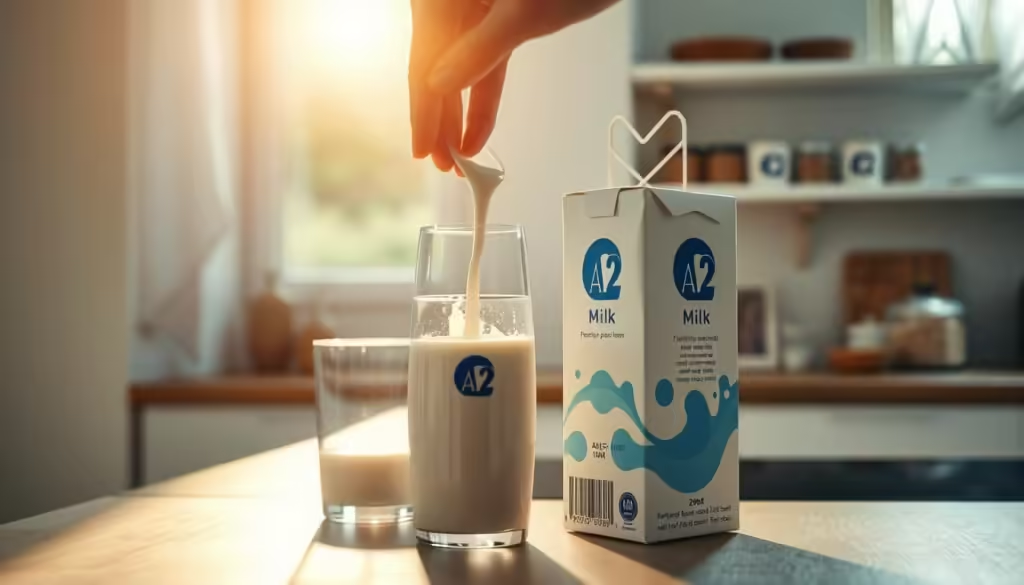
Shoppers and farmers alike should know how labels and storage shape the product that reaches the fridge.
Look for clear certification. The strongest claims state “A2 protein only” and cite herd DNA testing plus batch verification. If a carton instead says it “naturally contains A2 protein” without details, it may be from mixed herds.
Check dates and handle purchases with care. In hot Australian conditions, an insulated bag and a quick transfer to a 0–4°C fridge helps preserve quality and flavour.
Practical checklist for freshness and confidence
- Confirm certification or herd testing on the label.
- Move product from the store to fridge promptly; avoid temperature abuse.
- Remember the nutrition: macro content matches regular milk and lactose remains present, so benefits come from the protein difference, not sugar change.
- People trialling the product for digestive comfort should change one thing at a time and note symptoms.
| What to check | Why it matters | Action | Notes |
|---|---|---|---|
| “A2 protein only” statement | Ensures batch verification | Buy certified brands | Look for lab or herd ID |
| Use‑by date & cold chain | Drives shelf life and safety | Carry insulated, chill to 0–4°C | Buy smaller volumes if remote |
| Label wording | Shows mixed vs single‑source content | Avoid vague claims | Ask retailer about supplier practices |
From paddock to bottle: producing A2 milk on Australian farms

Turning a herd towards single‑type protein supply begins with one practical move: whole‑herd genotyping.
Selective breeding programs to build A2A2 herds
Start with a herd DNA map. Producers use that data to pick A2A2 sires and phase replacements. Strategic culling and planned matings steadily shift genotype mix over seasons.
Milk collection, segregation, and production controls to avoid A1 admixture
Segregate lines from the dairy to the tanker and through the plant. Label vats, train staff and keep clear records to satisfy audits.
Maintain sampling at pickup and intake. A single contaminated batch can erase seasonal premiums, so avoid cross‑filling and rushed CIP routines.
Economic considerations: premiums, demand, and risk management
Model lead times, testing costs and replacement rates before committing. Discuss premium structures with processors and align calving patterns to contracted volumes.
Watch market signals and research so breeding targets and production plans stay responsive to demand changes.
| On‑farm control | Proof required | Action for producers |
|---|---|---|
| Whole‑herd genotyping | DNA reports | Map herd, plan sire use |
| Segregated handling | Vial & tanker logs | Label vats, train staff |
| Batch verification | Intake sampling results | Retain records, test regularly |
| Financial planning | Contract & premium terms | Model cash flow, discuss with processor |
Benefits, risks and alternatives: who A2 milk may suit — and who should skip it
Choosing a product with a single beta‑casein form is a simple, low‑risk experiment for adults who get bloating or discomfort from standard milk. Try a fortnight, note symptoms, and keep other foods unchanged so results are clear.
Digestive comfort vs medical needs
Some people report less discomfort because the protein form reduces release of the BCM‑7 peptide in digestion. That change may ease lactose‑like symptoms for a subset of drinkers.
Important risks and limits: the product still contains lactose and milk protein. For anyone with a diagnosed milk protein allergy, it is not safe. People with confirmed lactose intolerance or galactosaemia will not be helped by protein form alone.
Large reviews, including EFSA’s 2009 analysis, found no proven causal link between this peptide and conditions such as type 1 diabetes or heart disease. Observational studies exist, but they do not prove cause.
Alternatives to consider
Goat and sheep dairy typically carry the proline form and may suit some palates and guts. Plant-based options (soy, oat, almond) vary widely in protein and nutrition, so read labels.
- Select products that match your nutrition needs and budget.
- Parents: do not swap infant feeds without clinical advice — infant feeding has specific medical guidance.
- Focus on overall diet quality rather than a single fix.
Conclusion
Practical action — not hype — best serves producers and consumers who want to test whether a different protein form eases symptoms.
For Australian families and producers, try a short household trial if digestion is the main issue. The product still contains lactose and the same core nutrition as regular milk, so results are about tolerance, not major health change.
On farm, building an A2A2 herd requires testing, sire choice and strict segregation to protect premiums and reputation. Recordkeeping and batch verification mirror the systems first pushed from new zealand by the milk company.
Keep decisions evidence‑led: watch emerging research, track herd performance and adjust production or purchasing choices to fit family needs and business budgets.