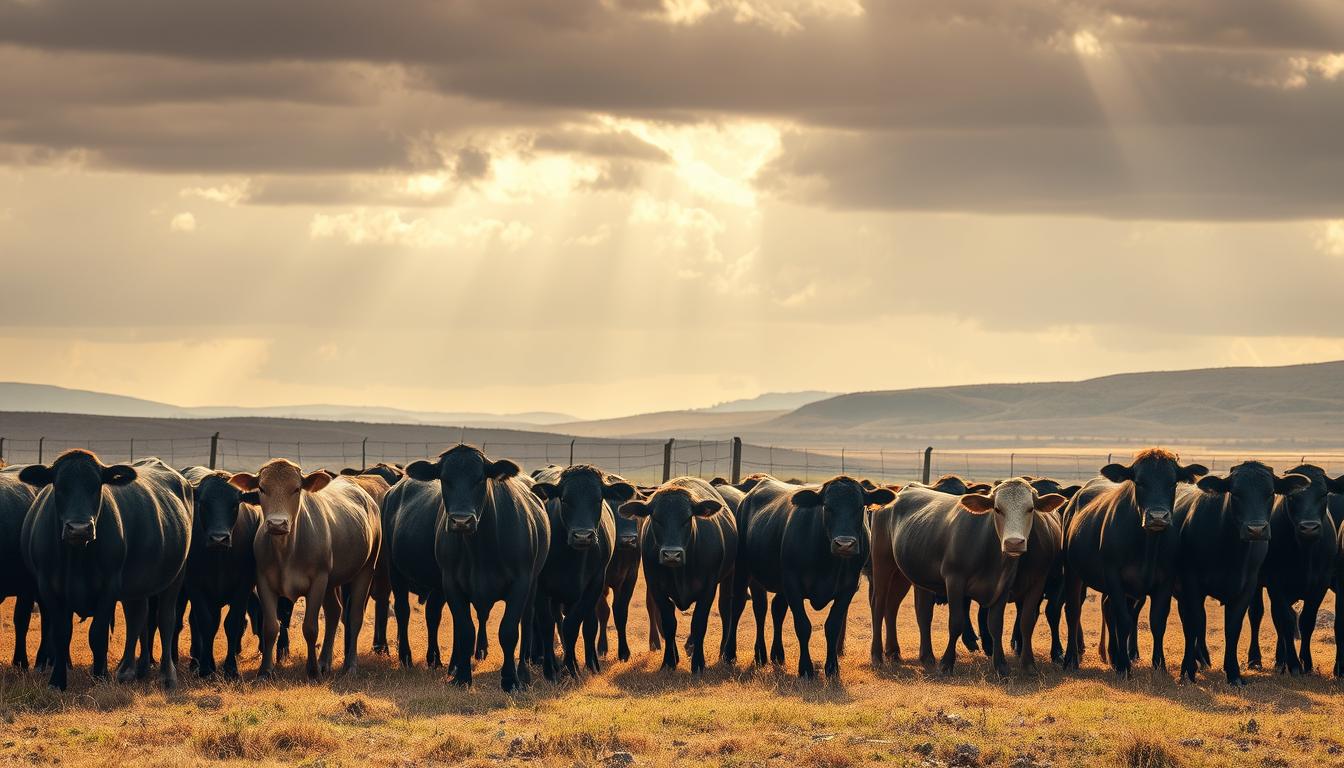

Surprising fact about the Australian cattle industry forecast: the national herd is expected to sit near 30.1 million head by June 2025, as beef production heads for a record year.
This outlook of the Australian cattle industry forecast shows the prices easing slightly in early 2025 even while export demand stays firm. A softer Australian dollar and lower ocean freight are helping keep markets competitive.
Producers face higher turn-off and rising processing, which lifts output and puts pressure on supply chains. Seasonal conditions split the country: the north looks generally favourable, while drier southern regions raise feed grain needs and feedlot use.
What matters on-farm is clear: plan stocking, sell decisions and cashflow around a phase of high supply and throughput. This report walks through production, processing, seasonal risks and export settings to point to where margins can be made.
Key Takeaways
- Herd near 30.1 million head and record beef production prompt planning for higher throughput.
- Prices may ease in H1 2025 despite firm export demand thanks to a softer AUD and easing freight.
- Regional differences matter: north favourable, south drier — impact on feed budgets and turn-off.
- Slaughter and processing changes will shape local markets and timing for selling stock.
- Climate variability is the top risk; restock or destock choices should follow rainfall signals.
Executive outlook: supply up, prices softer, exports firm
Short take: supply is rising through H1 2025 and prices expected at saleyards will soften, even as export demand stays solid into the year.
Higher turn-off and elevated slaughter lift beef output. An initially lower AUD and slightly cheaper ocean freight keep export buyers active.
Reduced US supply is redirecting global orders, which supports shipments despite more stock coming to market. Processors plan steady buying and high throughput for months ahead.
“A high-supply phase means softer local prices, but firm overseas pull keeps the pipeline moving.”
Seasonal rainfall is mixed — generally favourable in the north and drier in the south — and that shapes on-farm sell decisions and feed budgets. Producers should weigh current economic conditions and geopolitical risks when securing forward sales to protect margins.
- Key points: supply up, cattle prices to ease, but exports remain a constructive force for markets.
Australian cattle industry forecasts for 2025 and beyond
The next year is set for heavier throughput — the herd eases while slaughter rates climb.
Herd and slaughter
The national herd sits near 30.145 million head at 30 June 2025. Elevated turn‑off keeps slaughter high and nudges the cattle herd lower toward about 28.8 million by June 2027.
Beef production forecast
Beef production is production set to a record of roughly 2.624 million tonnes cwt in 2025. Slaughter of 8.535 million head represents a forecast increase of about 3% year on year and fuels exportable supplies.
Processor capacity and labour availability have improved since earlier constraints. That supports steady throughput, though regional staffing still affects shift patterns.
Climate variability remains the key swing factor. Drier southern seasons lift turn‑off and lighten carcase weights, while better northern rainfall supports restock and heavier cattle, affecting markets.
| Metric | 2024 | 2025 (proj) | 2027 (proj) |
|---|---|---|---|
| Herd (million head) | 30.561 | 30.145 | 28.8 |
| Slaughter (million head) | 8.29 | 8.535 | — |
| Beef production (tonnes cwt) | 2.58 million | 2.624 million | — |
| Live exports (head) | — | 803,000 | — |
Cattle prices, costs and on-farm conditions
Short read: supply growth through H1 2025 will put a little downward pressure on local rates, while farm conditions and input costs shape selling choices.
Cattle prices expected to ease in H1 2025 amid high supply
With more stock available and processors keeping steady buying, cattle prices are expected to track softer into mid‑year. Processing demand remains firm, but yardings may temporarily outpace capacity and weigh on values.
Feed, pasture and rainfall: dry southern conditions vs largely favourable north
On‑farm conditions vary. Dry conditions in southern grazing zones have cut pasture growth and lifted feed grain use.
By contrast, acceptable rainfall in the north supports restocker activity and steadier paddock finishes. Feedlots — expanded about 24% over five years — remain a strong outlet where pasture is short.
AUD, freight and input costs: export competitiveness and margins
An initially lower currency and slightly cheaper ocean freight sharpen export edges and cushion saleyard weakness. Producers should balance feed plans and selling timing against these economic conditions.
- Lock forward sales where available to protect margins.
- Keep lines even to compete better at the rails.
Exports, markets and trade outlook
Improved price competitiveness is nudging international shipments higher into key markets. Higher production and a softer currency are helping volumes move while demand stays steady across major export markets.
Beef exports: volumes trending higher with improved price competitiveness
Beef exports are expected to rise to about 2.035 million tonnes cwe in 2025, a near 3% lift on the prior year.
This increase reflects higher production and sharper price points that make australian beef more competitive in North Asia, the US and other major export markets.
Live exports: forecast increase to around 803,000 head and key destinations
Live exports are forecast to climb to roughly 803,000 head in 2025. A later northern wet season onset and adequate supply underpin this rise.
Logistics have improved as freight rates ease and vessel capacity expands, helping move live cattle and boxed beef to South‑East Asia and North Asia.
“Export demand remains firm, supporting processor throughput even as local prices soften.”
- What to watch: policy shifts and quota settings in major export markets.
- Freight and currency trends will shape competitiveness versus South American and US suppliers.
- Growth in tonnes shipped supports processors and saleyard clearances through the year.
State-by-state outlook: supply, slaughter and prices
Local rainfall and herd movements are already shaping slaughter rates and weekly market flows across states.
Queensland and New South Wales: restocker shifts, slaughter rates and demand
Queensland’s recent rainfall has improved pasture for some and lifted restocker interest. Still, high numbers of cattle available will likely keep prices steady to softer as slaughter rates increase through H1 2025.
New South Wales shows drier signals. More producers are leaning to destocking, which should push prices marginally lower unless strong interstate restocker demand and export demand offset the flow.
Victoria and South Australia: destocking pressure and processing demand
Victoria has average to better conditions in places, but destocking pressure remains. Processing and export programs will help limit falls, with slaughter marginally higher from an already strong 2024 base.
South Australia faces dry conditions and full yardings. Prices are likely to drift lower while processors keep busy on export orders, sustaining throughput.
Tasmania and Western Australia: steady to softer pricing and export support
Tasmania may see prices ease slightly under local dry conditions. Slaughter is above five‑year average levels and export demand offers a support line.
In Western Australia, more supply after rebuild phases weighs on values. Strong offshore demand and processing capacity should prevent sharp declines.
“Rainfall patterns and feed availability remain the main swing factors for weekly markets.”
- Where paddocks hold feed, restocker demand lifts; where feed is tight, turn‑off rises.
- Slaughter rates are set to rise in most states, keeping processing chains busy into the year.
- Compare prices to five‑year average benchmarks to judge where market opportunities sit.
| State | Conditions | Slaughter rates | Price outlook vs five‑year average |
|---|---|---|---|
| Queensland | Improved rainfall in parts | Increasing | Steady to softer |
| New South Wales | Drier signals | Elevating | Marginally lower |
| Victoria | Average to above‑average | Marginally higher | Below five‑year average pressure |
| South Australia | Dry conditions | Strong | Lower |
| Tasmania | Local dry conditions | Above five‑year average | Slight easing |
| Western Australia | Rebuild supply | Steady | Soft but supported |
Conclusion
Record beef production — about 2.624 million tonnes cwt in 2025 — sits alongside a herd near 30.1 million head and slaughter of 8.535 million head. This outlook means higher throughput and clear planning is needed on farm.
Exports remain a support, with boxed shipments near 2.035 million tonnes cwe and live exports around 803,000 head. A softer currency and easing freight help keep demand steady.
Practical takeaways: expect prices to ease in H1 2025, schedule when cattle are sent to works, keep lines even and consider forward sales to protect margins. Focus on controllables — weight, feed, timing — while watching trade and seasonal conditions over the coming years.