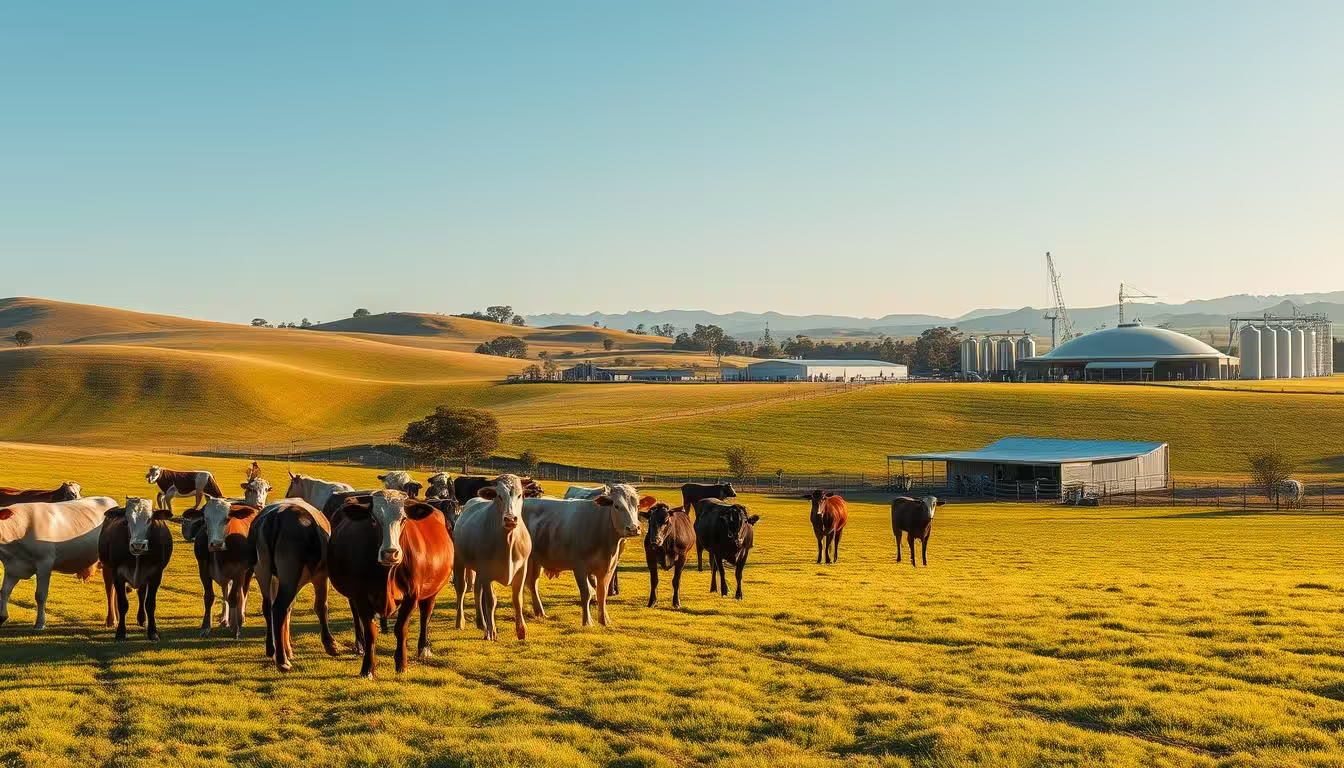

Practical herd management starts with clear steps that lift milk and reduce avoidable losses on Australian farms.
The average herd sits at about 220 cows, mostly Bos taurus types, with the Holstein Friesian the common high‑volume breed. Lactation peaks around 40–60 days after calving, cows milk for ~305 days then take ~60 days dry before the next calving.
This page sets out a hands‑on plan for better health, feeding and comfort so production improves through the seasons. It links breeding choices, ration balance and cow comfort to on‑farm results.
Readers will get straightforward actions: what to check this week, where to invest first and how a simple annual health calendar keeps the herd on track.
Key Takeaways
- Focus first on mastitis and lameness detection to protect milk and herd value.
- Balance rations for early lactation to support peak production and recovery.
- Use a calving‑to‑dry‑off calendar to reduce disease and culling.
- Match breeding goals to breed traits so nutrition and genetics work together.
- Prioritise cow comfort — feet and udder health pay back in yield and welfare.
Australian dairy farm services to lift herd health, nutrition and milk production
Practical on‑farm services link everyday routines to measurable lifts in milk and herd resilience. Local advisers convert herd goals into clear changes to milking routines, feed setups and daily health checks. These simple adjustments protect yield and lower treatment costs.
Breeding advice includes genomic testing and sire selection so farmers buy heifers and bulls that suit the farm’s feedbase and climate. Animal health planning focuses on early detection of mastitis and lameness and on building habits that reduce outbreaks and treatment bills.
- Nutrition guidance aligns rations with stage of lactation to protect milk quality.
- Biosecurity support manages people, vehicles and movements to keep milk market‑ready.
- Procurement help times products before calving and summer heat peaks.
| Service | What it covers | Key brands | Benefit |
|---|---|---|---|
| On‑farm advice | Milking, feed, checks | Elders | Higher, more reliable production |
| Health & welfare | Mastitis, lameness plans | Zoetis, Virbac, Elanco | Lower treatment costs |
| Products & supply | Drenches, vaccines, supplements | Allflex, Coopers, Troy | Ready for seasonal demand |
| Market services | Auctions, private sales, stud | Nationwide network | Best timing and price |
Clear checklists, reporting templates and national sourcing make it easier to match breed choice and management to on‑farm goals. That practical support helps farms protect animal welfare while lifting long‑term milk production and herd value.
dairy cattle
Many operators now balance expanding herds with fewer hands, so routines must be sharper and simpler.
Present challenges are clear: input costs and variable seasons push better feed planning, while labour limits demand easy, repeatable checks that protect milk and cow welfare.
Both intensive sheds and pasture systems work in Australia. The choice depends on climate, land and shed setup, not a single correct model. Matching breed and system keeps feed use efficient and maintains production.
Balancing growth, welfare and profit
Focus on a few fixes over 90 days — often improving subclinical mastitis detection and keeping rations consistent after milking delivers the quickest returns.
- Standardise milking line checks and yard hygiene to reduce mastitis and lameness.
- Pair ration design with pasture growth curves to smooth milk dips.
- Prioritise heifer rearing and clear culling rules as average herd size climbs.
| System type | Typical advantage | Common risk | Short-term action |
|---|---|---|---|
| Intensive (freestall/tie‑stall) | Higher, predictable milk yield | Labour and feed cost pressure | Check feed delivery timing and stall comfort |
| Pasture‑based | Lower feed cost, strong welfare metrics | Weather-driven production swings | Match grazing plan to pasture growth |
| Mixed systems | Flexibility by season | Complex management | Simple SOPs and monitoring tools |
| Small specialised herds | High solids or niche markets | Scale and labour limits | Targeted breed choice and marketing |
Action now: pick one bottleneck, set a clear SOP and measure the result each week. Simple steps protect milk, lift herd health and keep farms profitable.
Health and welfare programs that protect milk yield and herd longevity
On‑farm health programs are the backbone of steady milk yields and herd life. Practical routines catch problems early and keep milk production consistent across the lactation cycle.
Early detection and treatment of mastitis, lameness and metabolic disease
Build daily shed checks to spot udder heat, swelling or milk clots. Use strip cups and SCC trends to guide treatment and segregation.
Foot health matters. Record lameness scores, fix tracks and balance rations to reduce acidosis and laminitis risks.
Seasonal health plans: dry-off, calving, and summer heat stress mitigation
Map a simple seasonal plan: dry‑off therapy for ~60 days, calving surveillance and heat-stress measures like shade, fans and electrolytes.
Feed fresh feed after milking to keep cows standing while teat sphincters close and to support udder health.
On‑farm biosecurity and residue compliance for market‑ready milk
Tight records save market access. Log every treatment, respect withdrawal periods and test milk when needed so only compliant milk leaves the vat.
“Train staff to spot early signs and record events — good notes cut repeat problems.”
- Isolate bought‑in animals and control visitors.
- Use vaccines, drenches and fly control as planned products, not afterthoughts.
- Review culling quarterly; shift spend to prevention if mastitis or lameness lead the list.
Nutrition strategies for cows across the life cycle to optimise milk protein and fat
A stage‑based feeding plan keeps rumens steady and supports milk components through lactation. Early lactation needs energy density plus effective fibre so milk protein and fat stay up. Mid‑lactation focuses on steady intakes to protect yield and fertility.
Formulating rations for peak, mid and dry periods
Match energy and effective fibre to the cow’s stage. Early cows need higher energy with buffers and yeast where fermentable carbohydrate is high.
Close‑up dry cows should have controlled DCAD and minerals (calcium, magnesium) to lower metabolic risk at calving.
Rumen health, fibre balance and feeding after milking
Protect rumen function with consistent bunk management and forage testing. Feed fresh feed after milking so cows stand while teat sphincters close — this lowers mastitis risk and supports udder health.
Water access and quality: the unseen driver of milk yield
Water drives intake and milk production. Provide clean, cool troughs, correct flow and enough space per cow. Test for salinity or contaminants that reduce drinking and production.
| Focus | Action | Benefit |
|---|---|---|
| Early lactation | High energy + effective fibre, buffers/yeast | Higher milk, stable milk protein and fat |
| Mid‑lactation | Consistent feed access, monitor body condition | Sustains yield and fertility |
| Dry & close‑up | DCAD, mineral balance, controlled energy | Fewer calving problems, better next lactation |
| Water & management | Clean troughs, flow rate, forage testing | Higher intake and milk production |
Breeds and herd building in Australia: matching cows to your production goals
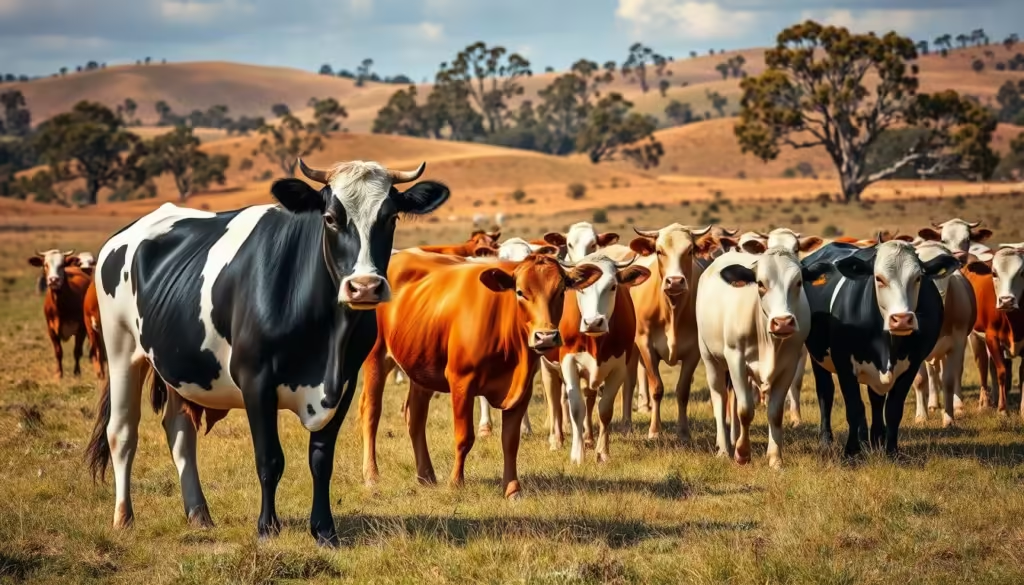
Breed selection shapes how a herd converts pasture and grain into saleable milk. Match the genetic profile to your feedbase, processor incentives and climate so feed turns into the right milk profile and stable returns.
Holstein Friesian dominance: volume and black‑and‑white versatility
Holstein Friesian remain the main choice for farms chasing yield. These black‑and‑white cows suit high‑energy rations and shed systems and deliver the highest milk volume per head.
Jersey, Ayrshire and Illawarra: solids and composition
Jersey bring higher fat and protein, ideal where processors pay for solids or pasture leads the diet. Ayrshire and Illawarra offer a middle ground—respectable yield with good composition and hardiness in local conditions.
Brown Swiss and crossbreeding to balance traits
Brown Swiss add strength, feet and fertility. Crossbreeding is a practical tool to lift robustness without losing too much yield.
| Breed | Strength | Farm fit |
|---|---|---|
| Holstein Friesian | High yield | Shed, high‑input systems |
| Jersey | High fat & protein | Pasture‑based, solids pricing |
| Brown Swiss / crosses | Hardiness, feet | Balance yield and fertility |
“Use on‑farm data to pick sires that fit your feed and market — small shifts in breed mix change profit quickly.”
Reproduction, AI and calf management to sustain consistent milk cows
Effective breeding and calf routines lock in the next generation of milk cows and steady farm returns. A clear reproduction plan reduces missed heats and sharpens the herd replacement programme.
Estrus synchronisation and artificial insemination for genetic gain
Use structured AI programs with synchronisation (GnRH → 7 days → PGF2α → GnRH at 48 hours) to tighten the calving window. That protocol lowers missed heats and speeds genetic progress.
Train staff to spot standing heat and restlessness and validate sightings with tail paint or activity monitors. Track submission and conception rates as KPIs so repro decisions are data driven.
Calf rearing choices: milk replacer, grouped housing and growth outcomes
Feed quality colostrum fast and record volumes. Day‑old calves typically need about 5 litres a day; measure and log intake for each animal.
Decide between whole milk and milk replacer based on cost and hygiene. Where replacer is chosen, mix and warm consistently to hit growth targets.
- Breed heifers at ~13 months so they calve at 22–24 months and meet production goals.
- Grouped or pair housing aids social behaviour and starter intake; design pens for easy cleaning and disease control.
- Wean by intake not age—use starter consumption targets and slow transitions to protect growth and future milk yield.
“Simple, repeatable calf health checks and clean gear cut losses and keep future milking cows on track.”
Productivity and cow comfort: housing, lighting and stall design
Cows that lie and ruminate well make more milk. Design and routine set the conditions for that behaviour. Simple fixes to stalls, bedding and lighting raise comfort, intake and yield.
Lying time, rumination and stall comfort as levers for milk production
Cows should lie down for at least 5–6 hours after meals to ruminate and keep blood flow to the udder high. Uncomfortable stalls cause perching and cut lying time, costing litres at the vat.
Practical checks:
- Design stalls and yards that invite lying and ruminating; give beds enough space and soft surfaces.
- Choose bedding to suit the system—sand, straw, rubber mats or waterbeds—and top up regularly to keep beds dry.
- Watch for perching and crowding; these are signs of poor fit and reduced rumination.
- Align lighting: 16 hours light/8 dark for lactating groups, 8/16 for pregnant, non‑lactating cows.
- Deliver fresh feed as cows return from milking so they stand until teat sphincters close, lowering mastitis risk.
“Audit lying time, hock scores and lameness monthly to target improvements and protect production.”
Maintain good water flow, clean lanes and steady ventilation. These basics keep animals comfortable, eating and producing into tough seasons.
Health and nutrition products to keep the herd performing
Reliable on‑farm products make planned herd care practical and repeatable. A simple product plan ties vaccines, drenches and fly control to the health calendar so teams act before peak risk.
Drenches, vaccines, anti‑parasite and rehydration support
Treatments should match parasite risk and follow a rotation plan to slow resistance. Dose by weight and record batch numbers and dates for traceability and residue compliance.
Lick blocks and supplements for protein, minerals and energy
Choose lick blocks and pellets to fill gaps shown by forage tests. Protein and mineral balance supports milk protein and fat, fertility and hoof health.
Trusted suppliers and practical buying tips
Source from reputable suppliers—Allflex, Boehringer Ingelheim, Coopers, Elanco, HRC, Pastoral Ag, Troy, Virbac and Zoetis—for quality products and advice.
- Stock ahead of calving and heat peaks so treatments arrive when needed.
- Use milk replacers and rehydration for vulnerable young or stressed animals.
- Link product use to outcomes (SCC, lameness and conception) so spend shows a return.
“Plan, record and review product use annually with your adviser to refine cost‑benefit.”
Market insights and selling options for Australian dairy farmers
A tighter market for farms shifts the selling decision from emotion to clear, data-led timing. As the number of operations falls and the average herd rises, buyers favour reliable lines with documented performance.
Growing average herd size, fewer farms: what it means for your strategy
With fewer farms and larger average herd numbers, market buyers want evidence. Herd books, SCC trends and fertility records give confidence and lift price.
Plan sales around production cycles and avoid selling at a low point in milk yield or after a drought when demand softens.
Auctions, private sales, stud and dispersal options with national reach
Choose the selling lane by stock quality and timing. Auctions suit volume and speed. Private sales work when buyers want choice. Stud and dispersal lanes target specific cow types and pedigree buyers.
- Present the facts: honest health, SCC and milking histories convert inspections to bids.
- Use agency media and market updates to pick the right week; small timing shifts can change returns.
- Plan transport, biosecurity and paperwork early to reach buyers beyond the district.
“Buyers come back for cows that perform as described — repeatability builds value.”
Monitor milk price signals and input costs. If margins tighten, speed up data-led culling and selling. Align breeding and feeding to your target market so stock matches buyer needs.
Conclusion
A practical 90‑day plan turns routine checks into steady litres and clearer herd value.
Focus on cow comfort, sound rations and early health detection to protect milk and lift production. Simple habits — fresh feed after milking, clean beds and clear treatment records — reduce risk and keep milk quality high.
Match breeds to your feedbase and market. Holstein Friesian and Brown Swiss crosses each have a role in balancing volume and protein for buyers.
Keep measuring SCC, lameness and conception, and use local advice to make targeted changes. A farm visit and a short, realistic 90‑day plan will convert priorities into better yield, welfare and long‑term herd health.