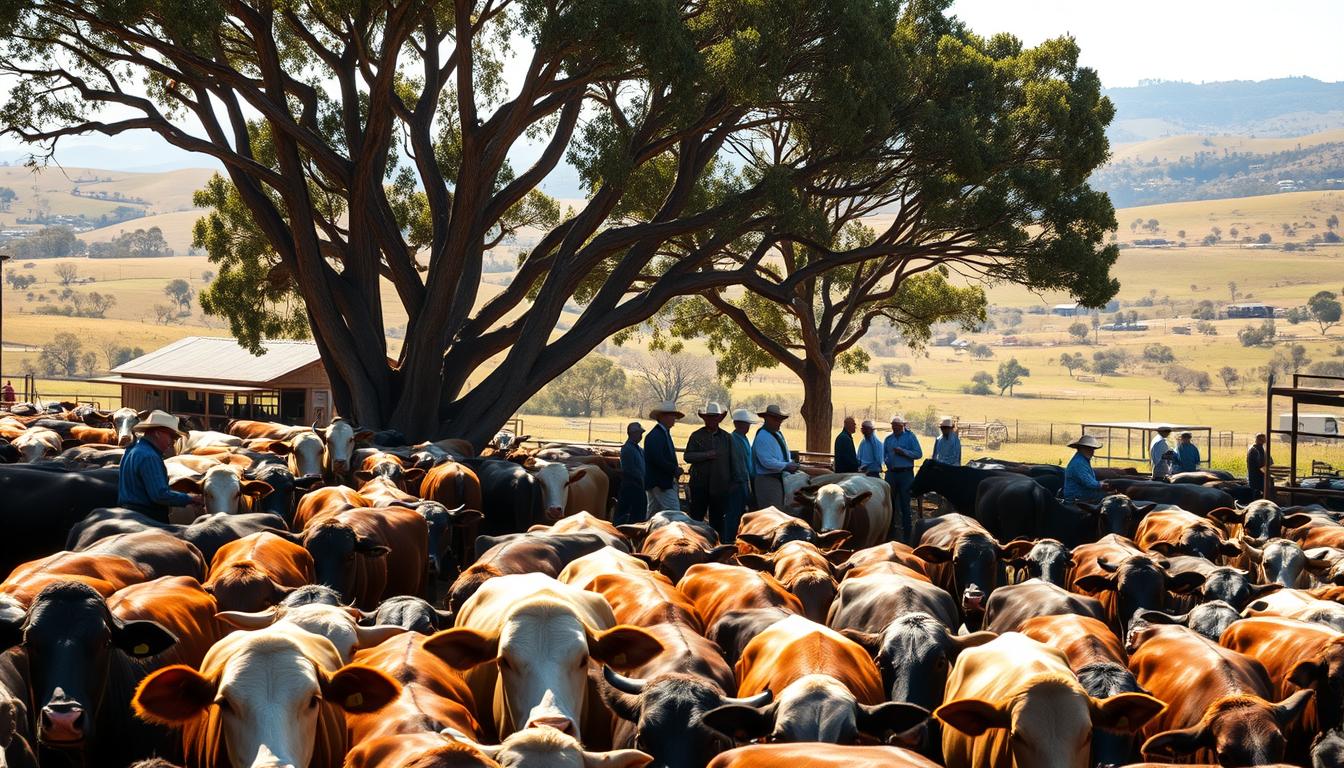

In 2023, Australian red meat exports surged to $14.5 billion, with over 70% attributed to overseas demand for premium cuts. This unexpected growth underscores the sector’s resilience despite global economic pressures.
Seasonal shifts, such as prolonged droughts and fluctuating feed costs, have historically shaped herd sizes and pricing. Recent rainfall patterns in key regions like Queensland have stabilised breeding rates, easing supply concerns for processors.
Export markets now account for 60% of total production, driven by Asia’s appetite for grass-fed varieties. Major trading partners, including Japan and South Korea, continue to prioritise Australian products due to strict quality assurances.
Domestic consumption patterns also influence strategies. Urban demand for ethically sourced options has prompted producers to adopt traceability frameworks. As one industry representative noted, “Transparency isn’t optional—it’s what keeps us competitive globally.”
Analysing these dynamics helps stakeholders anticipate risks and capitalise on emerging opportunities. Comprehensive data remains critical for navigating this fast-evolving landscape.
Key Takeaways
- Export revenue reached $14.5 billion in 2023, driven by international demand
- Weather patterns directly impact herd management and supply chain stability
- Asian markets dominate overseas trade, favouring quality-assured products
- Domestic consumers increasingly prioritise ethical production standards
- Data-driven insights are essential for strategic decision-making
Market Overview and Historical Context
Historical saleyard data reveals pivotal shifts in livestock valuation frameworks since the early 2000s. These changes stem from drought cycles, trade policy adjustments, and evolving consumer preferences. Analysing decades of records shows how processor margins and seasonal factors established today’s pricing benchmarks.
Understanding Past Market Dynamics
Last year’s 18% price surge in eastern states still influences current negotiations between producers and buyers. Supply constraints during 2019–2020 droughts created lasting volatility, with restocking efforts only stabilising herds by 2022. As one Queensland auctioneer observed, “Past shortages taught us to prioritise herd resilience over short-term gains.”
Evolving Pricing Mechanisms
Year-on-year comparisons highlight a 34% increase in average values since 2015, driven by Asian demand for premium Australian cattle. Export-focused strategies now dominate, contrasting with earlier domestic consumption patterns. Saleyard reports from 2018–2023 confirm this shift, showing tighter correlations between international bids and local prices.
Public infrastructure investments in northern Australia during the 2010s enabled larger-scale operations, indirectly affecting national supply metrics. These developments underscore why historical context remains vital for forecasting. Current conditions mirror pre-2010 patterns where feed costs dictated nearly 40% of price formations.
Impact of Weather Conditions and Rainfall Patterns
Australia’s agricultural landscape remains heavily influenced by climatic extremes, with regional disparities dictating production outcomes. Unpredictable rainfall and temperature shifts create distinct challenges for livestock management, particularly in moisture-sensitive regions.
Regional Differences Across Australia
Southern states faced severe drought conditions during 2023, reducing pasture availability and forcing early herd reductions. In contrast, northern regions recorded 15% above-average rainfall, enabling extended grazing periods. This geographical divide has created a two-tiered national supply chain.
| Region | Rainfall Impact | Supply Change (2023) |
|---|---|---|
| Victoria/NSW | 40% below average | -22% herd size |
| Queensland/NT | 110% of long-term average | +8% breeding rates |
The table highlights how weather conditions directly affect regional capacity. A central Queensland producer noted, “Wetter years allow strategic retention, but southern counterparts face relentless pressure to destock.”
Effects of Drought and Cyclone Disruptions
Cyclone Alfred’s 2023 landfall caused 14-day processing halts across three export facilities, creating bottlenecks that persisted for months. Combined with southern drought impacts, national turnoff rates dropped 9% year-on-year. Transport disruptions during cyclone seasons often delay deliveries by 21–35 days.
Adaptive strategies are emerging, including mobile abattoirs and feed stockpiling agreements. As one logistics manager stated, “We now plan cyclone-season routes six months ahead – it’s reshaped our entire operation.” These measures help mitigate weather-induced supply fluctuations affecting domestic and international demand cycles.
Trade Influences and Export Opportunities
Shifting global trade patterns are reshaping Australia’s agricultural exports, with recent bilateral agreements creating fresh pathways for growth. China’s renewed focus on food security and America’s herd reductions present dual advantages for local producers. These developments coincide with streamlined export license approvals, accelerating access to high-value markets.
Shifting Demand Among Key Partners
Asian nations now account for 78% of Australia’s red meat exports, up from 65% in 2020. Japan’s revised import quotas and South Korea’s tariff reductions reflect deepening trade relationships. However, sudden policy changes in Indonesia during Q3 2023 temporarily disrupted shipments, highlighting ongoing uncertainties.
Processors have responded by diversifying client portfolios. “We’re certifying facilities for six new markets simultaneously,” explains a Victorian plant manager. This flexibility helps mitigate risks when specific regions adjust import requirements.
US Production Gaps Create Openings
American herd numbers hit 30-year lows in 2023, reducing their export capacity by 19%. Australian suppliers capitalised on this deficit, securing 14 additional contracts in premium Asian markets. Key outcomes include:
- 15% rise in chilled product shipments to China
- Extended credit terms with Japanese buyers
- Three new halal-certified processing lines
Recent trade negotiations with India and Vietnam further strengthen market access. As one industry analyst notes, “Geopolitical shifts demand real-time adjustments – yesterday’s strategies won’t capture tomorrow’s opportunities.”
Analysis of Supply and Demand Fluctuations
Managing livestock availability during unpredictable weather requires producers to balance immediate needs with long-term sustainability. Dry spells often force rapid adjustments in turnoff rates, directly affecting national supply metrics. Recent data shows a 24% increase in head movements to saleyards during low-rainfall periods compared to average years.
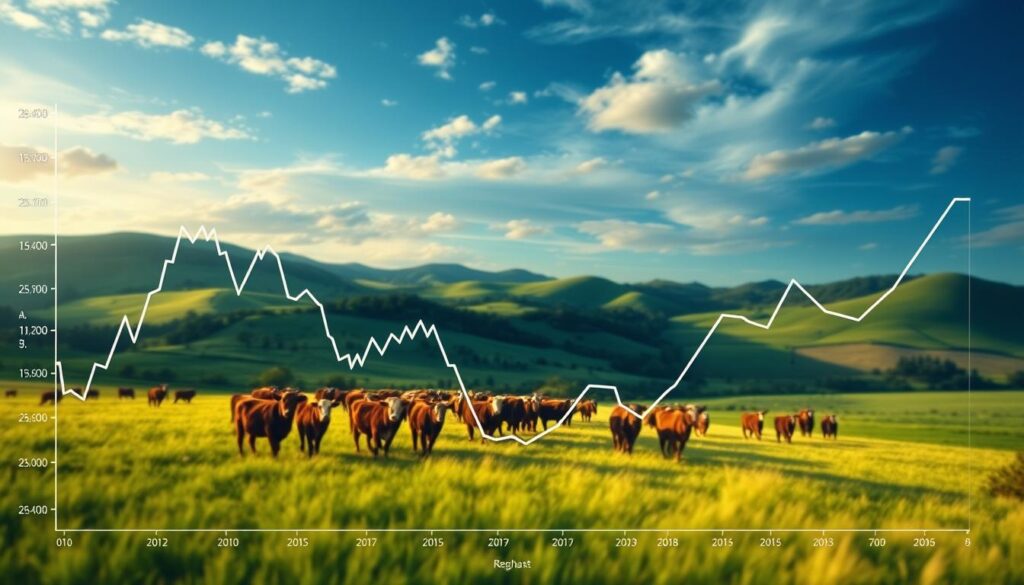
Producer turnoff strategies amid dry spells
When conditions deteriorate, producers face tough choices. Many prioritise selling younger steers early to reduce feeding costs, while retaining breeding stock. This approach temporarily boosts saleyard volumes but risks future supply shortages. As one NSW grazier explained, “Holding back heifers protects our herd’s core – even if it means thinner margins now.”
Limited processor capacity during droughts exacerbates imbalances. With fewer facilities operational, delayed turnoffs create backlogs. This often leads to oversupplied local markets despite sustained international demand. Recent months saw northern regions report 18% higher head listings than southern areas due to divergent rainfall patterns.
Key strategies shaping current dynamics include:
- Staggered sales to avoid market saturation
- Selective culling of non-productive animals
- Forward contracts with processors during stable periods
These measures help stabilise prices when supply chains face pressure. However, prolonged dry spells continue testing producers’ ability to match output with fluctuating demand cycles.
Insights into Cattle Prices and Slaughter Dynamics
Price formation in livestock markets reflects complex interactions between processing capacity and seasonal pressures. Recent shifts highlight how operational constraints and calendar events reshape producer returns and saleyard activity.
Processor Margins and Seasonal Price Adjustments
Processing facilities face margin pressures during peak seasons due to higher operational costs and transport delays. These challenges often lead to reduced bids at saleyards, particularly when feedlot placements surge. For example, winter 2023 saw a 12% drop in average prices across eastern states as processors managed stockpile limits.
Seasonal adjustments also occur when herd movements align with regional weather patterns. Northern producers typically sell heavier stock before monsoon seasons, creating temporary oversupply. One Queensland processor noted, “We adjust bids weekly based on throughput – wet weather can halve our intake capacity overnight.”
Influence of Public Holidays and Market Interruptions
Extended closures during Easter and Christmas routinely disrupt slaughter rates, causing 18–25% monthly supply drops. These gaps create processor backlogs, often triggering price corrections when operations resume. The table below illustrates recent impacts:
| Event | Processing Days Lost | Price Adjustment |
|---|---|---|
| Easter 2023 | 6 | -9% saleyard values |
| Christmas 2022 | 8 | -14% post-holiday bids |
Strategic forward contracts now help stabilise returns during volatile periods. Producers increasingly monitor saleyard indicator levels to time sales around anticipated disruptions. As supply chains adapt, data-driven planning minimises the financial impacts of predictable market interruptions.
Examination of Feed and Feeder Cattle Markets
Regional disparities in Australia’s feeder cattle markets reveal stark contrasts shaped by environmental and logistical factors. Northern and southern zones operate under distinct operational frameworks, with rainfall patterns and land management practices driving price differentials.
Performance Divergence Across Latitudes
Northern markets reported 23% higher feeder steer prices in 2023 compared to southern counterparts, according to saleyard reports. This gap stems from Queensland’s extended wet seasons enabling weight gains, while Victoria’s drought-reduced pastures forced early sales. Key regional indicators include:
| Metric | Northern Zone | Southern Zone |
|---|---|---|
| Average feeder steer weight | 420kg | 365kg |
| Weekly turnoff volume | 8,200 head | 12,500 head |
| Price/kg (live weight) | $3.85 | $3.15 |
A Darwin-based livestock agent explains: “Northern producers hold stock longer during favourable conditions – it’s reshaping how processors source feeder cattle nationally.”
Three critical factors amplify regional differences:
- Transport costs from remote northern properties
- Feed availability in drought-prone southern regions
- Processor preferences for heavier stock
These dynamics create supply chain complexities. Southern demand for lighter feeder steers surged 17% last quarter as feedlots adapted to pasture shortages. Meanwhile, northern processors prioritise export-oriented heavyweights, leveraging their proximity to Asian markets.
Heavy Steers and Beef Production Trends
Shifts in global feedlot capacities are reshaping valuations for Australia’s heavy steers, with domestic supply constraints amplifying price pressures. Data from MLA charts shows a 17% year-on-year increase in national averages, driven by shrinking availability and strategic processor adjustments.
Key Drivers for Heavy Steer Valuations
Tightening supplies dominate current dynamics. Northern producers retained 12% more stock in 2023 compared to previous years, prioritising weight gain over immediate sales. This strategy, combined with reduced US feedlot output, creates competitive export opportunities. One processor stated, “Asian buyers now compete aggressively for 500kg+ steers – weights we previously struggled to place.”
| Month | Avg Price/kg (LW) | Supply Volume |
|---|---|---|
| March 2023 | $4.20 | 42,000 head |
| July 2023 | $4.85 | 31,500 head |
The table illustrates how shrinking volumes correlate with rising steer prices. Export-focused processors now account for 68% of heavy steer purchases, up from 54% in 2022. This shift reflects:
- Increased Asian demand for premium cuts
- Domestic feed shortages pushing early turnoffs
- Strategic herd retention in northern regions
These factors collectively influence production strategies. Analysts note a 9% reduction in national processing volumes despite stable overseas orders, indicating tighter supply chains. As one industry report warns, “Current valuations rely on precarious global balances – any US recovery could reset pricing models.”
beef cattle market trends: A Detailed Analysis
Saleyard metrics from 2023 reveal how legacy factors continue steering contemporary pricing models. Auction data shows a 9% year-on-year increase in average values for Australian cattle, with northern regions accounting for 63% of total head movements. This aligns with patterns observed during 2015–2018 supply adjustments, though current conditions reflect tighter export competition.
| Metric | 2022 | 2023 |
|---|---|---|
| Weekly saleyard throughput | 28,500 head | 31,200 head |
| Avg price/kg (LW) | $3.40 | $3.75 |
Last year’s herd retention strategies now influence pricing volatility. Producers holding stock through 2022 droughts achieved 18% higher returns in Q1 2023, but face rising feed costs. A NSW market manager notes, “Strategic restocking created short-term supply gaps – buyers now compete fiercely for quality lines.”
Three key determinants shape current valuations:
- Export demand absorbing 58% of heavy steer supplies
- Domestic processors adjusting bids weekly based on rainfall forecasts
- Transport bottlenecks increasing northern saleyard dominance
These factors underscore why historical context remains vital. As global markets evolve, data-driven adaptation separates resilient operations from reactive ones.
Pricing Indicators and Saleyard Market Reports
Weekly market reports provide critical insights into livestock valuation dynamics. Authorities like AuctionsPlus and Meat & Livestock Australia (MLA) compile detailed pricing tables, tracking fluctuations across regions and categories. These resources help stakeholders identify patterns and optimise sale timing.
Weekly Price Tables and Indicator Comparisons
Market reports structure data using average prices, clearance rates, and Value Over Reserve metrics. The table below illustrates recent eastern states comparisons:
| Region | Avg Price/kg (LW) | Clearance Rate | Weekly Head |
|---|---|---|---|
| NSW | $4.10 | 83% | 8,420 |
| QLD | $4.35 | 77% | 11,200 |
| VIC | $3.95 | 89% | 6,150 |
Analysts cross-reference these figures with historical data to predict short-term movements. “A 5% drop in clearance rates often signals price corrections within two weeks,” notes an MLA market specialist. Processor bids frequently adjust based on these indicators, particularly when northern head volumes exceed southern supplies.
Interpreting c/kg LW Trends
Cents per kilogram live weight (c/kg LW) trends reveal buyer confidence and supply pressures. Recent months show northern steers commanding 12-15% premiums over southern equivalents due to export-focused demand. Key observations include:
- 15% wider price spreads between 400kg+ and lighter stock
- 8% monthly volatility in feeder categories
- Strong correlation between rainfall forecasts and saleyard volumes
Producers use these metrics to schedule sales during high-rate periods. As one Queensland agent advises, “Selling 70 head when indicators peak generates better returns than holding 100 through a downturn.” This data-driven approach minimises exposure to sudden market shifts.
Role of Processors and Supply Chain Disruptions
Operational bottlenecks at processing facilities directly shape livestock distribution patterns. Extended shutdowns during extreme weather or public holidays create ripple effects across saleyards, often forcing producers to delay turnoffs. These disruptions strain relationships between suppliers and export partners, particularly when international deadlines loom.
Impact of Processing Backlogs and Public Holiday Operations
Recent cyclonic events caused 11-day closures at four major northern plants, delaying 23,000 head from reaching export markets. Public holidays compound these challenges – Easter 2023 saw a 31% drop in weekly steers processed compared to seasonal averages. A logistics manager explained: “We reroute trucks for three days pre-holiday just to clear yards – it’s become standard practice.”
| Event | Processing Days Lost | Head Affected | Price Impact |
|---|---|---|---|
| Cyclone Alfred | 14 | 18,500 | -8% |
| Easter 2023 | 6 | 9,200 | -5% |
| Christmas 2022 | 9 | 12,700 | -11% |
Supply chain delays alter producer strategies. Many now prioritise selling lighter steers during stable periods, retaining heavier stock for post-disruption premiums. This approach balances immediate cash flow needs against potential long-term gains.
Three adaptive measures help mitigate risks:
- Pre-holiday inventory stockpiling at export facilities
- Dynamic pricing models adjusting for backlog durations
- Shared transport networks between regional processors
While these strategies ease short-term pressures, sustained demand growth requires systemic infrastructure upgrades. As one industry analyst notes, “Processing capacity must expand 19% by 2025 to match projected head volumes.”
Impact of Global Trade Relations on Local Markets
Diplomatic negotiations between Canberra and Washington are altering export dynamics. Recent proposals under the US-Australia Free Trade Agreement could reshape how producers allocate stock for domestic and international buyers. Tariff adjustments discussed in late 2023 may influence saleyard pricing by 8–12%, according to industry forecasts.
US-Australia Free Trade Agreement Considerations
Current talks focus on reducing non-tariff barriers for chilled products. A 15% quota expansion for Australian steers entering US markets is under negotiation, potentially boosting annual shipments by 24,000 head. However, reciprocal measures requiring stricter biosecurity checks could delay processing timelines. As one trade representative noted: “Balancing access with compliance costs remains our core challenge.”
Tariff Negotiations and Reciprocal Measures
Proposed US import levies on Australian goods reached $120 million annually in 2023 discussions. These could trigger retaliatory actions affecting 14% of outbound shipments. The table below outlines potential impacts:
| Scenario | Export Volume Change | Price Impact (c/kg) |
|---|---|---|
| 10% Tariff Implementation | -18% | -22 |
| Quota Expansion | +9% | +15 |
| Status Quo Maintenance | ±3% | ±5 |
Monthly trade data now incorporates real-time policy updates, helping producers adjust strategies. Export-focused feedlots have reduced forward contracts by 17% this year, reflecting caution amid negotiations. Meanwhile, processors are diversifying client bases to mitigate risks.
Three key developments shape current strategies:
- Accelerated certification for alternative Asian markets
- Increased use of trade clause exemptions during disputes
- Weekly briefings linking saleyard data to policy shifts
As global agreements evolve, adaptive decision-making separates resilient operators from those constrained by outdated models.
Technological and Financial Insights in Agribusiness
Digital transformation is reshaping how stakeholders monitor and respond to agricultural dynamics. Advanced platforms now aggregate real-time data from saleyards, weather stations, and export hubs, offering actionable insights previously unavailable. This shift empowers managers to make informed decisions within tight timeframes, balancing operational needs with financial realities.
Digital Platforms for Tracking Market Data
Modern analytical tools process vast datasets, from pasture growth rates to processor demand cycles. A Queensland manager explains: “We adjust herd movements based on weekly price trends – delays cost thousands.” These systems reduce guesswork by providing:
- Historical comparisons across months or years
- Regional price differentials within a 500km range
- Processor capacity updates affecting sale timing
Financial modelling features help assess scenarios like feed cost spikes or export license delays. Platforms now integrate with accounting software, automating profit forecasts based on current average values. This synergy between tech and finance enables proactive strategies rather than reactive measures.
| Platform Feature | Impact | Adoption Rate |
|---|---|---|
| Live saleyard feeds | 17% faster decisions | 63% |
| Risk analysis tools | 22% cost reduction | 41% |
Recent innovations include AI-driven pasture assessments and blockchain-based supply tracking. As data integration improves, stakeholders gain unprecedented clarity across the production chain – from paddock to processor.
Government Policies and Tariff Implications
Recent regulatory shifts are reshaping Australia’s agricultural export landscape, with updated compliance requirements altering operational frameworks. Authorities now mandate stricter traceability protocols for overseas shipments, affecting how processors manage documentation. These changes aim to align with international standards but increase administrative burdens for smaller operators.
Regulatory Changes Affecting Trade
New licensing rules introduced in March 2024 require export facilities to implement digital tracking systems for livestock movements. This impacts 73% of northern processing plants still using manual records. A Darwin-based manager notes: “We’ve allocated $240,000 for software upgrades – costs we’ll recoup through premium markets demanding compliance.”
Potential Adjustments in Export Licenses
Proposed tariff revisions could reduce access to key Asian destinations unless reciprocal agreements are finalised. Industry reports indicate:
- 14% increase in license application processing times
- 9% rise in compliance costs for chilled meat shipments
- Three new biosecurity clauses affecting live animal exports
These developments create strategic dilemmas. While enhanced regulations improve export credibility, they strain operators with limited resources. Major processors are consolidating supply networks to offset rising costs, potentially reshaping regional processing hubs.
| Policy Change | Impact Duration | Cost Increase |
|---|---|---|
| Digital traceability | Ongoing | 8-12% |
| Tariff adjustments | 2024-2026 | 5-9% |
Adaptive strategies now dominate sector discussions. As one industry analyst summarises: “Policy agility determines who thrives in tomorrow’s markets – hesitation risks obsolescence.”
Conclusion
Navigating Australia’s livestock sector requires balancing seasonal pressures with evolving global demands. Weather patterns and trade shifts continue shaping prices, while accurate head counts remain vital for supply chain planning. Producers leveraging real-time saleyard data gain critical insights to time sales and manage herds effectively.
Domestic strategies now intersect with international expectations, particularly for feeder cattle and heavy steers. Seasonal adjustments, like staggered turnoffs during dry spells, help stabilise regional disparities. As one industry analyst notes, “Adapting to rainfall forecasts separates resilient operations from reactive ones.”
Key takeaways emphasise proactive measures:
- Monitor weekly pricing indicators to capitalise on demand peaks
- Align breeding cycles with historical weather trends
- Prioritise traceability frameworks for premium markets
Detailed market reports empower stakeholders to mitigate risks and seize opportunities. With strategic adjustments, Australia’s agricultural sector can maintain its competitive edge amid fluctuating conditions.