
Surprising fact: Australia has an allocation of 205,000 tonnes, but shipments above that face a steep 55% charge from 1 January 2026 for three years.
The measure sets a clear mechanic: a quota first, then a heavy levy on excess exports. That makes export programmes and processor contracts the first to feel pressure.
For Australian cattle producers this matters now. Domestic supply is near record levels and strong feedlot activity is pushing export urgency and price sensitivity.
This is a safeguard-style border restriction, not a quality or biosecurity ban, so market access stays open but timing and volumes will drive price signals.
The article maps the announcement, the likely domestic politics, the trade deal angle and practical impacts across premium and commodity channels. Readers get the key dates, the quota number, who will be hit first and what to watch from government and industry.
Key Takeaways
- Quota and levy: 205,000 tonnes for Australia; 55% charge above the cap from 1 Jan 2026 for three years.
- Producers should watch export programs and processor bids for early signs of volume squeeze.
- This is a safeguard-style action at the border, not a quality or biosecurity ban.
- High domestic supply and active feedlots could push lower-value product early, risking premium programs later.
- Keep an eye on government and industry responses and shifts in global competition that affect market access.
What China announced and when it starts
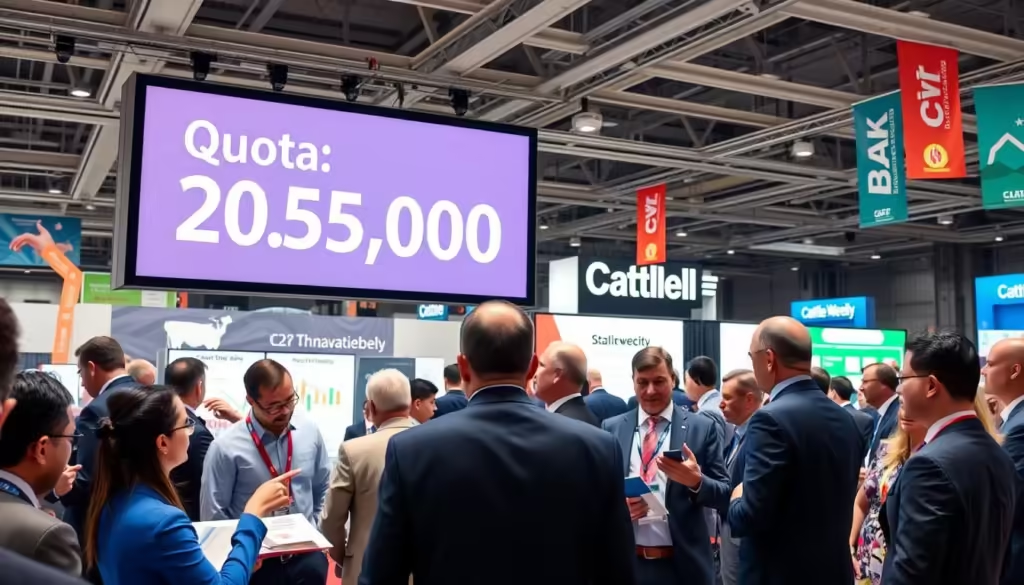
From 1 January 2026 an annual cap and a 55% surcharge will alter how exporters pace shipments and price contracts.
Quota and 55 per cent surcharge rules for export above the cap
How it works:
- What counts: all imports designated to the market count against the annual quota.
- When it fills: once the allocation is exhausted, shipments face a 55% surcharge that makes many exports uneconomic.
- Practical effect: the surcharge will price most premium and commodity product out of the market once the cap is reached.
Australia’s allocation is 205,000 tonnes. That sits well under recent run-rates — more than 295,000 tonnes shipped in the first 11 months of 2025 — so the cap is commercially meaningful.
Why ChAFTA protections are under pressure
The trade partner said it will pause compliance with relevant free trade agreement measures covering this product. In practice this removes some procedural safeguards and dispute protections for Australia while the measure remains in force.
What “three years from January 2026” means on the ground
Three years from January 2026 affects budgeting, multi-year contracting and feedlot placement cycles. Many processors and exporters plan 6–18 months ahead; this measure forces earlier decisions on bookings and prioritisation.
Timing risk: if the quota fills early, domestic bids and processor offers will shift as product is diverted from exports.
- Who must act now: branded chilled programs, processors with heavy market exposure and aligned producers.
- Checklist to confirm with your exporter/processor: quota management approach; monthly shipment pacing; product prioritisation (premium vs trim); contract clauses for surcharge changes.
China’s new beef tariff and the domestic forces behind it
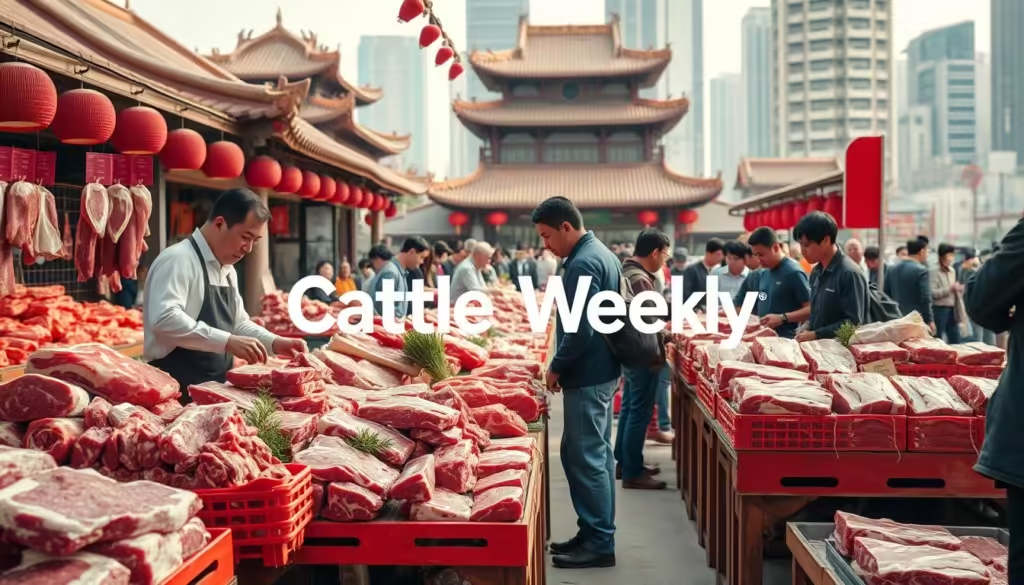
When domestic supply outpaces demand, officials often turn to import controls to steady local markets.
China’s domestic beef oversupply and price falls
Reports since 2023 flagged a surplus in the china domestic market and sharp price falls for red meat. That created political pressure from local producers to curb imports.
The Commerce Ministry investigation and producer complaints
Complaints began in 2023 and grew into a formal request in December 2024 from agricultural groups. The Commerce Ministry opened an investigation and later extended its review.
“Australia participated as an interested party and argued its product did not cause injury” — Meat & Livestock Australia, Andrew Cox
Global trade turbulence and redirected supply
Trade disruption elsewhere pushed more South American product into the market. TradeMap data showed Brazil and Argentina led imports, so supply pressure came from multiple suppliers and countries.
How safeguard-style restrictions reshape markets
Safeguard settings change behaviour fast: importers pull forward shipments, exporters race to fill quota, and stockpiles can depress prices. That shifts quota space to those able to supply frozen commodity volumes rather than chilled premium lines.
| Driver | What it means | Who wins |
|---|---|---|
| Domestic price falls | Political push for import limits | Local producers, commodity suppliers |
| Redirected South American supply | Higher import volumes, faster quota use | Large frozen exporters |
| Investigation outcomes | Legal basis for safeguard restrictions | Quota holders; premium exporters may lose space |
What to watch: china domestic beef prices, monthly beef imports and whether this safeguard becomes a template for other proteins. For Australian producers, the lesson is clear — single-market reliance raises volatility risk.
What it means for Australian beef exports, export demand and production in 2026
A tight 205,000-tonne allocation changes the math for exporters and processors heading into 2026. Australia shipped more than 295,000 tonnes into the market in the first 11 months of 2025, so quota space is clearly limited.
Australia’s export exposure and quota pressure
That allocation forces competition for space. Big processors can fill quota with trims, offal and bones, leaving chilled premium lines at risk.
Premium cuts in the firing line
Robert Mackenzie warned trims and offal could soak quota early, crowding out wagyu and Angus shipments. Premium producers face disrupted programs and price negotiation late in the year.
Price and supply-chain impacts at home
If volumes are redirected, saleyard competition rises and farm-gate prices can fall while processor margins tighten. Simon Stahl notes diversion is possible but likely at lower returns, which matters for regional kill schedules and jobs.
Production backdrop and market options
Australia enters 2026 with production near 2.8–2.85 million tonnes, a herd near 31 million head and active feedlots. That scale makes any demand shock immediate.
Diversification and industry response
Displaced product may head to the US, South Korea or Southeast Asian markets, but high-marbling cuts are harder to re-sell without price concessions. The federal government (Don Farrell, Julie Collins) has raised concerns and Meat & Livestock Australia (Michael Crowley) is working in-market.
Practical takeaways for producers: confirm where your cattle usually land, ask your processor about its quota plan, review forward contracts and watch quota fill-rates so you can adjust selling and agistment plans quickly.
Conclusion
Producers should mark 1 January 2026 on their calendars and plan for a tighter export year.
The measure runs for three years and applies a quota plus a 55% surcharge above that cap. That change alters the economics of exports and will affect monthly pacing and contract decisions.
Why it arrived: pressure in the domestic beef sector, an investigation pathway and redirected global supply pushed authorities toward safeguard-style restrictions. The announcement also paused certain free trade agreement procedures, which matters for dispute options.
Practical risk: quota competition tends to favour high-volume, lower-value lines first, leaving chilled premium programs exposed. With near-record production and strong feedlot throughput, any shock can flow quickly to farm-gate prices.
Action now: check quota plans with your processor or exporter, review destination mix and contract flexibility, and follow government and MLA updates.