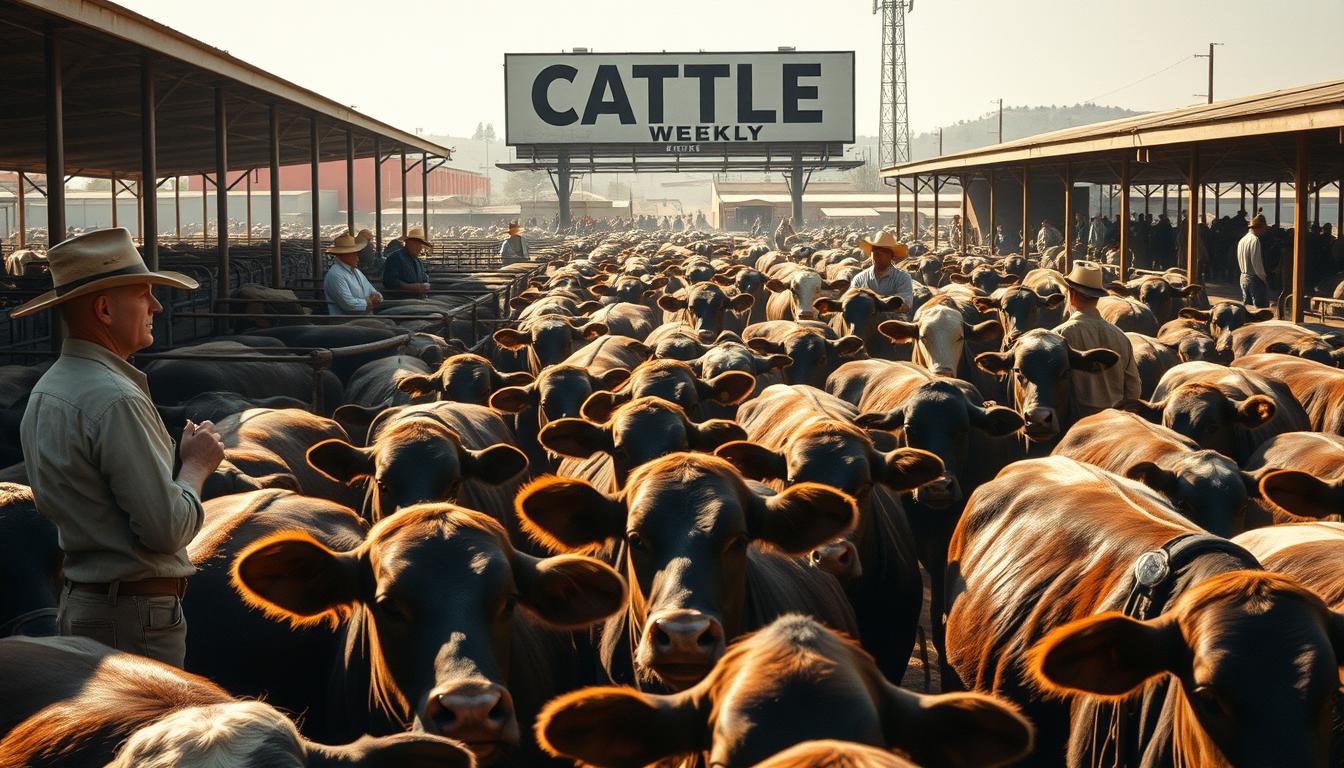

AuctionsPlus throughput jumped almost 40% this week, with 16,114 head offered — a top‑quartile volume that changed the tone of the sale yard.
The week to Friday, 15 August 2025, saw clearance ease to 77% and Value Over Reserve fall to $93. The AYCI closed at 971c/kg DW, down week‑on‑week but still in the top historical quartile.
Processors ranked among the top quartile for activity, pushing competitive bidding on quality lines. Lighter lines and breeding stock led gains: NSM cows & calves, NSM heifers & calves and light heifers under 200kg recorded notable lifts.
Standout sales gave a clear read on demand: Angus steers 230kg to 306kg sold to strong buyer interest across SA and VIC, with per‑head returns that matter to restockers and producers planning the next move.
This section lays out where the market sits this week, the headline numbers and which classes moved. It sets expectations for the rest of the report: indicator explainer, weekly wrap, class breakdown, state moves and practical strategy.
Key Takeaways
- Throughput rose to 16,114 head, up nearly 40% week‑on‑week.
- Clearance eased to 77% while AYCI stayed at 971c/kg DW — still historically strong.
- Processor competition lifted demand for finished and near‑finished lines.
- Lighter steers and heifers plus breeding classes delivered the biggest gains.
- Notable sales across SA and VIC give real price points for on‑farm decisions.
- The results show solid market depth despite some weekly easing of indicators.
Executive summary: where cattle prices in Australia stand right now
Higher throughput this week pushed buyers to pick more selectively across classes. The sale yard offered 16,114 head, up roughly 40% from last week, and that extra supply eased the clearance rate to 77% and Value Over Reserve to $93.
The national AYCI held at 971c/kg DW, still inside the top historical quartile despite softer short‑term momentum. Light heifers under 200kg and sub‑200kg steers led the lifts, while some mid‑weights saw more selective bidding.
Key movements this week vs last week
- Throughput rose to 16,114 head from 11,521 last week; clearance fell from 89% to 77%.
- Light heifers jumped to an average of $875; 280–330kg steers reached $1,830.
- Breeding lines strengthened — NSM pairs and heifers recorded notable gains.
What’s driving buyer behaviour and clearance
Buyers balanced restocker demand, lotfeeder margins and processor grids. Higher numbers this week gave buyers choice, so competition concentrated on lighter and finished lines while some feeders stepped back.
One clear takeaway: throughput climbed, clearance eased, and processors remained active — a signal that demand is real but more selective as months of momentum meet short‑term supply lifts.
Headline indicators and how to read them
This week a lift in offered head shifted vendor–buyer dynamics and changed where value sat across lots.
AYCI and what 971c/kg DW means
The AuctionsPlus young cattle indicator sits at 971c/kg DW for the week. That level is down week‑on‑week but still inside the top quartile, signalling a strong long‑run read even as short‑term pressure shows.
Value Over Reserve and clearance
Value Over Reserve (VOR) fell to $93, from $141 the prior week. Practically, vendors earned less above reserve as more head gave buyers choice.
Clearance at 77% is the best real‑time gauge of alignment between sellers and buyers. A 77% week points to more selectivity and pockets of unmet demand.
Feeder premium and a simple rule of thumb
Feeder premium last week was -3.05% with a tight 0.7% weaner gap. Those spreads show buyers easing on feeders but still chasing light demand lines.
- Rule of thumb: indicator direction + clearance trend + VOR = how hard buyers pushed this week.
- Use a top‑quartile vs mid‑range vs softer range mindset to judge risk before selling.
Weekly market wrap: robust throughput meets selective demand
This week the sale yard carried a much larger offering, testing buyer depth across several classes.
Volumes, clearance and VOR for week ending 15 August 2025
Head offered: 16,114 — roughly a 40% rise on last week.
Clearance: 77% as buyers narrowed focus on value lines.
Value Over Reserve: $93, reflecting softer margin above reserve despite active bidding on quality lots.
Comparisons with 8 and 1 August weeks
The prior two weeks show a steady climb in supply: 11,521 head (8 August) and 9,877 head (1 August).
Clearance slipped from 89% and 91% respectively, while VOR eased from $141 and $193. Those numbers show buyers grew more selective as volumes rose.
Weaner vs feeder gap and seasonal context
Weaner spreads remained tight last week (0.7% gap) and feeder premiums softened. Seasonal feed conditions often favour lighter weaner demand, which kept competition high for those lots.
Practical take: sellers of feeders should set realistic reserves this week; buyers chasing weaners should expect strong competition. Months of improving confidence still sit alongside sharp weekly ebbs when numbers jump.
Steer market breakdown: lightweights lead the gains
Lightweight lines set the tone this week. Restockers and backgrounders targeted even lots, pushing solid bids for sub‑200kg and 280–330kg lines. Sellers with clear weights and health records saw the best competition.
Sub‑200kg and 200–280kg: pricing, c/kg trends and clearance
Sub‑200kg steers averaged $1,373 this week, up $50 and +10c/kg DW. Clearance was strongest where weights were documented and calves presented in uniform pens.
200–280kg mid‑weights were mixed. Recent weeks show volatility and a wider range, so vendors should expect selective bidding unless lines are even.
280–330kg and 330–400kg: performance and buyer profiles
280–330kg steers averaged $1,830 (+$63; +37c/kg DW). Lotfeeders chased even lots here. Buyers favoured well‑bred British and Angus crosses for backgrounding and feedlot entry.
400kg+ heavy steers: premiums, processor interest and finishers
Heavy lines remain supported where finish is clear. Processors paid premiums for quality weight and breed. Vendors should supply accurate age and weight notes to lift competition.
| Weight band | Average $/head | Week change | Buyer profile |
|---|---|---|---|
| <200kg | $1,373 | + $50 | Restockers |
| 200–280kg | $1,322 (recent) | Mixed | Backgrounders |
| 280–330kg | $1,830 | + $63 | Lotfeeders |
| 330–400kg / 400kg+ | $2,272 (selected) | Variable | Processors / Finishers |
Practical take: present clear weight, breed and management notes. That detail lifts demand and the per‑head outcome for all steer weight bands.
Heifer market dynamics: lighter lines shine, mid-weights mixed
Demand concentrated at the lower weight end, where under‑200kg heifers drew the keenest bidding. This band lifted $156 to an average of $875, rose +119c/kg DW and cleared 100% — a clear restocker signal.
Under 200kg and 200–280kg: price lifts and demand signals
Under‑200kg heifers saw broad buyer confidence this week. Full clearance and sharp per‑head gains point to strong short‑term demand from restockers.
Mid‑weights (200–280kg) remain mixed. Recent weeks show swings: 8 Aug averaged $1,052 (down $64 week‑on‑week) but still recorded high clearance in some yards. Buyers weigh feed availability, finishing pathways and steer alternatives when bidding here.
330–400kg and 400kg+: where the value is holding
Heavier heifers are holding value where breed and finish are obvious. The 330–400kg band averaged $1,689 (+$209) with 86% clearance, drawing interest from backgrounders and select lotfeeders.
| Weight band | Average $/head (this week) | Clearance | Primary buyers |
|---|---|---|---|
| <200kg | $875 | 100% | Restockers |
| 200–280kg | $1,052 (8 Aug) | ~94% | Backgrounders / price‑sensitive buyers |
| 330–400kg | $1,689 | 86% | Lotfeeders / backgrounders |
| 400kg+ | $1,989 (recent peaks) | Variable | Processors / feeders |
Practical take: present even pens, verified weights and treatment history to lift competition in mid‑weight lots. High clearance among light heifers could persist if paddock feed remains good, so time listings to follow rain where possible.
Breeding stock and females: NSM and PTIC trends to watch
Breeding lines showed clear buyer support this week, with non‑pregnant pairs and quality heifers driving stronger returns.
NSM cows & calves recorded a standout rise, up $600 to an average of $2,857 per head. NSM heifers & calves lifted $146 to $2,932, while NSM heifers rose $757 to $2,180.
NSM pairs and keyed categories
Those NSM categories led the week. The gains reflect herd‑rebuild demand where feed and seasonal outlooks allow buyers to commit to replacements.
- Why buyers paid up: maternal traits, calf vigour and easy temperament.
- Benchmark averages: NSM pairs ~ $2,857; NSM heifers & calves ~ $2,932; NSM heifers ~ $2,180.
PTIC cows and heifers: selective clearance
PTIC females behaved more variably. PTIC heifers rose $92 to $1,952 but clearance has been mixed across recent weeks. On 1 Aug PTIC cows cleared about 45% while PTIC heifers cleared ~72%.
Practical seller tips: provide preg‑test certificates, joining dates, bull source and calf weights. That information lifts buyer confidence and competition.
| Category | Average $/head (this week) | Buyer focus |
|---|---|---|
| NSM cows & calves | $2,857 | Rebuilders / restockers |
| NSM heifers & calves | $2,932 | Replacement buyers |
| PTIC heifers | $1,952 | Selective buyers (calving window) |
Buyers continue to favour younger females with sound udders and verified management history. Sellers should time listings to local demand pockets and focus on lifetime productivity, not just the headline per head this week.
State-by-state movements: NSW, Queensland, Victoria and South Australia
A short regional snapshot shows where supply and demand met this week and which routes moved the most head.
Listings vs purchases: Queensland and NSW continued to set the pace for offered head and buying activity. On 8 August Queensland listed 5,036 head (up 707 WoW) and purchased 3,837 head (+1,552). NSW listed 4,716 head (+689) and purchased 4,328 head (+220). Those flows kept both states central to market direction through the month.
Victoria stepped up buying at the start of the month. On 1 August Victoria purchases jumped to 1,806 head (+1,156 WoW). That increased demand shaped interstate movements and drew more lots southward for sale.
South Australia highlights and notable sale lines
South Australia recorded strong local interest and inbound buyers from Victoria this week.
- Mumbannar — 69 Angus steers, 230kg, sold for $1,540/head (670c/kg) to Suttontown, SA.
- Meningie — 110 Angus steers, 306kg, sold for $1,830/head (598c/kg) to Apsley, VIC.
- Ararat (VIC) — 46 Angus heifers, 175kg, sold for $1,020/head (582c/kg) to Langhorne Creek, SA.
Practical takeaways for vendors and buyers
Local seasonal shifts mean a strong buyer one week in one state can be softer the next. Numbers coming from Queensland have been especially influential across months, so vendors should note where buyer interest is thickest before listing.
Action: consider freight into active sale zones and track repeat patterns by state. Well‑timed listings into areas with deep buyer pools often lift final outcomes and create arbitrage chances for organised operators.
Processor activity and competition for quality lines
This week saw plants target grid‑fit animals, sharpening competition where carcase potential was clear.
Processors lifted presence to top‑quartile activity, underpinning bids on the right lots even as overall clearance eased to 77%.
When processor demand is firmer it narrows spreads between feeder and finished types. That tightening shows in real bids and how many head change hands under competitive yards.
Recent purchase shares show the pattern: processors bought about 8.5% of purchases on 8 Aug and 9.4% on 1 Aug. Those percentages matter when head numbers jump during a busy week.
Practical signals for vendors: present grid‑fit types, clear finish notes and MSA or kill‑sheet history. These details attract multiple buyers and lift final returns.
- Beef brands and programs pull processors toward consistent lots.
- Restockers should expect to adjust reserves or target lighter bands when processors are active.
- Export demand gives processors confidence to chase quality lines.
Market reward sits with low‑risk, clearly specified lots. If processor activity stays high next week, finished and near‑finished stock should continue to clear well and support steady prices.
Supply, numbers and seasonal settings underpinning price
Supply surged this week, pushing total offered head to 16,114 — roughly a 40% lift and into the top 25% of recorded weeks.
The jump in numbers changed seller–buyer dynamics quickly. Compared with early August ranges of 9,877–11,521 head, the extra volume tends to make bidders pickier and stretch clearance. AYCI remains high at 971c/kg DW, yet Value Over Reserve eased to $93 (from $141 and $193 in prior weeks).
Total head offered and where volumes sit historically
Higher head usually nudges mid‑tier lines softer while keeping lightweights and select breeders supported. That pattern shows how averages can mask wide spreads: the average VOR fell sharply even though top lines held.
“When volumes sit in the top quartile, expect selective bidding and be realistic on reserve for mid‑tier lines.”
Practical outlook: if supply stays elevated into next week, clearance will hinge on vendor flexibility, presentation and local feed. Watch weather and paddock feed closely — seasonal moves across years teach the same rule: supply sets the tone; quality sets the result.
Action: sellers should verify weights and photos; buyers should have transport and finance ready to strike on the right lots when demand shows.
Price spreads and premiums: weaner gap, feeder discount and AYCI
Market spreads shifted noticeably as weaner premiums narrowed and feeder discounts eased over the last three weeks.
Short summary: on 8 Aug the weaner gap tightened to 0.7% with a feeder premium of -3.05% and 89% clearance. By 1 Aug the feeder discount was deeper at -17.8% while the young cattle indicator sat at 940c/kg DW and VOR was $193. On 15 Aug the AYCI lifted to 971c/kg DW, VOR eased to $93 and total head offered hit 16,114 — clearance fell to 77%.
How spreads sit versus top quartiles
When the young cattle indicator sits in the top quartile, top‑end price support is clear even as total clearance softens. Narrow weaner gaps usually show restocker competition and can compress the feeder discount temporarily.
- What to watch: if head offered rises sharply one week, expect wider ranges and selective buying the next.
- Restockers should avoid paying above expected weight‑gain margins.
- Feeders should run a weekly gross‑margin checklist when discounts narrow and adjust entry targets accordingly.
“Near‑top quartile indicator prints plus tight weaner gaps = robust competition for the best young lines.”
cattle prices in Australia: data-backed insights and latest results
Below is a data-first summary of averages, notable sales and buyer destinations for quick benchmarking.
Top-line averages per head and c/kg DW/LW by category
Steers: 280–330kg averaged $1,830 per head (+$63; +37c/kg DW). Sub‑200kg steers averaged $1,373 per head (+$50; +10c/kg DW).
Heifers: light heifers <200kg averaged $875 per head (+$156; +119c/kg DW; 100% clearance).
Breeding: NSM cows & calves $2,857 per head (+$600); NSM heifers & calves $2,932 (+$146); NSM heifers $2,180 (+$757); PTIC heifers $1,952 (+$92).
Selected sale highlights and buyer destinations
| Lot | Weight | Price per head | Destination (buyer) |
|---|---|---|---|
| Angus steers (Mumbannar) | 230kg | $1,540 (670c/kg) | Suttontown, SA |
| Angus steers (Meningie) | 306kg | $1,830 (598c/kg) | Apsley, VIC |
| Angus heifers (Ararat) | 175kg | $1,020 (582c/kg) | Langhorne Creek, SA |
Practical read: use both c/kg DW/LW and per head figures to compare like‑for‑like across weight bands. In higher head weeks, clear specs and even pens outperform the simple average.
External drivers: export demand, live export and processor margins
Uncertainty offshore and clearer brand standards at home are combining to nudge buyer behaviour this week.
Indonesia import policy and disease mitigation
Indonesia’s Q4 quota process remains unsettled and that can swing export demand quickly. Importer permits and live export rules shape how confident processors feel when they set grids.
Progress on disease mitigation helps. Australian-backed workshops delivered 400,000 vaccinations in Indonesia. That work supports trade continuity over coming years and eases one source of downside risk for livestock exporters.
Brand signals, marbling and feedlot pathways
Grainfed and grassfed programs now segment product by marbling. Many schemes target marbling 4+ and push premiums for eligible lots.
Those brand rules pull competition toward documented genetics and feed histories. Producers who back finished pathways often see better interest from processors and stronger prices at sale.
- Practical checks: track currency moves, competitor slaughter rates and offshore permits each week.
- Consider feedlot pathways and carcase specs when deciding to hold or sell.
- Watch Roma store results — firm bidding there shows domestic demand remains resilient despite mixed yards.
| Driver | Short-term effect | Who adjusts |
|---|---|---|
| Export policy | Shifts export demand and grid confidence | Processors / exporters |
| Disease mitigation | Reduces trade risk over years | Livestock exporters |
| Brand marbling | Raises premiums for qualifying lots | Feeders / producers |
No single factor sets this week’s outcome; the mix of export demand, brand signals and processor margins usually determines how margins are shared and whether records hold or slip.
Strategy and risk management for producers in the present market
This week favours clear strategy: match animals to the buyer type most active locally and pencil the numbers first.
Restocker, feeder or processor pathways
Producers should sort lots by likely buyer profile and weight targets. Restockers favour light, uniform pens for fast turnover.
Feeders want predictable genetics and clear weight windows. Processors pay for grid‑fit animals with finish and carcass traits.
- Match: light lots → restocker; growing yearlings → feeder; finished lots → processor.
- Note: buyers with cash and trucks can act quickly across states — be ready to move when opportunity appears.
Weight‑gain economics, carrying costs and finance
Use a simple TEM style check: buying a 300kg yearling, selling at 600kg and allowing ~$250 per head carrying cost shows clear break‑evens across likely price points.
Pencil $/kg targets, feed and transport, then test scenarios against recent average outcomes. Lock grain contracts and grids where possible to cut margin risk.
“Keep budgets simple: show lenders turnoff windows and buffers — that builds confidence and access to finance.”
| Pathway | Key check | Action this week |
|---|---|---|
| Restocker | Weight uniformity | Set tighter reserves; target light‑weight buyers |
| Feeder | Feed plan, grain cover | Lock grids/grain where possible |
| Processor | Finish and specification | Provide MSA/kill info and clear weights |
Practical steps: set reserves with recent averages as a guide but stay flexible when head supply spikes and buyers thin. Review each sale and adjust strategy week‑to‑week.
Short-term outlook and fair value context
Using a TEM-based framework gives a clear map for expected per‑head outcomes across likely ranges. This short outlook sets a practical, fair-value envelope to guide decisions over the next year.
The TEM fair value for a national heavy steer was previously set at 350c/kg lwt with a modelled range of 305–375c. That range reflects currency moves, export flows, slaughter and processor margins over future years.
TEM heavy steer fair value ranges applied to current levels
Apply the TEM band as a planning tool rather than a target for a single week. Traders buying near an EYCI-equivalent of ~1040c/kg cwt (~550c/kg lwt) should test exit points across the TEM range.
- Fair value mid: 350c/kg lwt — conservative planning base.
- Lower bound: 305c/kg lwt — stress-test / worst-case.
- Upper bound: 375–400c/kg lwt — upside scenarios if export demand and AUD align.
Scenario map: entry/exit prices and per head outcomes
Example TEM trade: buy young cattle at EYCI ~1040c/kg cwt (~550c/kg lwt), carry cost $250/head.
| Exit price (c/kg lwt) | Projected profit per head | Notes |
|---|---|---|
| 350 | $200 | Base fair‑value exit |
| 400 | $500 | Strong export / firm processor margins |
| 305 | Small loss / breakeven | Downside stress-case over next year |
Practical points: plan to trade off a range, not a single record week. Build contingency into per head targets and test worst‑ and best‑case exit price points before bidding.
“Realistic price assumptions and disciplined budgets beat optimism alone.”
- Track the AUD, slaughter volumes, export demand and processor grids — these levers shift outcomes over months and years.
- Use the TEM range to set reserves and scenario tests for young cattle you buy this year.
- Measure results after turnoff to refine future fair‑value bands and budgeting.
Methodology, data notes and how to access the dashboards
Practical note: this section explains how indicators are compiled, why the latest table failed on the date of the report, and where corrected numbers are published.
About the malfunction: the weekly indicator table on the reported date experienced a feed error and did not reflect current conditions. The corrected figures for these weeks are embedded throughout this article and in the recap table below.
About AuctionsPlus indicators and updates
AuctionsPlus metrics — clearance rate, VOR, AYCI and spread measures (weaner gap, feeder premium) — are calculated from transaction‑level records and updated after reconciliation.
Post‑auction trades, late vendor adjustments and private listings can change totals over the following days and months. That can alter summary head counts and final sale outcomes.
Best viewing tips and practical checks
- Busy market days: late processors and private deals may add head to totals; always cross‑check category results.
- Device advice: use a desktop or tablet for dashboards; phone users should zoom for line‑by‑line clarity.
- Data hygiene: bookmark dashboards, set a reminder for each date you review, and save PDFs/screenshots after a sale.
“Final checked figures are published in the article recap — transparency and consistent methodology underpin trust in these weekly reports.”
Conclusion
The key takeaway from a 16,114 head week is that quality and presentation still win bidder attention.
Clearance eased to 77%, VOR sat at $93 and the AYCI printed 971c/kg DW. Processors were active at top‑quartile levels, while restocker buyers chased light steers and heifers.
NSM pairs and quality females led the breeding gains. South Australia sales at Mumbannar and Meningie showed where well‑specified lots found strong demand.
Supply set the tone this week; if numbers stay high next week, vendors should present even pens, verified weights and realistic reserves. Use both per‑head and c/kg views to compare outcomes.
Practical outlook: expect solid competition for the best lines next week. Watch the young cattle indicator and feeder spreads to fine‑tune timing and seller strategy.