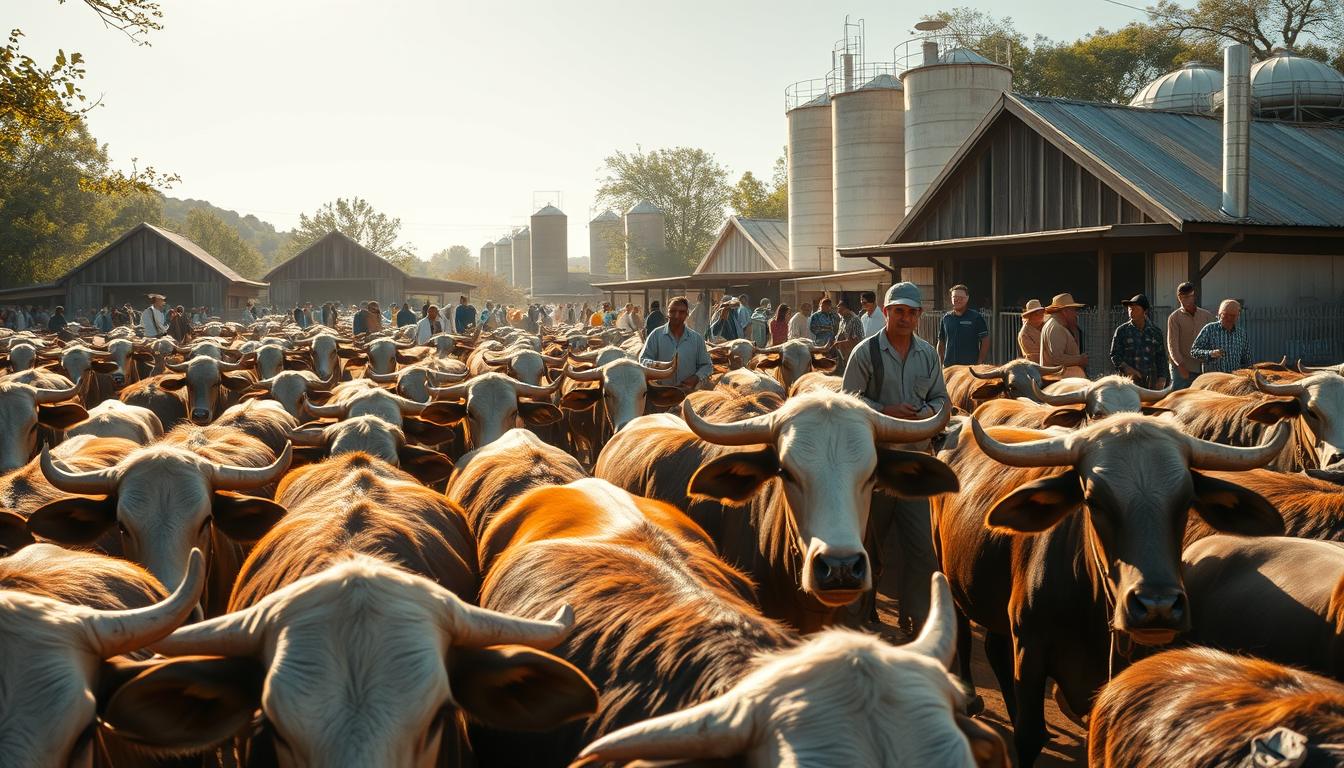

In 2021–22, Australian livestock producers celebrated record-breaking returns, with values soaring to unprecedented levels. Yet, few anticipated a 40% price correction within two years. This volatility underscores why analysts now describe the 2025 outlook as a potential ‘goldilocks’ phase – a rare alignment where margins could stabilise across the entire supply chain for the first time since 2015.
Recent herd rebuilds and improved seasonal conditions have reshaped expectations. After historic highs, softer demand and increased processing capacity are creating a delicate equilibrium. Industry stakeholders suggest this balance may allow producers, lotfeeders, and exporters to share profits more evenly – a scenario last seen during sustained periods of herd expansion.
Export markets remain pivotal. Competitive pricing and shifting global demand for beef products continue influencing domestic trends. As one Queensland-based analyst noted: “When overseas buyers adjust orders, it ripples through every tier – from paddock to port.” With feed costs stabilising and processing margins recovering, 2025 could mark a turning point for long-term viability.
Key Takeaways
- Industry experts predict balanced profit distribution across supply chains in 2025
- Herd recovery and export demand remain critical to price stability
- Processing capacity improvements may ease historical margin pressures
- Seasonal rainfall patterns continue shaping feed availability and costs
- Global beef consumption trends directly impact domestic market sentiment
Market Overview and Historical Context
Australian livestock markets have long been shaped by cyclical patterns, where supply shifts and global demand drive weekly price movements. The 2019 herd liquidation phase saw processors capitalise on abundant stock, while producers faced margin pressures – a stark contrast to 2021-22’s unprecedented highs. These extremes highlight the sector’s susceptibility to sudden swings, often unfolding within weeks of shifting trade signals.
Past Trends and Price Volatility
Historical data reveals weekly fluctuations exceeding 15% during critical periods, such as the 2021 supply crunch. Back then, tightened herd numbers collided with surging export orders, creating a seller’s market that lasted 18 months. One meat industry executive recalled: “Plants scrambled to secure livestock, with bids revised daily based on overseas orders.”
Earlier cycles demonstrate how oversupply triggers rapid corrections. Between 2016-2018, expanded breeding herds led to a 22% price drop as producers offloaded stock. Such volatility forced operational changes, including flexible herd management and diversified buyer networks.
Lessons Learned from Previous Cycles
Three key insights emerged from past disruptions:
- Producers now maintain buffer herds to mitigate supply shocks
- Exporters prioritise multi-market strategies to balance trade risks
- Weekly market alerts help stakeholders anticipate sudden demand shifts
Recent infrastructure investments also address historical bottlenecks. As one Queensland grazier noted: “We’ve learned to watch global indicators as closely as rainfall forecasts – both dictate our margins.” These adaptations underscore the industry’s hardening resilience against external pressures.
Economic and Processing Factors Shaping the Market
A weaker Australian dollar presents both opportunities and challenges for meat exporters. Recent economic shifts have amplified the role of currency valuations and industrial efficiency in determining market outcomes. These elements now compete with seasonal factors as primary drivers of profitability.
Currency Impact and Export Competitiveness
The Aussie dollar’s 12% depreciation against major currencies since 2022 has made Australian beef shipments more attractive overseas. Industry reports show a 17% year-on-year increase in orders from price-sensitive Asian markets. One exporter remarked: “Every cent the dollar drops adds margin flexibility against Brazilian and US competitors.”
However, currency gains bring risks. Rising input costs for fuel and equipment, priced in US dollars, squeeze regional processors. Trade news highlights how sudden exchange rate swings can erase supply chain profits within days. Analysts urge stakeholders to monitor economic indicators as closely as herd numbers.
Processing Capacity and Labour Constraints
New abattoir expansions have boosted national throughput by 23% since 2023. This addresses historical bottlenecks in livestock processing. Yet 68% of plants report staffing shortages, delaying order fulfilment despite upgraded infrastructure.
Government initiatives aim to attract workers through regional visa programs. Meanwhile, automation investments help cattle operations maintain output. As one plant manager noted: “We’ve halved labour needs in boning rooms, but skilled butchers remain irreplaceable.” These contrasts underscore the delicate balance between capacity growth and workforce realities.
Such economic forces directly shape market sentiment. While improved supply chain resilience supports steady cattle exports, persistent labour risks remind stakeholders that operational hurdles still demand innovative solutions.
cattle price forecast 2025
Industry projections reveal tightening supply buffers as herd numbers approach critical thresholds. MLA data indicates a potential 12% year-on-year increase in slaughter volumes by mid-2025, driven by improved breeding rates and feed availability. This surge coincides with export markets demanding higher-quality cuts, creating complex operational decisions for stakeholders.
Supply and Demand Analysis
Current metrics show a 4.3% annual growth in breeding herds across northern Australia. However, processing facilities face capacity challenges, with slaughter rates projected to reach 7.2 million head annually. Key indicators suggest:
| Metric | 2023 Actual | 2025 Projection |
|---|---|---|
| National Herd Size | 24.1 million | 26.8 million |
| Weekly Slaughter Volume | 135,000 | 152,000 |
| Beef Export Share | 72% | 68% |
| Domestic Demand Growth | 2.1% | 3.4% |
Global competition intensifies as Brazilian suppliers undercut traditional markets. One processor noted: “Our focus shifted to premium EU and Korean buyers – they value consistency over bulk shipments.”
Producer Sentiment and Risk Management
Recent surveys show 68% of northern graziers plan to retain heifers despite strong market signals. This cautious approach reflects lessons from past oversupply cycles. Common mitigation strategies include:
- Forward contracts covering 40-60% of expected output
- Real-time satellite monitoring of pasture conditions
- Diversification into crossbred operations
Financial advisors report increased adoption of feed swaps, with 62% of producers now using market alerts for inventory decisions. As margins tighten, operational flexibility becomes the new benchmark for sustainability.
Global Export Dynamics and International Influences
International market shifts now dictate profitability for Australian producers more than ever. Two key players – the United States and Brazil – are reshaping global trade flows through contrasting strategies. Their decisions directly affect herd management and processing priorities Down Under.
US Market Conditions and Herd Liquidation
American ranchers reduced breeding herds by 4% last year amid drought pressures. This liquidation pushed US feeder stock values to record highs, with USDA reports showing a 19% annual increase. One Nebraska feedlot operator stated: “We’re prioritising carcass quality over volume – buyers want consistency, not just bulk.”
The strategy impacts Australian exports. As US production numbers decline, Asian importers increasingly seek alternative suppliers. Recent trade data reveals a 14% quarterly rise in Australian shipments to Japan and South Korea.
Brazilian Supply Trends and Competitive Pricing
Brazil faces different challenges. Despite processing plant closures affecting 12% of capacity, their herd expansion continues. Government figures show a 6.7 million head increase over three years – the largest growth in two decades.
This expansion fuels aggressive pricing. Brazilian exporters now undercut Australian offers by 8-11% in key markets. However, quality concerns persist. A São Paulo industry report notes: “Our focus remains volume-driven markets rather than premium segments.”
Key contrasts emerge:
- US prioritises margin protection through selective breeding
- Brazil leverages scale to dominate price-sensitive buyers
- Australian operators balance both approaches
These dynamics force local supply chain adjustments. Forward-looking producers now align breeding programs with emerging trade patterns rather than historical benchmarks.
Weather Patterns and Regional Supply Considerations
Recent Bureau of Meteorology reports highlight shifting climate patterns reshaping production strategies across eastern Australia. Improved rainfall during critical growing months has enabled faster herd recovery, though regional disparities persist. These geographical nuances demand tailored approaches to inventory management and infrastructure planning.
Seasonal Rainfall and Herd Rebuilds
Three consecutive La Niña events delivered 23% above-average rainfall to Queensland’s grazing regions since 2022. This moisture surplus allowed producers to retain breeding stock, with northern feeders reporting 18% higher retention rates. A Central Tablelands grazier observed: “Good autumn breaks let us hold onto heifers we’d normally sell – that buffer protects against future dry spells.”
Contrasts emerge when comparing recovery timelines:
- Coastal NSW achieved 94% of pre-drought herd levels within 24 months
- Western Victoria required 36 months due to waterlogged pastures delaying rotations
- Northern NT stations face ongoing challenges despite improved totals
Processing capacity fluctuates with these regional disparities. Drought-prone zones maintain higher feedlot utilisation, while temperate areas prioritise pasture finishing. Monthly weather tracking now informs 68% of procurement decisions across the industry, according to recent AgriFutures surveys.
Historical parallels reveal risks. The 2016-17 recovery collapsed when El Niño conditions returned, forcing abrupt herd reductions. Stakeholders emphasise balancing optimism with contingency plans – a lesson hard-learned from previous cycles.
Market Confidence and Future Industry Trends
Australian livestock operators increasingly view forward trading mechanisms as critical stabilisers in volatile markets. Recent data reveals 73% of producers now use contractual agreements to lock in margins – a 28% increase since 2022. This shift reflects hardening confidence in orderly market conditions through 2025.
Risk Mitigation Through Contractual Innovation
Feed swap arrangements now cover 41% of national grain purchases for feedlots, according to Rural Bank analysis. These agreements let producers secure feed costs while processors guarantee livestock supply. One Victorian operator explained: “Swaps remove guesswork – we budget tighter but sleep better.”
Export figures underscore improved supply chain management. March 2024 shipments reached 98,000 tonnes – 15% above five-year averages. Trade analysts attribute this to coordinated forward contracts aligning production schedules with overseas demand cycles.
| Metric | 2023 | 2024 YTD | 2025 Projection |
|---|---|---|---|
| Forward Contracts Executed | 62% | 71% | 78% |
| Feed Swap Participants | 890 | 1,240 | 1,550 |
| Sheep/Cattle Cross-Hedging | 18% | 27% | 34% |
Market trends show growing integration between cattle and sheep sectors. Producers now hedge 34% of red meat exposure across both commodities – up from 19% in 2021. This diversification helps maintain stable revenue levels during supply shocks.
Industry reports released today highlight moderated price expectations. Forward curves suggest ±8% fluctuations through mid-2025 – half the volatility seen in 2021-22. As one NSW broker noted: “Calm markets breed confidence – that’s when strategic investments happen.”
Conclusion
Strategic adaptations across Australia’s livestock supply chain point toward stabilised conditions through 2025. Feeder cattle markets show signs of equilibrium, supported by improved herd numbers nearing million head thresholds. Analysts anticipate steadier returns for producers, though steer prices face pressure from global competition and shifting trade flows.
Beef production remains robust despite cyclical challenges, with processing innovations helping maintain output levels. StoneX data highlights record export volumes achieved through forward swap agreements, reflecting the beef industry’s capacity to adapt. One Queensland processor noted: “We’re balancing premium cuts for Asia against bulk shipments – it’s a tightrope walk with currency shifts.”
Key risks persist, particularly in northern regions where feeder cattle supplies approach million head capacities. Market watchers urge proactive hedging strategies as steer prices exhibit wider volatility bands than pre-2022 averages. However, coordinated risk management practices across the beef industry are tempering extreme fluctuations.
While 2025 won’t replicate past record highs, stakeholders report cautious optimism. Sustainable margins now depend on aligning feeder cattle inventories with processing capabilities and export timelines – a complex equation demanding real-time data analysis. As herd expansions peak, the sector’s resilience hinges on these calibrated responses to emerging pressures.