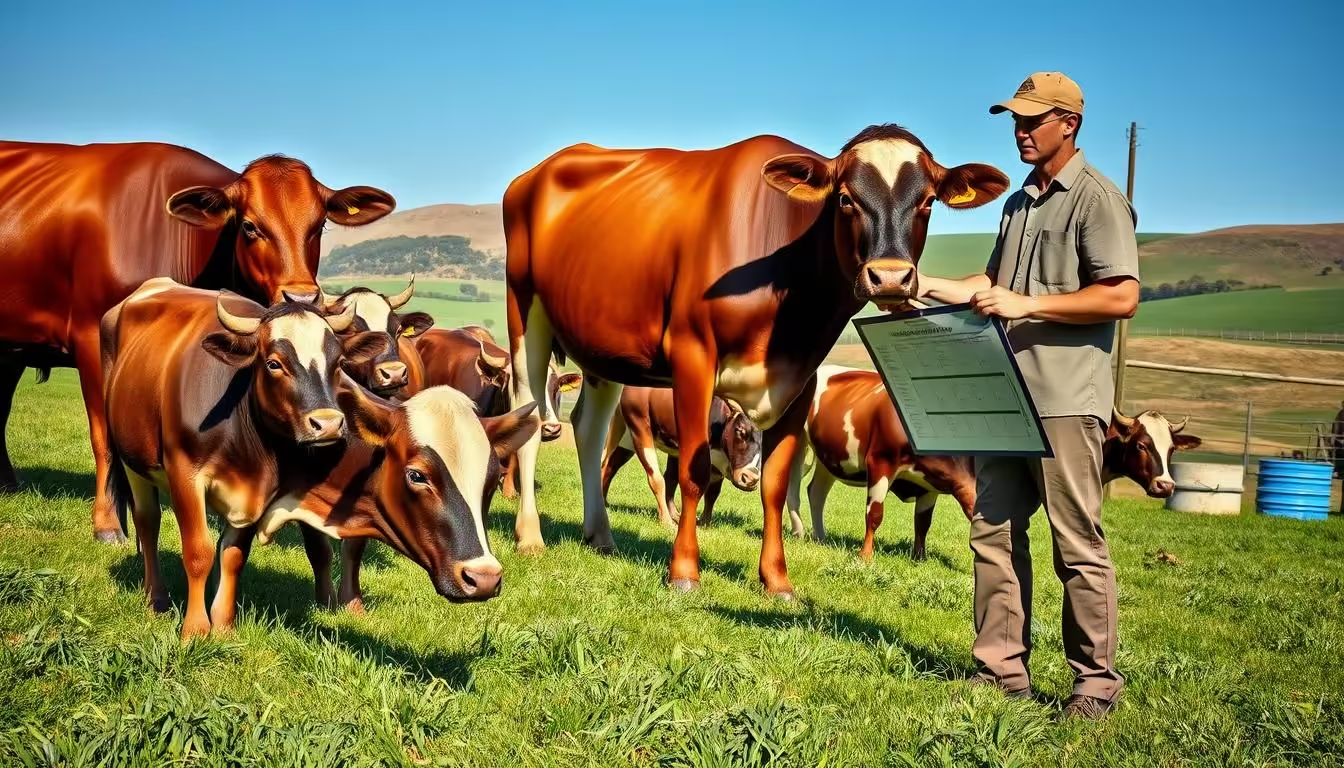

How much more could your herd return if genetics, feed and handling worked as one?
This guide gives a clear, practical roadmap for lifting on‑farm outcomes. It sets out a three‑stage system that links cow‑calf, backgrounding and finishing steps to margins, risk and seasonal swings.
Key choices — from weaning weights and average daily gain to finishing consistency and carcass compliance — decide where yield is won or lost. The text flags essential resources: feed availability, water security and animal health, and explains how each affects cost and market access.
The approach is grounded in Australian realities. It draws on science and field experience to help producers match turnoff to market grids, feedlot programs or export paths without overextending the farm.
Key Takeaways
- Use a three‑stage plan to target margins at each life stage.
- Prioritise weaning weights, ADG and finishing consistency.
- Secure feed, water and animal health to control costs.
- Match on‑farm choices to Australian market paths.
- Low‑stress handling and data (kill sheets, CS) protect quality.
Understanding the beef cattle production cycle
Understanding each turn in the herd’s life helps producers plan feed, labour and sales with confidence.
Cow‑calf, backgrounding and finishing
The system breaks into three practical stages: cow‑calf, backgrounding (stocker) and feedlot finishing. Each stage has clear aims — breeding and rearing, building frame and condition, then hitting consistent carcass specs for market.
From birth to market
Gestation runs about 285 days. Calves are weaned at 6–9 months and commonly weigh 500–700 lb. Backgrounding uses pasture plus supplements to prepare yearlings for the feedlot.
Finishing usually lasts 4–6 months on balanced rations; some stock finish on grass. Typical market weight sits near 1,200–1,300 lb at 14–15 months. A 1,000 lb live steer yields roughly 615 lb carcass and ~430 lb boxed meat after chilling and cutting.
Roles, timelines and performance signals
Heifers may enter the herd or the supply chain, steers are castrated for slaughter, and bulls provide service or semen. Monitor body condition and ADG as the core signals that animals are tracking to weight and fat targets.
“Manage the last 90–120 days deliberately — finishing decides carcass outcomes.”
- Use clear weaning, induction and transport protocols to cut stress and protect gains.
- Flag freemartins early to avoid feeding infertile heifers into the breeding herd.
Beef cattle production in Australia: systems, markets and regulation
Regional systems and clear market rules shape how on‑farm choices convert grass into value.
Northern versus southern systems and pasture use
Australia splits into long‑range pastoral country in the north and higher‑rainfall mixed farms in the south. The two systems set different breeding windows and turnoff timings.
Northern operations use extensive grazing and carry lower stocking rates for long periods. Southern farms manage shorter, higher‑quality pasture growth curves and use spelling and rotational grazing to protect groundcover.
The feedlot sector and finishing pathways
The feedlot industry provides a reliable finishing pathway when pasture gaps appear. Feedlots deliver consistent carcass specs and support branded grain or grass‑fed programs.
Feedlots link backgrounders to processors and reduce variability at slaughter by controlling diet and days on feed.
Live export, market prep and supply chain flow
Typical supply chains move station‑bred weaners to backgrounders, then to feedlots or grass finishers. Live export remains a separate pathway with strict pre‑export checks.
- NLIS tags, vendor declarations and fit‑to‑load checks keep animals moving.
- Processors reward weight, fat and ossification consistency via grids.
- Biosecurity, welfare and record keeping are mandatory across states.
“Consistency across genetics, feed and handling protects market access and premiums.”
Genetics, breeding and reproductive management
Genetics and mating decisions determine how well herds match climate, feed and market targets.
Selective breeding lifts traits such as growth rate, lean yield and disease resistance. Producers use EBVs and simple on‑farm records to target fertility, calving ease and marbling. Dual‑purpose breeds exist, but lines diverge as selection focuses on either maternal durability or finish‑weight traits.
Matching breeds to country and markets
Choose breeds with the right climate tolerance. Bos indicus content helps northern operations with heat and parasites. British and European breeds or composites suit temperate areas where growth and meat quality matter most.
Natural service and artificial insemination
Natural service is reliable where yards and labour are limited. A bull is typically joined about 55 days after calving, but first‑calvers may need ~10 extra days before re‑joining.
Artificial insemination concentrates superior sires and tightens calving windows. Use AI where yards, heat detection and timing can be managed to take advantage of top genetics.
“Manage body condition through late pregnancy and pre‑joining so cows cycle strongly and reconceive on time.”
- Select replacement heifers for feet, temperament and fertility.
- Consider polled lines or horn management for safety and yard efficiency.
- Link vaccination, parasite control and nutrition to your reproductive plan.
| Area | Recommendation | Expected benefit |
|---|---|---|
| Breed choice | Bos indicus composites north; British/European south | Better heat tolerance or improved growth and meat quality |
| Breeding method | Natural service where labour limited; AI where precision is possible | Tighter calving windows and faster genetic gain |
| Joining rules | Bull joined ~55 days post‑calving; allow extra for first‑calvers | Improved reconception and even branding |
| Health & condition | Vaccinate, control parasites, manage BCS pre‑joining | Higher fertility and heavier weaners |
Nutrition, finishing and carcass quality
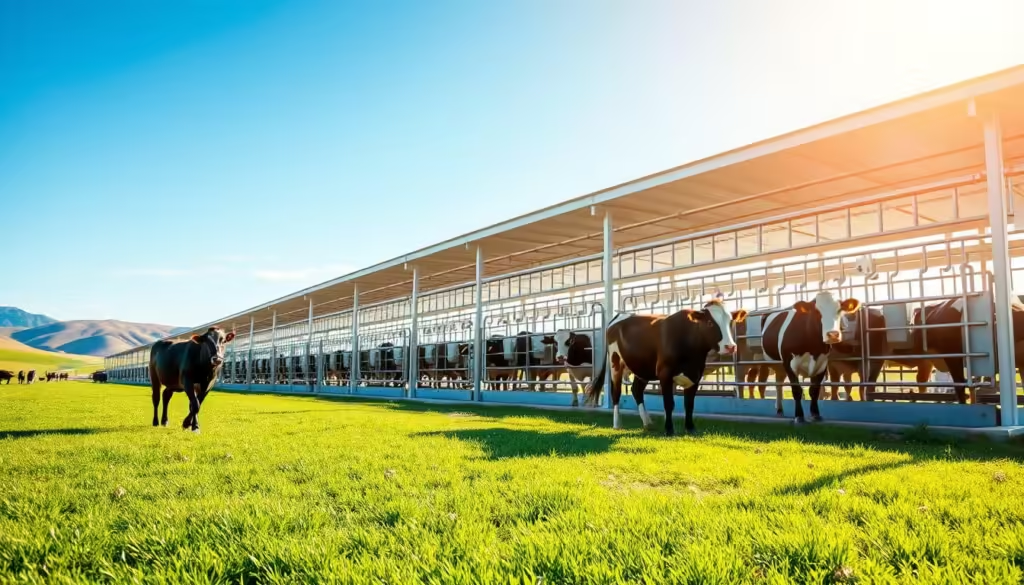
Nutrition and finishing decisions set the margin between paddock weight and market value.
Pasture feeding, supplements and protein needs
Animals typically eat 1.4–4% of live body weight daily. Roughage is essential; hay, silage or haylage fill out diets when pasture falters.
Plan protein to match growth phases. Use legumes or concentrates to lift intake and meet requirements through dry spells.
Backgrounding targets and ADG
Backgrounding aims for steady average daily gain (ADG) and balanced minerals. Avoid growth checks that add days on feed and hurt margins.
Set a clear growth target and adjust supplements, not just stocking rate, to keep animals on track.
Finishing options, water and welfare
Grain finishing often speeds weight gain and marbling, while grass finishing fits some brand specs with longer days.
Feedlot rations blend grain and roughage to protect the rumen. A 1,000 lb animal drinks about 41 L/day; expect demand to double in heat. Shade, quiet yards and stocking density are simple levers for animal welfare and intake.
Processing, yields and grading
Slaughter has three key steps: calm preslaughter handling, effective stunning and hygienic processing. These steps influence meat quality and market access.
“Use kill‑sheet feedback to change days on feed, energy density or selection for marbling.”
| Stage | Key action | Typical outcome |
|---|---|---|
| Backgrounding | Steady ADG, mineral balance | Even growth, fewer days on feed |
| Feedlot finish | High‑energy rations with roughage | Faster gain, higher marbling potential |
| Grass finish | Pasture allocation, longer days | Brand‑specific profile, leaner meat |
| Processing | Low‑stress handling, water access | Better colour, grading and market returns |
Conclusion
Simple rules around breeding, feeding and handling lift yard results year after year.
Focus on matching breed choice to your country, growing calves steadily and finishing to the grid. Clear KPIs — joining rate, weaning weight, ADG, days on feed and carcase compliance — show where gains come from.
Good care and low‑stress yards improve marbling and meat outcomes. Practical traits such as temperament and horns/polled status make handling safer and cheaper on the farm.
Work with agents, feedlots and processors, pick pathways that suit your systems and seasons, and measure each year. Small, steady improvements protect margins, market access and the reputation of Australia’s industry.