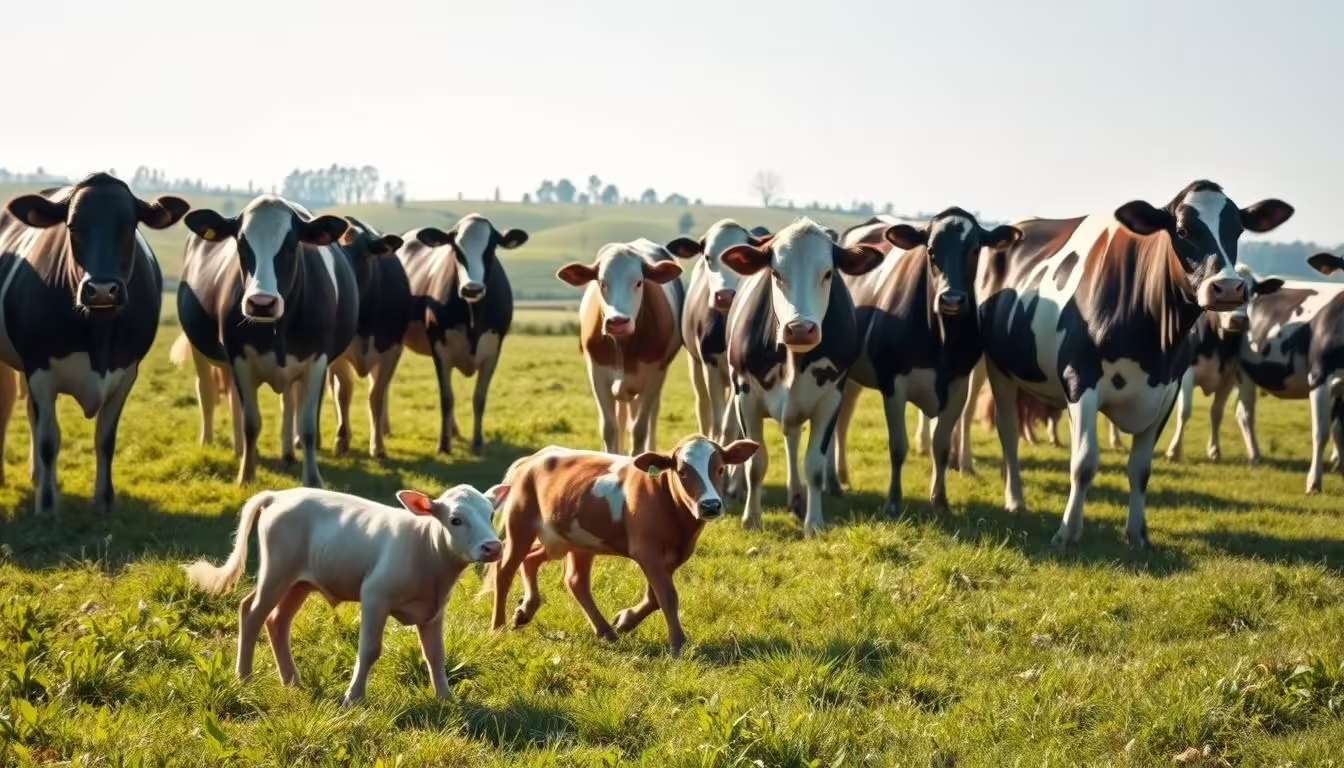

“Do what you can, with what you have, where you are.” — Theodore Roosevelt
This short guide sits with practical advice for producers making choices on-farm today. It focuses on beef cattle decisions that lift performance and help plan for market shifts across Australia.
The world herd totals sit in the high hundreds of millions, and that number shapes policy and consumer attitudes. Producers should weigh greenhouse gas context and market status when setting priorities on land and herd management.
In Australia, two-thirds of animals spend most of their life on pasture and nearly half the national herd lives in Queensland. This guide links day-to-day paddock moves — nutrition, heat and parasite control, genetics — to broader market realities.
What follows is plain, steady guidance: quick, actionable tips for local conditions and clear steps that producers can use now to cut guesswork and lift returns on farms.
Key Takeaways
- Use pasture-first strategies where land and seasons allow to reduce costs and risk.
- Match breed type to local climate and parasite pressure for consistent performance.
- Plan finishing and marketing with slaughter ages and market status in mind.
- Monitor herd numbers and emissions context to stay ahead of policy changes.
- Apply simple, regular health checks to protect animal welfare and cashflow.
Quick-start list of practical beef cattle tips for Australian conditions
Quick, hands-on tips keep producers focused on the small changes that lift herd returns.
Match genetics to your land and climate. Bos taurus lines suit cooler, temperate areas with steady pasture. Bos indicus and composites cope better in hotter, tick-prone country. Pick sires and dams with traits proven for your rainfall, pasture base and parasite pressure.
Prioritise pasture, then bring in supplements
Keep pasture quality front and centre. Build a feed wedge of digestible feed and test before adding energy or protein.
Plan breeding and calving around feed
Time calving so peak lactation aligns with your best grass growth months. Use compact joining windows to simplify health checks, weaning and market timing for meat and livestock sales.
- Watch grazing behaviour: animals often take clover-heavy bites in the morning and more grass later—rotate paddocks to protect quality.
- Ensure clean, close water—walking burns energy and reduces intake.
- Use body condition scores and regular weighing, not guesswork, to guide feeding decisions.
- Manage shade, airflow and handling times in hot spells to protect intake and performance.
- Select bulls with appropriate birth-weight EBVs for heifers and temperament suited to your conditions.
Understanding cattle types: Bos taurus, Bos indicus and strategic crosses
Choosing the right breed mix sets the foundation for reliable growth and herd resilience.
Bos taurus for temperate zones
Bos taurus originated in cooler regions and suits temperate areas with steady pasture.
Types such as Angus, Hereford and Murray Grey bring good temperament and carcass traits.
They finish well on pasture and match southern market status that values marbling and consistent weight gains.
Bos indicus for tropical resilience
Bos indicus lines evolved in tropical origin countries and tolerate heat and ticks.
They carry loose skin, a hump and slick coats that help with heat loss. Northern systems lean to these types or composites for survivability under harsh conditions.
Crossbreeding to balance performance
Strategic crosses blend strengths: indicus for parasite and heat resilience, taurus for finish and temperament.
- Set a clear genetics goal for indicus percentage.
- Match the cross to rainfall, pasture and market requirements.
- Keep handling and fertility in mind—shade, water and timing matter as much as origin.
Australian beef breeds at a glance: origins, coats, weights and status
A quick field reference helps producers pick breeds that suit their paddock, market and management.
Use origin and adaptation first: Scottish and European types suit cooler finishing systems. Australian and indicus-based composites fit hotter, tick-prone northern runs.
Popular bos taurus beef breeds in Australia
Key temperate breeds and quick notes for the paddock:
- Angus — Origin: Scotland. Male ~1000 kg; female ~650 kg; coat black; status: polled.
- Hereford / Poll Hereford — Origin: Scotland. Male ~1075 kg; female ~675 kg; red & white coat; horned or polled.
- Murray Grey — Origin: Australia. Male 780–860 kg; female 500–680 kg; grey/silver/dun coat; polled and easy-doing.
- Charolais, Limousin, Simmental, Wagyu, Speckle Park — heavier frames for rapid growth or specialized grids; check coat and horn status before purchase.
Key bos indicus and composite breeds for northern environments
Heat and parasite resilience matter up north.
- Brahman — Origin: America. Male 800–1100 kg; female 500–700 kg; coat varies; horned or polled; tick resilience noted.
- Droughtmaster, Santa Gertrudis, Braford, Brangus — Australian and American composites blend survivability with growth and maternal traits.
Coat colour, horn status and management
Coat and colour affect heat load and sun sensitivity. Light, slick coats reflect heat and can reduce fly burden.
Horn status changes handling needs. Polled lines cut dehorning work and lower bruising risk.
“Match origin, coat and weight to your water, shade and handling set-up.”
Breed-by-breed pointers: Angus, Hereford, Murray Grey, Wagyu, Charolais and more
Practical, breed-level notes help producers match animals to country and markets.
British and European types: growth, carcass and feed conversion
Angus — Origin: Scotland. Male ~1000 kg; female ~650 kg; coat black; polled. Use Angus where finishing and marbling matter. They suit paddocks with steady pasture and add reliable temperament.
Hereford / Poll Hereford — Origin: Scotland. Male ~1075 kg; female ~675 kg; coat red/white; horned or polled. They grow well on pasture. Choose polled lines to reduce handling work and bruising at sale.
Murray Grey — Origin: Australia. Male 780–860 kg; female 500–680 kg; coat grey/silver/dun; polled. Good maternal traits and calm nature make them useful on mixed farms and in warmer southern zones.
Wagyu — Origin: Japan. Male ~950 kg; female ~700 kg; coat black/red; horned. Slow to finish but high marbling reward—best where long feeding and premium grids are available.
Charolais — Origin: France. Male 1000–1650 kg; female 700–1200 kg; coat white; horned. Use for heavy weight markets and high dressing percentages, but manage calving ease in heifers.
Tropical and composite options for northern and mixed country
Brahman — Origin: America. Male 800–1100 kg; female 500–700 kg; coat grey/red/black; horned or polled. Key for heat resilience and tick tolerance. Suits long paddock walks and rough feed.
Droughtmaster — Origin: Australia. Male ~1000 kg; female ~695 kg; coat red; horned or polled. Balanced for northern and coastal runs with seasonal feed swings.
Santa Gertrudis — Origin: America. Male 750–1000 kg; female 600–850 kg; coat cherry red; horned or polled. Versatile, good for mixed grazing and finishing systems.
Braford & Brangus — Origin: Australia / America mixes. Braford male 900–1000 kg; Brangus male 800–900 kg. They blend muscle, fertility and adaptability; pick the indicus percentage to suit local parasite and heat pressure.
- Quick action points: use recorded weight and male/female metrics when selecting sires; check horn status and match EBVs for birthweight, growth and carcase targets.
- Over time, tighten breed mix to what suits your country; consistent selection gives better temperament, fertility and saleable kilograms.
“Match the breed’s origin and coat to your water, shade and handling set-up for best returns.”
Beef cattle nutrition: grazing behaviour, diet energy and feeding times
Watch what animals eat and when — that observation alone changes ration and rotation choices.
The rumen hosts microbes that break down cellulose, so steady fibre and gradual diet changes protect digestion. Grazing patterns show roughly 70% clover and 30% grass preference, stronger for clover in the morning and more grass in the evening.
Grazing patterns and intake behaviour
Animals adjust bite size with sward height. Keep high-quality forage in front of stock by rotating paddocks and setting sensible residuals.
Practical steps:
- Rotate early-morning access to clover-rich paddocks to capture higher intake.
- Provide water close to grazing to reduce walking and lift daily intake.
- Introduce higher-energy feeds slowly to avoid rumen upset.
Pasture and feed budgets for seasons and years
Build a rolling feed budget using pasture growth curves and realistic utilisation rates. Test pastures and conserved feeds and match energy to class of stock — lactating females and weaners need more energy and protein.
When feedlots make sense
Feedlot finishing suits falling pasture quality, grid premiums or tight logistics. Run cost-of-gain v. pasture analysis before switching to a feedlot strategy.
| Scenario | Action | Key benefit |
|---|---|---|
| High clover availability (spring) | Short grazing rotations; protect regrowth | Higher intake, better daily gains |
| Dry season pasture decline | Conserve feed early or consider feedlot finish | Stable supply, predictable carcase specs |
| Lactating females or weaners | Increase energy density; test and balance protein | Protect fertility and growth |
Heat, ticks and parasites: practical management for northern Australia
Hot, humid country needs a toolkit that balances resilient genetics and smart on‑farm routines.
Start with genetics. Select sires that lift heat tolerance and parasite resilience. Target animals with clear indicus influence and traits such as a slick coat, loose skin and a hump. These features help airflow, shade use and parasite shedding in humid runs.
Choosing genetics for northern pressure
Pick bulls for local status and performance. Aim for lines proven under northern ticks and seasonal feed swings. Breed for temperament too — calmer stock graze more and handle stress better.
Integrated parasite control with minimal chemicals
- Rotate paddocks to break life cycles and lower parasite burdens.
- Use faecal egg counts and visual checks; treat only mobs that need it.
- Rotate chemical actives, calibrate gear and avoid blanket dosing.
- Provide shade, cool handling times and reliable water to keep intake and reduce heat stress.
- Cull chronic carriers; steady selection raises whole‑herd robustness.
“A pragmatic northern plan blends genetics, grazing and careful chemical use for long‑term gains.”
Genetics and breeding: from bos taurus and bos indicus to targeted hybrids
Choose breeding goals that move your herd toward measurable, on‑farm gain.
Select traits first: write down objectives for temperament, growth, fertility and carcase traits. Match sire choices to those goals and the market status you target.
Selecting for temperament, growth, fertility and carcass traits
Temperament is measurable and heritable — estimates sit near 0.36 for behaviour and 0.46 for habituation to handling. Picking calmer sires reduces yard incidents and improves grazing time. That converts to extra kilos over years.
Fertility and calving timing matter. Aim to tighten joining windows and track days from calving to conception. Semi‑wild calving intervals average about 391 days; on‑farm targets should be shorter with tight management.
Leveraging heritable traits and genomic tools in herd improvement
The bovine genome has about 22,000 genes. EBVs plus genomic tests speed selection for feed efficiency, meat quality and fertility.
| Tool | Use | Practical benefit |
|---|---|---|
| EBVs | Compare sires by trait | Faster, predictable genetic gain |
| Genomic testing | Identify markers for meat and milk yield | Improve accuracy in young animals |
| Artificial insemination (AI) | Access top sires remotely | Raise herd status without large bull purchases |
Practical checklist:
- Record birthweights, 200/400/600‑day weights and temperament scores.
- Balance bos taurus and indicus content to suit climate and parasites.
- Cull empty or structurally unsound animals early to keep selection focused.
- Build relationships with seedstock breeders for proven status and genomic results.
“Expect steady progress, not miracles; consistent selection across seasons compounds gains.”
Dairy cattle versus beef breeds: roles, crosses and market fit
Mixing dairy genetics into finishing systems works when rearing, nutrition and market rules align.
Dairy lines are mostly bos taurus and bring milking capacity and maternal traits that can suit supply chains. Holstein‑Friesian, Jersey and other dairy types appear in beef supply channels as either pure dairy or as dairy‑beef crosses. Producers should plan feeding, health and markets from day one.
Holstein‑Friesian, Jersey and practical notes
Holstein‑Friesian offer frame and growth. Their origin spans multiple European countries and female weight sits around 550 kg. They often need higher energy rations to meet carcass targets.
Jersey animals are smaller (female 350–400 kg) and lift eating quality. Their lighter coat helps in warmer finishing, but market placement must value the eating traits to cover longer feeding times.
| Breed | Origin | Female weight | Coat | Status | Finishing note |
|---|---|---|---|---|---|
| Holstein‑Friesian | Multiple European origin | ~550 kg | Black/white or red/white | Polled or horned | Good frame; needs energy to hit grids |
| Jersey | British Channel Islands origin | 350–400 kg | Light brown to dull black | Polled or horned | Higher marbling; careful market fit |
| Fleckvieh / Montbéliarde | Continental origin | Varies (dual‑purpose) | Light to speckled coats | Mixed | Suit dual-purpose and finishing |
What to watch: record origin, coat and status when buying. Horn status affects handling work. Use colostrum, strict health protocols and tailored feeding for dairy‑beef calves to protect lifetime performance.
Contracts and grids often set minimum weight and fat cover. Separate feeding groups for dairy crosses helps hit targets without overfeeding smaller British types. Align joining and nutrition plans so different mobs don’t compete at critical feed times.
“Use recorded breed and origin to predict finishing time and to match animals to the right market.”
Weights, ages and life milestones: male, female and herd metrics
Clear weight and age targets make it easier to plan feed, yards and sale timing. Producers can use simple benchmarks to compare their herd and set practical goals for handling, nutrition and markets.
Typical weight ranges by breed, sex and production class
British types: Hereford females commonly sit between 600–800 kg, while Hereford males often reach 1000–1200 kg. That gap affects feed budgeting and yard design.
Continental sires: Charolais bulls can reach 1000–1650 kg, with females often 700–1200 kg. Match large frames to pasture supply, loading ramps and transport limits.
Calving intervals, days on feed and key timings
Many systems target turn-off around 18 months. Adjust days on feed when finishing to meet grid weight and fat windows without over‑feeding.
- Record weights at weaning, yearling and pre‑sale by sex and breed to spot which lines convert feed best.
- Aim for calving intervals near 365 days; semi‑wild examples averaged ~391 days, so tightening joining windows pays.
- Use scales, not sight, for ration design—current weight plus daily gain targets simplify feed decisions.
- Separate mobs by sex and weight where practical to reduce competition and hit class‑specific growth rates.
Practical point: consistent recording and modest, measurable targets turn herd status into clearer management actions.
Pasture-based majority, grainfed minority: how Australian systems work today
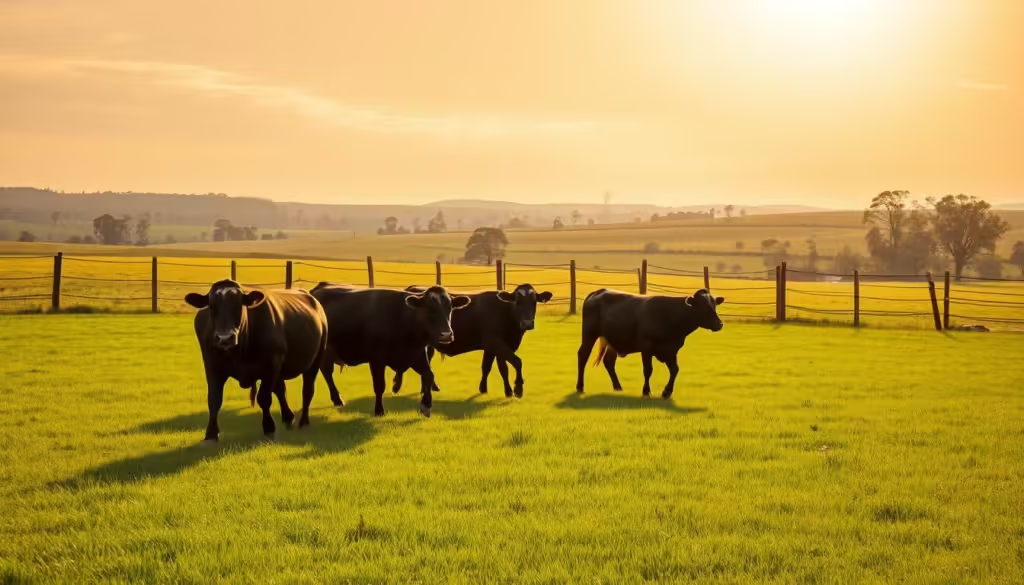
Australia still runs a pasture-first system. Most animals are born, weaned and finished on grass. Nearly half the national herd lives in Queensland, and about two-thirds of cattle spend their whole lives on pasture.
How animals move through the system
Usually stock spend months or years on farms grazing native and improved pastures. Producers use fencing, water and rotation to match seasonal growth.
Around one-third of animals enter feedlots late in life for grain finishing. Those mobs still spend most years grazing before a short yard and feeding period to hit grid specs.
Why grain finishing is used
- Feedlots add consistency when pasture quality dips, helping meet buyer specifications.
- Short or long days on feed target different market grades and margins.
- Recordkeeping and on‑farm health set stock up for success whether finishing on grass or grain.
- Sheep enterprises often run alongside, so grazing plans must suit both species and protect land.
Practical point: a flexible blend of pasture and feedlot options lets producers respond to world and domestic demand without losing herd momentum.
Where Australia’s cattle are: regional conditions and state snapshots
Where stock live matters: soils, rainfall and transport links steer breed and management decisions across the country.
Queensland: herd concentration and tropical production
Queensland holds nearly half the national herd. Tropical and sub‑tropical conditions favour indicus and composite genetics for heat and tick resilience.
Long musters and road transport favour calm animals and robust yards. Producers plan joining windows and water strategies around the wet–dry cycle.
Southern temperate areas: New South Wales, Victoria and Tasmania
These temperate areas suit bos taurus breeds and finishing on reliable pasture. Close access to processors and saleyards cuts transport costs and bruising risk.
Mixed enterprises are common; sheep and livestock share grazing plans, so producers balance stocking rates and pasture persistence.
WA, SA and NT: diverse land and logistics
Western Australia, South Australia and the Northern Territory cover wide, varied country. Enterprises mix breeder country, backgrounding and logistics to ports and processors.
Regional infrastructure and environment dictate turn‑off timing as much as pasture growth. Match origin and adaptation of genetics to your state, not to trends elsewhere.
- Practical checklist: align breed choice, joining windows and sale timing to local rainfall, temperature swings and parasite pressure.
- Use state services—saleyards, feedlots and processors—to sharpen marketing calendars and lower costs.
- In temperate areas conserve seasonal surplus; in the north plan wet–dry water and yard strategies.
Market trends and environment: meat demand, emissions and sustainable grazing
How stock are run and the land they graze increasingly shapes market access and premium payments.
Livestock numbers and Australia’s position
The world held over 940 million head by 2022, and that large number keeps markets competitive. Buyers seek consistent specs and verified production that shows good land and animal status.
Reducing methane and improving land through grazing
Emissions are under scrutiny: global estimates place livestock near 7% of greenhouse gases. Faster, efficient growth lowers emissions per kilogram and helps both environment and farm margins.
- Match stocking to pasture growth and rotate to protect ground cover.
- Raise feed quality with legumes and higher energy phases to improve gains and lower methane intensity.
- Place shade and water to cut heat stress so animals spend more time eating and less energy cooling.
- Use targeted chemicals and integrated parasite control to keep treatments effective long term.
Practical point: keep simple records linking grazing choices to growth and turn‑off weights — data wins market trust and supports premium pathways like feedlot or verified pasture‑based status.
Conclusion
Simple, steady actions on genetics and grazing deliver the biggest returns across an animal’s working life.
Match breed to climate and country, and plan grazing around how cattle actually eat. Those two choices lift lifetime performance more than small fixes elsewhere.
Keep calving timed to pasture peaks. Measure weights, not guesses, and record the few numbers that drive decisions on feed, sale timing and breeding.
In the north, favour indicus and composite types for heat and ticks. In the south, use taurus strengths for finishing and cross where it improves fit and margins.
Prioritise nutrition, shade, water and low‑stress handling. Markets pay for consistent specs and good welfare — build systems that deliver steady cashflow year after year.