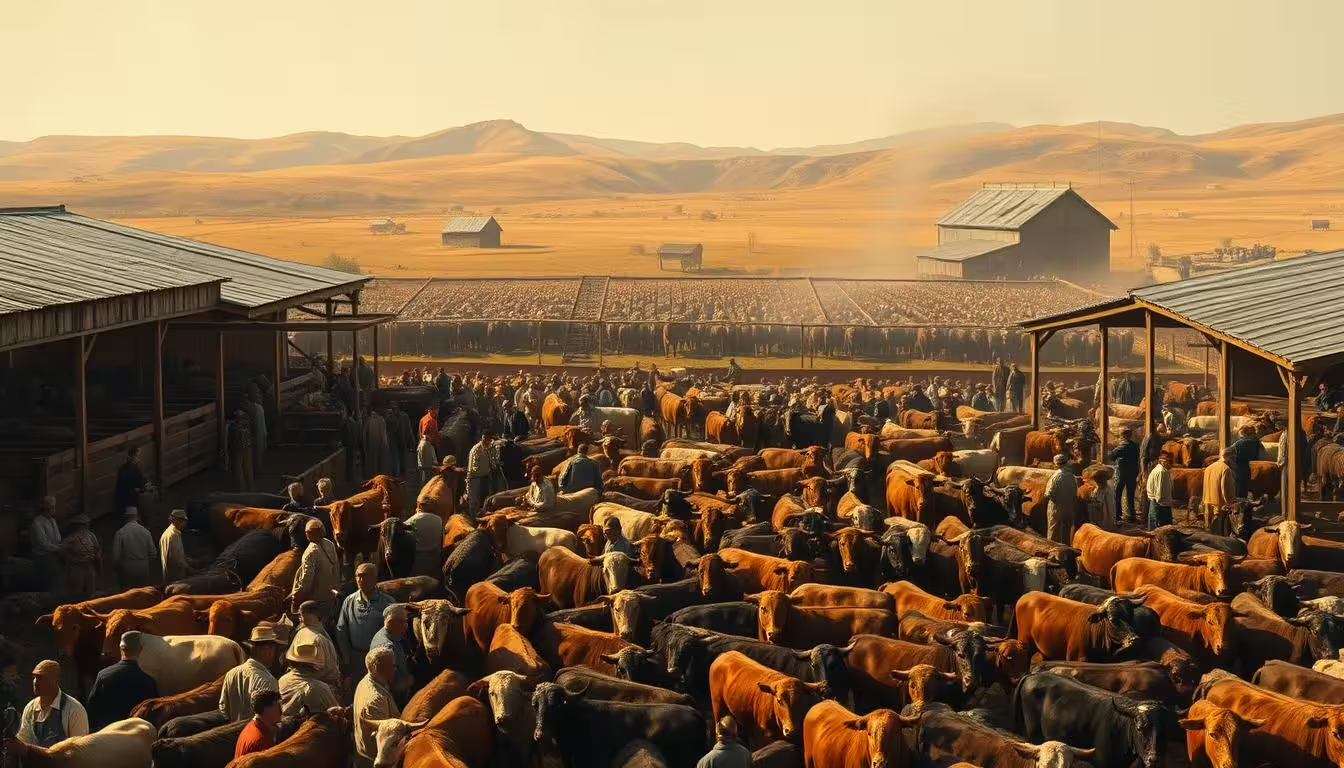

Surprising fact: global beef demand has jumped while US production has slowed sharply, lifting import needs and pushing Australian markets higher.
This short guide pulls the essential signals into one place so producers can act fast. It points to MLA indicators, Prices & Markets charts and weekly market report summaries.
The service directory gives a live snapshot by state, explains category definitions and shows over-the-hooks pointers for direct trade. It also highlights where sheep and lamb cycles can tighten processor space and affect chain capacity.
Practical focus: look for slaughter category strength, processor capacity near full, and how restocker and feeder lines are tracking by season and feed. The page is designed for farmers who need clear, trusted information without fluff.
Key Takeaways
- Stronger global demand and reduced US supply are driving local market gains.
- Use MLA indicators and Prices & Markets tools for quick regional comparisons.
- Processor capacity and slaughter categories are leading recent moves.
- The directory offers live state snapshots and over‑the‑hooks pointers.
- Watch sheep and lamb cycles for indirect effects on processing space.
Current cattle price directory – Australia
Use this compact directory to benchmark consignments across segments and selling channels. It brings together live ranges, over‑the‑hooks grids and direct links so producers can act with confidence.
By market segment
Slaughter, cows, feeders, restockers and young cattle are listed with recent indicator ranges. Compare heavy steers and processor cows on both saleyard (c/kg lw) and hook (c/kg cw) bases to choose direct or yarded trade.
State quick links
NSW, Queensland, South Australia and Tasmania saleyards each have quick pointers to yardings, sale outcomes and the latest market report path on MLA’s Prices & Markets.
Feeder programs and restockers
Angus feeders are showing premiums; British cross and flatback lines trade in defined bands. Light and medium store lines move with seasonal feed confidence and regional demand.
- Benchmarks: use MLA indicators to filter by region and category.
- Online vs ringside: AuctionsPlus is strong for straight Angus feeders in parts of Queensland.
- Note: sheep and lamb processing can tighten hooks and shift timing for mixed enterprises.
“Check both saleyard outcomes and over‑the‑hooks grids — the best choice depends on weight, program and local buyer demand.”
Practical tip: download the reports and chart recent indicators before booking a sale to match your consignments to current trade and store expectations.
Live market snapshots and regional saleyard indicators
Here are concise saleyard and hook indicators that matter for booking a consignment today.
New South Wales
MLA indicators show heavy steers at 436c/kg lw and processor cows at 363c/kg lw. Feeder steers are at 493c while restockers sit near 503c.
Nik Hannaford notes supermarkets lifted spots to about $8.70–$8.80/kg cw and grassfed lines to $9–$9.30/kg cw, with EU black feeders up near $5.50/kg lw.
Queensland
Heavy steers are around 386c/kg lw and cows near 347c/kg lw. Angus feeder programs trade near $5.30/kg lw, with AuctionsPlus delivering the best competition for quality lines.
South Australia
Momentum is with young lines. MLA shows heavy steers at 469c/kg lw and restockers near 472c/kg lw. Little black steers are making more than $6/kg lw in improved feed.
Tasmania
Powranna cleared ~2,400 head. Heavy steers $5.00–$5.50/kg lw, mediums $5.40–$6/kg lw and top light calves $7–$8/kg lw. Over‑the‑hooks yearlings hit about $8.40/kg cw.
| Region | Heavy steer | Processor cow | Feeder / Restocker |
|---|---|---|---|
| NSW | 436c/kg lw | 363c/kg lw | Feeder 493c / Restocker 503c |
| Queensland | 386c/kg lw | 347c/kg lw | Angus ~530c / Restocker 479c |
| South Australia | 469c/kg lw | 385c/kg lw | Feeder 466c / Restocker 472c |
| Tasmania | 417c/kg lw | 373c/kg lw | Restocker 444c; Powranna store sale results listed above |
“Program‑compliant lines and straight Angus feeders are drawing premiums across saleyards and online channels.”
What’s moving the market right now
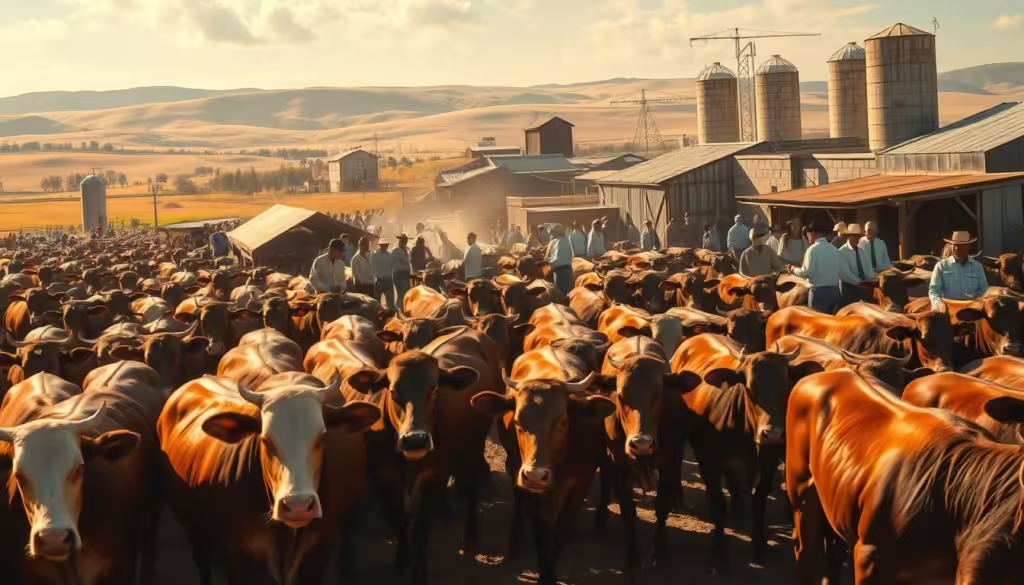
A tightening US supply and steady demand are sending ripples through export channels and local trade.
US demand and lower US production
Retail beef demand in the US remains firm while fed slaughter has run roughly 12% below last year. That gap has pushed global values higher and flowed into stronger local returns for slaughter stock.
Processing margins and capacity
Processors are earning solid margins and many southern plants are competing for northern lots. That competition has kept plants near full capacity and supported rates for finished lines.
Tariffs and lean beef availability
A steep US tariff on Brazilian beef looks set to reduce shipments into the US. Less Brazilian lean supply tightens the grinding complex and lifts demand for Australian cow and manufacturing beef.
- Key points: US demand, lower US kill rates and shifting export flows are the main drivers.
- Exports: Australian shipments to the US and China have lifted, supporting finished lines and young cattle demand.
- Seasonal note: northern feeder supplies may rise into spring, while southern pasture confidence will shape restocker appetite.
“Watch US consumption and policy — a sharp demand pullback is the main risk to the current outlook.”
Conclusion
,Slaughter values look well supported into year‑end on firm US demand, tight overseas production and healthy processing margins.
Cow lines show the clearest upside as local turn‑off tightens and lean beef flows remain constrained. Feeders have lifted with better margins, though seasonal supply may temper gains.
Restocker outcomes depend on a kind southern spring. If feed returns, expect renewed bids for young cattle; if dry, exercise caution when booking a sale.
Use MLA indicators and the latest market report before locking in a channel. Check hooks quotes, compare saleyard results and reports for your centre, then secure space early to manage risk.